





Power Unit Fundamentals
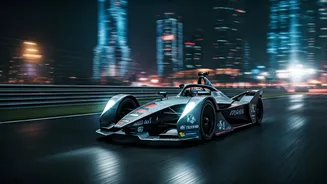
The modern Formula 1 power unit is a complex synergy of a 1.6-liter V6 turbocharged internal combustion engine (ICE) integrated with advanced energy recovery
systems (ERS). This sophisticated combination aims to achieve extreme performance, often exceeding 1,000 brake horsepower, all while adhering to strict fuel flow regulations. The design is a testament to engineering prowess, balancing raw power with remarkable efficiency. These units are continually refined to meet evolving regulations, ensuring Formula 1 remains at the pinnacle of automotive innovation. Key aspects driving their design include the integration of hybrid technologies for enhanced power and strategic adaptation to regulatory constraints, all focused on achieving a perfect balance between sheer force and operational efficiency.
ICE Mechanics Explained
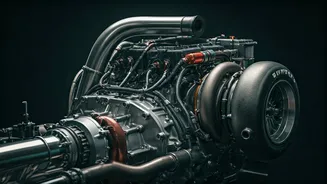
At its core, the Formula 1 internal combustion engine (ICE) operates on a four-stroke cycle: intake, compression, power, and exhaust. The 1.6-liter V6 engine utilizes a turbocharged system to force more air into the combustion chamber, enabling a richer fuel-air mixture and thus greater power output. Precise control over the air-fuel ratio, often aiming for a stoichiometric balance, is managed by sophisticated electronic control units (ECUs). These units adjust fuel delivery and air intake based on numerous factors like ambient temperature and engine load. The exhaust gases produced are not merely expelled; they are harnessed. They spin the turbine of the turbocharger, compressing intake air, and energy from these gases is further captured by the Motor Generator Unit-Heat (MGU-H) to enhance overall efficiency and contribute to the power unit's electrical capabilities. This intricate process transforms fuel into the immense power seen on the track.
Turbocharging Mastery
Turbocharging is fundamental to achieving the immense power generated by Formula 1 engines. A turbocharger employs a turbine driven by exhaust gases to spin a compressor, which forces more air into the engine's cylinders. This increased air density allows for more fuel to be burned, significantly boosting power and torque. Managing the 'boost pressure' is critical, achieved through sophisticated control systems and wastegates that regulate the exhaust flow to prevent overboosting and maintain optimal performance. A key challenge is 'turbo lag,' the delay between throttle input and the turbocharger delivering full boost. Engineers mitigate this using advanced designs and technologies like the MGU-H, which can spin the turbocharger to rapidly increase its speed (spool) and minimize this momentary pause, ensuring immediate power delivery when the driver demands it. Turbocharger speeds can reach up to 150,000 RPM, showcasing the extreme engineering involved.
Energy Recovery Systems
Formula 1's hybrid technology includes advanced Energy Recovery Systems (ERS) that capture and redeploy energy, enhancing both performance and efficiency. The Motor Generator Unit-Kinetic (MGU-K) is crucial here; during braking, it acts as a generator, converting the car's kinetic energy into electrical energy. This stored energy can then be utilized as an additional power boost during acceleration, effectively functioning as an electric motor. Complementing this is the Motor Generator Unit-Heat (MGU-H), which intercepts heat energy from the exhaust gases. This captured thermal energy is converted into electrical energy, which can either power the MGU-K directly or assist the turbocharger by spinning it up quickly, thereby reducing turbo lag and improving engine responsiveness. Together, these systems allow the power unit to produce around 1,000 bhp by cleverly repurposing energy that would otherwise be lost.
Fuel Flow and Cooling
Strict fuel flow regulations are a cornerstone of Formula 1, with a mandatory fuel flow meter ensuring compliance with a maximum rate of 100 kilograms per hour. This regulation drives innovation in fuel efficiency. Alongside these limitations, the extreme temperatures generated by F1 engines—reaching critical levels within the combustion chamber—necessitate highly sophisticated cooling systems. These systems employ both air and liquid cooling methods, circulating coolants through engine components and dissipating heat via radiators. Effectively managing thermal loads is vital not only to prevent engine failure and maintain performance but also to ensure the longevity of complex hybrid components. Balancing the need for aggressive cooling with aerodynamic efficiency and weight management is a constant engineering challenge.
Hybrid Integration
The integration of hybrid technology is central to modern Formula 1 power units, merging the internal combustion engine (ICE) with electric systems. The turbocharged V6 ICE provides the primary propulsion, while the electric components, managed by an energy store (ES), harvest energy from braking (MGU-K) and exhaust heat (MGU-H). This stored electrical energy can be rapidly deployed to provide a significant power boost on demand, offering strategic advantages during races. The energy store, essentially a high-tech battery, is meticulously managed to optimize its capacity and ensure consistent power delivery. The synergy between the ICE and electric power components allows for a dramatic increase in overall performance and a more efficient use of energy throughout a race lap.
Control and Evolution
Sophisticated control electronics are indispensable for managing the intricate operations of a Formula 1 power unit. These systems govern everything from fuel injection and ignition timing to turbocharger behavior and the deployment of hybrid energy. They are programmed to optimize performance while strictly adhering to FIA regulations, particularly the fuel flow limits. Advanced data acquisition systems continuously monitor engine performance, providing valuable information for tuning and strategy adjustments. These data feeds allow engineers to fine-tune engine mapping and performance parameters for different track conditions and race scenarios. Furthermore, the engine regulations themselves have evolved dramatically, transitioning from naturally aspirated engines to complex V6 turbocharged hybrids, constantly pushing manufacturers to innovate and refine their designs to meet new challenges in efficiency, power, and environmental considerations.