






Raptor Engine's Fiery Trial
The development of SpaceX's colossal Starship rocket, a vehicle designed for interstellar endeavors, has taken a significant step forward, albeit with
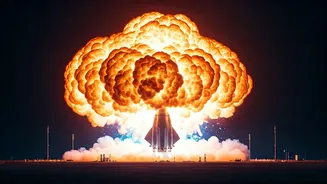
a pyrotechnic display. A recent test of the V3 Raptor engine, the refined powerhouse intended to propel the third iteration of Starship, concluded not with a quiet success, but with a spectacular, uncontrolled detonation. This event, captured on video at SpaceX's Starbase facility in Texas, initially showed a plume of smoke, typical for rocket engine tests, before erupting into a massive fireball. While such incidents are not entirely unexpected in the high-risk field of rocket propulsion, and testing sites are engineered to withstand such events without harm to personnel, this particular mishap raises crucial questions about the engine's development trajectory. It is currently unclear whether this outcome was an anticipated part of pushing the engine's limits or an unforeseen failure. Regardless, the data gleaned from this explosive conclusion will undoubtedly inform future engineering decisions.
Starship's Ambitious Future
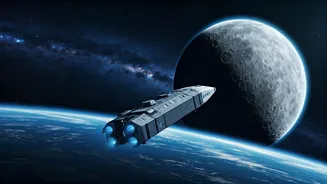
The Starship V3 is central to SpaceX's audacious plans, carrying immense expectations for future space exploration. The vehicle is slated for a critical uncrewed mission to Mars in 2026, a monumental undertaking requiring unprecedented reliability. Furthermore, it is designated as the conveyance for Artemis IV astronauts, tasked with the delicate operation of landing on and ascending from the lunar surface. A successful orbital demonstration of Starship is a prerequisite for its lunar debut, scheduled for the Artemis III mission next year. Beyond lunar and Martian excursions, Starship’s utility hinges on another groundbreaking capability: in-orbit refueling. This complex maneuver, essential for the heavy rocket's extended journeys, has not been successfully demonstrated on such a scale before. The successful execution of these missions is paramount for SpaceX's continued advancement in space exploration.
Financial Stakes and Flight Schedules
Beyond the allure of space exploration, substantial financial interests are tied to Starship's success, most notably SpaceX's anticipated Initial Public Offering (IPO). Elon Musk has publicly expressed his ambition for this to be a record-breaking market debut, and a successful orbital flight demonstration of Starship would undoubtedly bolster investor confidence. Previous Starship prototypes have only achieved sub-orbital flights, many ending in dramatic failures. Conversely, a significant engine failure or launch mishap shortly before the planned IPO could cast a shadow over the company's valuation and dampen market enthusiasm. The current schedule places the first flight of Starship V3 in May, with the IPO projected for June. It would not be surprising if the flight date is subject to postponement, especially if an exploding engine test provides a convenient, albeit concerning, justification for the delay.