





Mastering the Weeding Tool
For any gardener aiming to maintain pristine beds, a dedicated weeding tool is indispensable. Typically featuring a long handle crowned with a flat or angled
blade, this implement excels at breaking up and loosening compacted soil. Its primary function is to efficiently extract unwanted weeds from between plant rows, simultaneously aerating the soil around your precious flora and gently moving earth. This simple yet powerful tool is your first line of defense against garden invaders, ensuring your cultivated plants receive optimal sunlight and nutrients without competition.
The Versatile Spade
A cornerstone of any gardening arsenal, the spade is an incredibly versatile tool. Its defining characteristic is a flat, rectangular blade, perfectly engineered for digging and relocating substantial volumes of soil. Beyond this, it proves invaluable for handling and transporting loose materials such as sand, coal, or even snow. Gardeners will find it instrumental for excavating planting holes with precision, and for diligently turning over garden beds to prepare them for new growth. The spade's robust design makes it a reliable companion for a multitude of earth-moving tasks.
Pruning Shears: Precision Cuts
Every gardener, regardless of experience level, should possess a reliable pair of pruning shears. These hand-held cutting tools are specifically designed for the meticulous removal of branches, the careful pruning of plants and shrubs, and the essential task of maintaining desirable plant shapes. Often spring-loaded, these shears function much like scissors, employing two opposing blades that meet and sever stems with a clean closing action. Their precision allows for healthy cuts that promote plant vitality and aesthetic appeal.
Rake: Gathering and Leveling
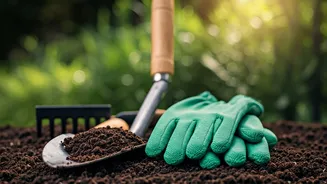
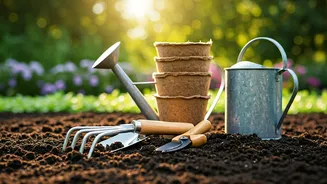
For those fortunate enough to have trees in their backyard garden, a rake is an absolute necessity. This long-handled tool is distinguished by its array of tines or teeth, designed for efficiently gathering fallen leaves and debris. Beyond simple collection, the rake plays a crucial role in loosening matted soil and debris, and in expertly leveling garden surfaces. It's an essential implement for keeping your garden tidy and preparing the ground for optimal planting conditions.
Watering Can: Controlled Hydration
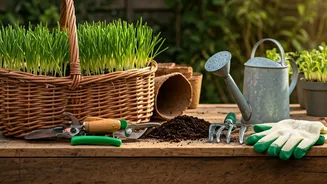
Investing in a quality watering can is a wise decision for any gardener. This portable container, equipped with a spout and a perforated rose or nozzle, offers a controlled method for hand-watering plants. Unlike broader irrigation techniques, a watering can provides unparalleled precision, allowing you to direct water exactly where it's needed. This makes it an exceptionally effective tool for nurturing delicate seedlings and ensuring potted plants receive adequate, consistent hydration without oversaturation or disturbance.
Garden Fork for Soil Work
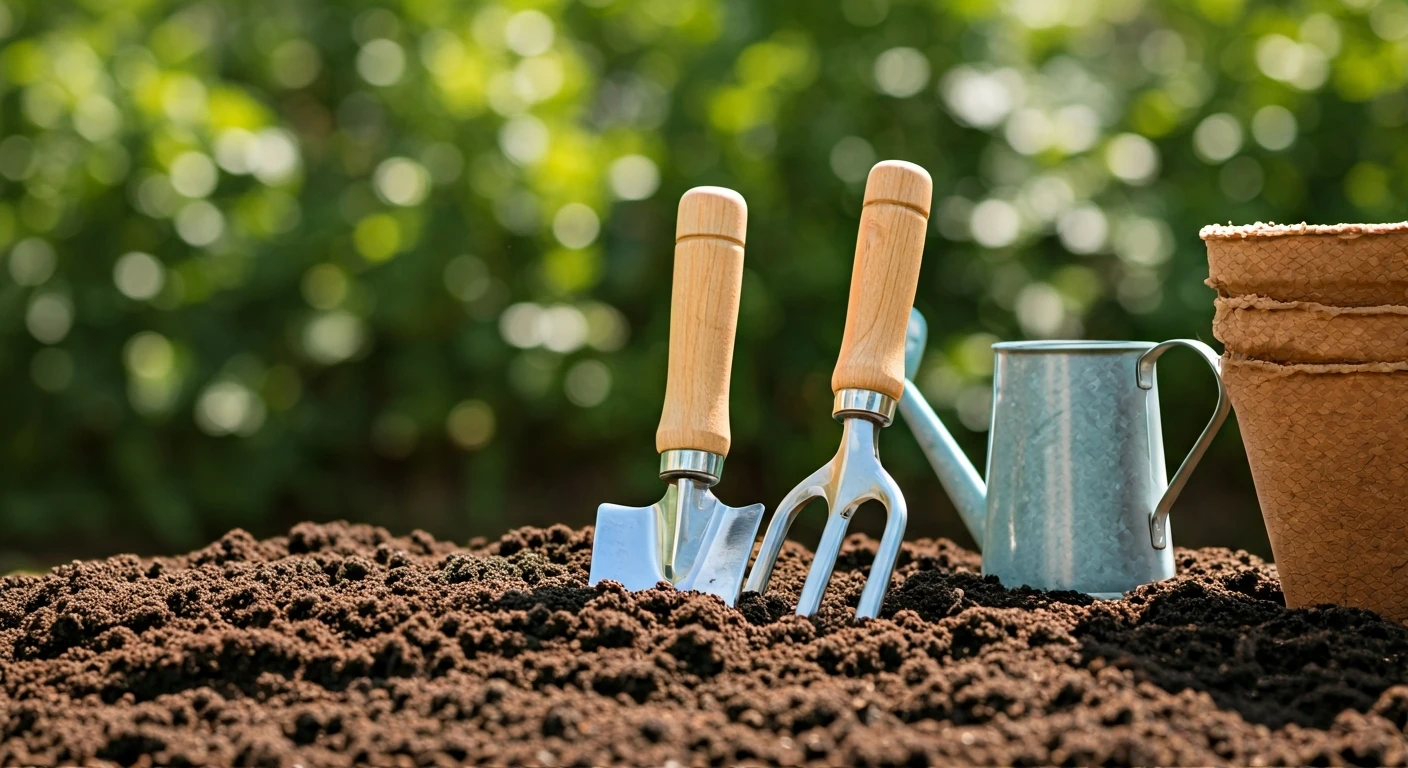
Featuring sturdy tines, the garden fork is a highly functional tool designed for robust soil manipulation. It excels at loosening, lifting, and turning earth, making it ideal for breaking up compacted ground, efficiently removing stubborn weeds, and integrating compost into the soil. This tool is particularly advantageous when working with heavy or clay-rich soils, as its weight distribution is superior to that of a shovel, leading to better soil aeration. It's a valuable asset for addressing challenging soil conditions and promoting healthy root development.
Spade vs. Shovel Explained
The spade is another critical digging tool, characterized by its sharp, rectangular blade. Its design is optimized for tasks such as digging holes, cleanly cutting through stubborn roots, defining garden bed edges, and turning soil over. A key distinction from a shovel lies in the spade's blade alignment, which is perpendicular to the handle, enabling it to cut and slice through the soil. In essence, while a shovel is primarily for scooping and moving loose material, a spade is engineered for more precise cutting and digging into the earth.