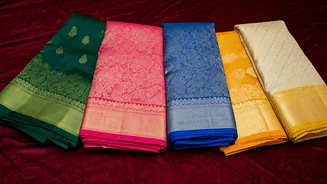







Feel the Fabric
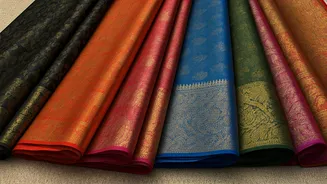
The initial tactile experience offers a significant clue. Authentic Banarasi silk possesses a distinctive richness; it feels substantial and luxurious
without being slippery or excessively smooth. A genuine saree drapes elegantly, maintaining its form without clinging unnaturally or feeling overly flimsy. In contrast, imitation sarees, often crafted from synthetic materials like polyester, tend to have a uniform, almost plasticky smoothness and a surprisingly light weight. Experienced shoppers can often discern the difference instantly through touch alone, recognizing the inherent quality that requires no artificial enhancement. Once you've had the opportunity to feel a truly authentic Banarasi weave, the distinction becomes undeniably clear, showcasing a natural, understated luxury.
Examine Zari Shine
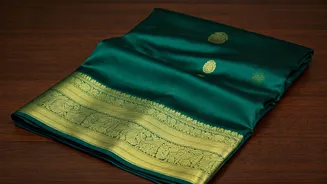
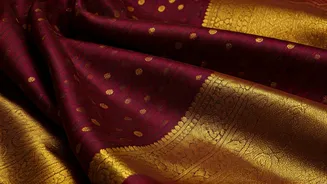
While imitation sarees often rely on an overly bright, flashy zari to appear luxurious, authentic Banarasi sarees boast a more refined and elegant sheen. Genuine zari, historically made from real silver threads dipped in gold or modern metallic yarns, offers a subtle, sophisticated glow that complements the fabric rather than overwhelming it. Fake zari, on the other hand, frequently appears too coppery, overly brilliant, or even rough to the touch. A simple test involves gently rubbing the zari between your fingers; high-quality woven zari will feel smooth, seamlessly integrating with the saree, whereas cheap synthetic versions often feel stiff or plasticky. An aggressively sparkling saree that seems to mimic a disco ball under lights is a strong indicator of a potentially inferior imitation, compensating for a lack of genuine craftsmanship with excessive shine. True luxury is often characterized by a more understated elegance.
Inspect the Backside
A simple yet effective method for identifying an authentic Banarasi saree involves examining its reverse side. Handwoven Banarasi sarees, in particular, often reveal small, loose threads or 'floats' behind the intricate motifs. This appearance is a natural consequence of the traditional weaving techniques and is a sign of genuine craftsmanship, meaning the back will not be perfectly smooth or polished. Conversely, machine-made imitations typically exhibit a uniform and flawless finish on both the front and back, as their patterns are often digitally printed or produced on power looms. If the backside of the saree appears suspiciously identical to the front, it warrants a closer inspection, as authentic handloom work invariably leaves subtle traces of the artisan's process.
Verify Certifications
When investing in a Banarasi saree, particularly if it commands a significant price, looking for official certifications is a wise practice. Authentic sarees are often accompanied by a Geographical Indication (GI) tag, which signifies that the product originates from the traditional Banaras weaving region and adheres to its specific standards. Furthermore, many pure silk sarees come with Silk Mark certification, assuring the buyer of the silk's purity. While these tags are not infallible, as counterfeit products can still exist, they significantly enhance credibility and provide buyers with greater confidence. When shopping online, it's crucial to go beyond appealing visuals; meticulously examine fabric details, scrutinize customer reviews, and thoroughly research the seller's reputation to ensure a genuine purchase.
Observe Weave Detail
Many shoppers mistakenly focus on the overall shine when evaluating a Banarasi saree, overlooking the more crucial element: the weave itself. The true beauty of an authentic Banarasi lies in its intricate patterns and textures, often featuring detailed floral designs, paisleys, and elaborate borders directly woven into the fabric, not merely printed on the surface. Running your fingers over the motifs will reveal a subtle texture, indicating the depth of the weave. Fake sarees often use excessive shine to mask a flat or artificial-looking pattern. Interestingly, minor imperfections can actually be a positive sign, suggesting that an artisan, rather than a machine, crafted the saree. These small irregularities are hallmarks of handmade artistry, lending character and uniqueness that mass-produced items lack.