






Knowledge Over Ignorance
For ages, Hindu traditions have powerfully equated light with enlightenment and understanding, while darkness signifies the absence of knowledge or confusion.
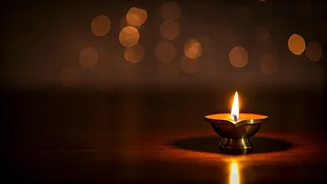
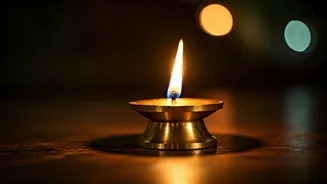
The act of lighting a diya makes this potent metaphor tangible, transforming an abstract concept into a visual representation. More than just an act to increase visibility, igniting the flame before prayer is a conscious decision to embrace clarity and truth. The diya's steady light prompts the devotee to shift focus from inner turmoil and uncertainty towards a state of heightened awareness and intellectual pursuit. In essence, the simple ritual of the diya serves as a foundational lesson for spiritual living: it encourages paying close attention, acknowledging one's confusion, and actively moving towards a state of deeper comprehension and insight.
The Soul's Steadfast Flame
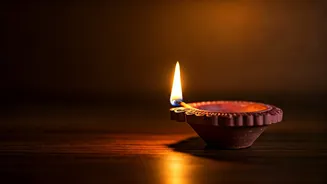
Observing a diya closely reveals a consistent and unwavering motion of its flame. It consistently ascends, stabilizes, and remarkably, remains independent of the container holding it. This resilient behavior serves as a powerful analogy for the 'atman,' or the soul, which many spiritual philosophies describe as the enduring inner self. This inner essence is understood to persist, unchanging, even as our physical bodies age and our life circumstances shift and evolve. For numerous practitioners, the simple act of watching the diya's flame offers a tranquil refuge from everyday anxieties. It provides a profound connection to a deeper, more constant aspect of their being, fostering a sense of inner stability amidst life's flux.
Sanctifying Sacred Space
The ritual of lighting a diya carries the significant function of transforming a regular space into a consecrated area, signaling a shift in purpose and intent. In many households, the glowing diya extends a warm and inviting welcome, signifying readiness and openness. It communicates that the space is designated for focused attention, for spoken devotion in the form of prayer, and for attentive listening. In this capacity, the flame functions less as a mere implement and more as a symbolic threshold or portal, ushering one into a realm of spiritual engagement and introspection. It marks a deliberate transition from the mundane to the sacred.
Discipline of Attention
The practice of maintaining a diya cultivates a valuable discipline of focus. The lamp requires consistent sustenance, needing both oil and a protective environment to keep burning. Similarly, any refined mental habit or spiritual practice demands regular care and attention. Lighting a diya becomes a personal pledge, a subtle but significant commitment to pause, observe, and nurture one's inner world for a brief period each day. While this ritual doesn't guarantee immediate spiritual awakening, it offers a persistent and gentle invitation to return to oneself, to the present moment, and to one's spiritual path, fostering a habit of mindful engagement.
Transformation Through Consuming
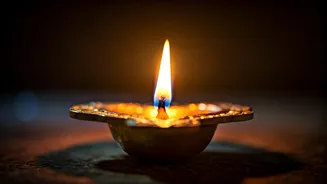
The very materials that comprise the diya hold symbolic weight. The wick is often associated with the ego, while the oil represents the various passions and desires, such as greed, anger, and attachment, that fuel the ego. As the lamp burns, these components are gradually consumed, transforming into radiant light. This imagery offers a clear and profound spiritual lesson: the path of spiritual practice, much like the steady flame, involves a gradual and peaceful depletion of lower, more transient aspects of oneself, allowing a higher, purer essence to emanate. This process of transformation is depicted not as a sudden or forceful event, but rather as a slow, steady, and consumptive journey.