





A New Window Into Anatomy
For those fascinated by the inner workings of the human body, a remarkable new resource has emerged: the Human Organ Atlas (HOA). This international scientific
collaboration has unveiled an open-access 3D portal that allows anyone to delve deeply into the structures of human organs. Users can virtually navigate through organs like the brain, heart, lungs, kidneys, and liver, fostering a more profound comprehension of our anatomy and the various ailments that can affect it. The platform, detailed in a recent journal publication, builds upon its initial release from 2023 with significant enhancements. It is now accessible directly through standard web browsers, eliminating the need for specialized software and offering a user-friendly experience akin to a digital journey through the body.
Revolutionary Imaging Unlocks Detail
The magic behind the HOA's unprecedented detail lies in an advanced imaging technique known as High-Throughput Cryo-Preservation and Tomography (HiP-CT). This cutting-edge method leverages the immense power of the European Synchrotron's Extremely Brilliant Source, which is billions of times more intense than typical hospital CT scanners. This extraordinary brightness enabled scientists to scan entire, intact human organs without causing damage. The result is the ability to zoom in on structures with astonishing clarity, reaching magnifications less than one micron – a scale approximately 50 times finer than a human hair. This technological leap effectively bridges a century-old divide, connecting the fields of radiology and detailed biological tissue study, offering a view into the body never before possible outside of highly specialized research.
Collaborative Power and Early Impact
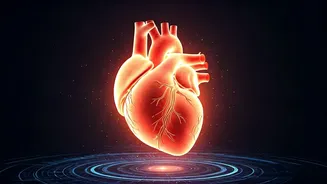
The development of the HOA is a testament to extensive international collaboration, bringing together experts from nine institutions across Europe and the United States. This consortium, known as the Human Organ Atlas Hub, comprises researchers, engineers, clinicians, and infrastructure specialists who pooled their knowledge. Originally conceived and developed during the challenging period of the pandemic, the HOA has already demonstrated its significant impact. For instance, it has aided scientists in identifying previously undetected cellular anomalies in patients who succumbed to COVID-19. Furthermore, the advanced imaging capabilities are proving invaluable to cardiologists, who are using it to investigate the complexities of heart disease and gain new insights into its progression and potential treatments.
Rich Data, Accessible to All
The current iteration of the Human Organ Atlas offers an impressive wealth of data, making it an invaluable resource for a wide audience. It currently houses detailed information on 56 distinct organs, encompassing 307 complete 3D datasets derived from 25 individual donors. The collection spans 11 different organ types, including crucial ones like the brain, heart, lungs, kidneys, and liver, alongside the colon, spleen, placenta, uterus, prostate, and testis. What sets the HOA apart is its capability for multiscale scanning, allowing users to transition seamlessly from a macroscopic, whole-organ perspective down to a resolution approaching cellular detail. This comprehensive and accessible dataset was built with the explicit goal of creating a global, shared scientific infrastructure, open to researchers, medical professionals, educators, and indeed, anyone with a curiosity about the human body's intricate architecture.
Future Potential: AI and Education
Beyond its immediate applications in research and understanding, the Human Organ Atlas is poised to become a vital asset for the future of artificial intelligence and medical education. The platform's extensive and high-quality 3D datasets are ideal for training sophisticated AI systems, particularly in the areas of disease detection and super-resolution analysis. This could lead to the development of more accurate and advanced diagnostic tools. Moreover, the HOA presents transformative opportunities for medical learning and public engagement. Students can immerse themselves in 3D organ explorations, traverse anatomical cross-sections, and zoom into fine tissue structures, offering a dynamic and interactive alternative to traditional diagrams. This shifts anatomy learning from passive memorization to an active, guided discovery process, fundamentally enhancing spatial understanding of complex biological systems for both teachers and learners. The development team is committed to expanding the atlas further in the coming years, by incorporating additional organs, samples, and data.