






Multi-Level Challenges
While visually appealing, homes with multiple floor levels pose significant challenges as mobility decreases. Navigating stairs or even minor level changes
daily escalates the risk of falls, particularly for individuals relying on mobility aids like wheelchairs or walkers. These vertical separations can transform a once-functional space into a daily hazard. To mitigate this, even if a multi-story design is desired, prioritizing a main-floor primary bedroom ensures essential living quarters remain easily accessible, promoting independence and safety throughout the years. The ease of movement between living areas becomes paramount when considering long-term occupancy, making single-level or adaptable multi-level designs far more practical.
Drawer Fixtures Explained
The choice between drawer knobs and handles transcends mere aesthetics, directly impacting a kitchen's usability as one ages. Small, round knobs demand a firm grip, which can be difficult for individuals experiencing reduced hand strength or conditions like arthritis. Wider, more substantial handles, conversely, are significantly easier to grasp and operate, requiring less dexterity and providing better leverage. Fortunately, cabinet hardware is often one of the simpler elements to update. As needs evolve, these fixtures can be relatively straightforward to replace, allowing homeowners to adapt their cabinetry to changing physical requirements without necessitating a complete overhaul of their kitchen design.
Transition Strip Woes
Even slight variations in floor height, often marked by transition strips between different flooring materials, represent a significant tripping hazard. Danny Niemela, a construction expert, emphasizes that these small lips can cause falls. The issue is compounded when homes feature numerous flooring types or excessively thick connectors. To circumvent this, Niemela advocates for a consistent flooring choice throughout the residence, thus eliminating the need for transition strips altogether. This approach not only enhances safety but also proves to be cost-effective in the long run. Implementing this from the outset often aligns financially with the cost of correcting such issues later, which can range from $3,000 to $10,000, especially when addressing doorway modifications.
Hallway Width Matters
One of the most overlooked yet critical aspects for aging in place is the width of hallways, a feature notoriously difficult to alter post-construction. A standard 36-inch hallway, comfortable for younger individuals, becomes constricting when navigating with a walker or wheelchair. Niemela highlights that such narrow passages can feel claustrophobic and impede movement, with walls seemingly encroaching on personal space. For comfortable maneuverability, a minimum clearance of 48 inches is recommended for walkers, while wheelchair users require a wider 60 inches to navigate effectively and safely within the home's corridors.
Bathroom Sink Selection
Bathroom design requires careful consideration for long-term accessibility. Experts advise against certain sink styles that can become problematic. Pedestal sinks offer little lateral support for those needing to lean, while vessel sinks, often set back on vanities, necessitate excessive bending and leaning to wash hands. These designs can strain the back and neck, becoming uncomfortable or even painful over time. Prioritizing sinks that allow for comfortable approach and provide stability is crucial for an aging-in-place friendly bathroom environment. The inclusion of grab bars and handrails further enhances bathroom safety and accessibility.
Shower Entry Design
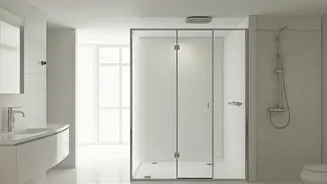
High-threshold showers, characterized by a raised lip at the entrance, introduce an unnecessary risk in an already potentially slippery environment like a bathroom. Paul McManus, a kitchen and bath specialist, strongly recommends opting for low-threshold showers. These designs significantly reduce the step-up height, making entry and exit much easier and safer. Incorporating a grab bar at the shower's entrance provides additional support and stability, further enhancing safety and reducing the likelihood of slips and falls for individuals, especially as they age and require more assistance with balance.