






The AI Talent Arena
The domain of artificial intelligence is currently experiencing an unprecedented surge in demand for top-tier talent, akin to a fervent gold rush. Leading
companies are locked in an intense competition, vying to secure the brightest minds capable of developing the next generation of groundbreaking AI models. This fierce rivalry mirrors the early days of the internet boom but carries significantly higher stakes, as mastering advanced AI could profoundly reshape global economies, creative industries, and power structures. Companies are making massive financial investments, offering substantial compensation packages to gain a crucial edge in the race towards achieving superintelligence, recognizing that versatile architects are indispensable for achieving future breakthroughs in this rapidly evolving field. The constant movement of highly skilled individuals between these major corporations underscores the critical importance and high value placed on AI expertise in today's technological landscape.
Ruoming Pang's Trajectory
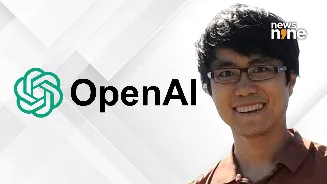
Ruoming Pang, a notable figure in the AI community, has recently completed a remarkable seven-month journey, transitioning between three of the most influential tech companies: Apple, Meta, and OpenAI. He initially moved from Apple to Meta in July 2025, and then, after a brief seven-month period, joined OpenAI. This move to OpenAI occurred despite Meta reportedly offering a substantial package exceeding $200 million over several years, indicating the immense draw and perhaps superior opportunities presented by OpenAI. Reports suggest OpenAI actively pursued Pang for an extended duration before his recruitment. Previously, Pang also had a stint at Meta's Superintelligence Labs, where he was involved in overseeing AI infrastructure, reportedly with a very competitive remuneration. His departure from Meta adds to the company's existing challenges in retaining top-tier AI professionals, highlighting that even lucrative offers may not be sufficient to secure long-term commitment from these highly sought-after experts amidst the prevailing rivalry.
Pang's Stellar Background
Ruoming Pang possesses an impressive academic and professional background, having graduated from prestigious institutions. He holds a bachelor's degree from Shanghai Jiao Tong University, followed by a master's from the University of Southern California (USC), and a PhD from Princeton University. His extensive experience in the tech industry includes a significant tenure of over 15 years at Google. During his time there, he was instrumental in co-founding Zanzibar, a foundational authorization system that underpins many of Google's services, and also contributed to building search systems utilizing Bigtable. More recently, at Apple, he spent more than four years leading a team of over 100 engineers focused on developing the core foundation models that power Apple Intelligence features across their devices.
Versatility Drives AI
Ruoming Pang's career serves as a powerful illustration of how adaptability and a broad skill set are becoming increasingly crucial in the advancement of artificial intelligence. His journey highlights a broader trend of top AI talent being drawn to organizations that possess the infrastructure and resources to effectively scale cutting-edge AI technologies. Despite significant efforts by Meta's CEO, Mark Zuckerberg, who actively recruited prominent figures like former Scale AI CEO Alexandr Wang and ChatGPT co-creator Engj Zhao for the Superintelligence Labs, retaining these key individuals has proven challenging. OpenAI, on the other hand, stands to benefit immensely from Pang's integrated expertise, which spans Google's robust infrastructure, Apple's consumer-focused AI development, and Meta's advanced research capabilities. While Meta reportedly offered compensation equivalent to approximately ₹1,800 crore, OpenAI ultimately secured his services, suggesting the terms offered were more compelling. Pang's career path strongly indicates that individuals with diverse and adaptable technical proficiencies will be pivotal in shaping the future trajectory of AI.