





Nature's Wake-Up Call
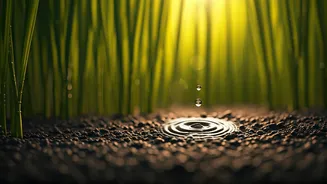
Imagine being a tiny seed buried deep in the earth, surrounded by darkness. Suddenly, a gentle rhythmic sound breaks the silence – the pitter-patter of
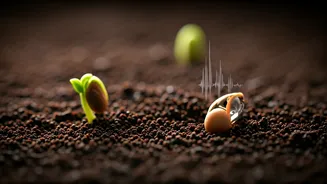
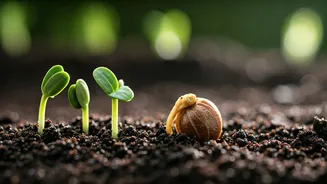
rain. This auditory cue, researchers at MIT have discovered, acts as a powerful signal for certain seeds, potentially awakening them from dormancy. A groundbreaking study, published in Scientific Reports, provides the first direct evidence that plant seeds and seedlings can perceive natural sounds. Specifically, experiments with rice seeds demonstrated that exposure to the sound vibrations of falling raindrops stimulated them to germinate and grow at a significantly accelerated rate compared to seeds kept in silence. This suggests that the very sound of rain is not just background noise but a crucial environmental cue that aids in plant survival and propagation.
Sensing the Vibrations
Plants possess an astonishing array of sensory capabilities, finely tuned for survival. While responses to light, touch, and even gravity are well-documented, their perception of sound has remained largely unexplored until now. The MIT study, spearheaded by Professor Nicholas Makris and Cadine Navarro, was born from a curiosity about whether sound alone could influence seed germination by jostling internal structures called statoliths. Makris referenced earlier research from the 1980s that measured the intensity of rain sounds underwater, noting that water's density amplifies these sound pressures significantly. Consequently, the vibrations experienced by a seed close to a raindrop's impact in soil could be equivalent to much louder sounds in the air, suggesting a potent trigger for biological responses. This connection between sound waves and physical stimulation is the core of how plants might 'hear' the rain.
Rice Seeds Take Root
To empirically test their hypothesis, the MIT team conducted extensive experiments involving approximately 8,000 rice seeds submerged in shallow water. They meticulously varied droplet sizes and the heights from which they were dropped to accurately simulate diverse rain conditions, from a light drizzle to a heavy downpour. Using specialized hydrophones, they precisely measured the acoustic vibrations generated by these simulated raindrops. The results were compelling: rice seeds exposed to the sound of falling water germinated between 30% and 40% faster than control groups that did not experience these auditory stimuli. Furthermore, the study observed that seeds situated closer to the water's surface were more adept at sensing the droplet sounds and exhibited faster growth compared to those more deeply submerged or further away. This highlights a direct correlation between proximity to the sound source and the germination enhancement.
Rethinking Plant Perception
The findings of this research lend new meaning to our understanding of plant biology and their interaction with the environment. Professor Makris suggests that the same mechanisms plants use to sense gravity might also enable them to perceive depth in soil or water by listening to the sound of rain. This connection is particularly evocative when considering cultural nuances, such as the Japanese microseason 'Falling rain awakens the soil,' which now appears to have a profound scientific basis. The ability of seeds to respond to the auditory cues of rain indicates a sophisticated sensory system that prioritizes survival by identifying favorable conditions for growth. This study opens up exciting avenues for future research into how plants perceive and react to a wider spectrum of natural sounds and vibrations.