



Ancient Royal Roots
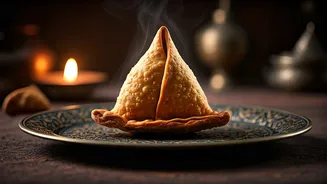
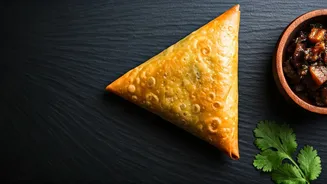
The familiar Indian samosa, often associated with a simple potato and pea filling, might have a much richer and more complex history than commonly believed.
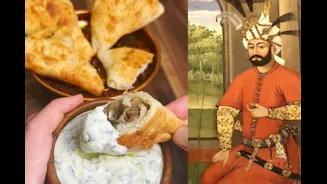
A recent viral discussion on X, initiated by a historian, has brought to light a fascinating 16th-century Persian manuscript named 'Ni'matnama', which translates to 'The Book of Delights'. This ancient text, dating back to the early 1500s and currently housed in the British Museum, reportedly contains a recipe for a samosa that is remarkably different from the street food staple we know today. The manuscript was created for the Sultan of Mandu, suggesting that this early iteration of the samosa was likely a delicacy enjoyed within royal circles, far removed from its current widespread popularity as a quick snack.
A Different Filling
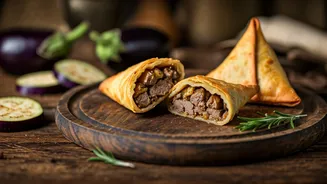
Delving into the contents of the 'Ni'matnama', the historical account shared highlights a startling departure from the contemporary samosa's typical ingredients. The ancient recipe calls for a filling composed of roasted aubergine pulp, dried ginger, and minced lamb, all prepared and then fried in ghee. This is a stark contrast to the common potato, onion, and spice mixture that dominates modern samosa recipes. Crucially, the manuscript makes no mention of potatoes or chili peppers, ingredients that are now considered quintessential to the Indian samosa. Historians note that both potatoes and chili peppers were introduced to India significantly later, after the 'Ni'matnama' was compiled, thus explaining their absence in this early version of the dish.
Culinary Evolution
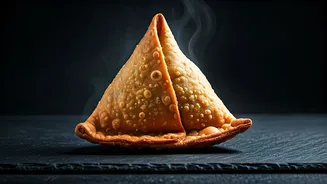
The revelation of this ancient recipe sparks intriguing questions about the samosa's journey through history. The 'Ni'matnama' itself has a documented past, said to have passed through the hands of prominent Mughal emperors like Akbar and later Tipu Sultan, before finding its way into British collections. This suggests that the samosa, in its early form, was a part of a sophisticated culinary tradition enjoyed by royalty and the elite. It's proposed that the dish may have evolved from this richer, more elaborate preparation into the more accessible and varied street food it is today. The name 'samosa' itself is believed to derive from the Persian word 'sanbusak' or 'sanbosag', meaning 'triangle', reflecting its characteristic shape which has remained consistent over centuries, even as its internal composition has transformed dramatically.
Global Connections
The discussion surrounding the samosa's origins has also illuminated its broader historical context and potential connections beyond India. Some commenters on the viral post suggest that the snack's roots might extend to Oman, where a similar dish is still known as 'Sambosa'. This points to a wider geographical spread and influence, with theories suggesting the dish originated in the Middle East and Central Asia before making its way to the Indian subcontinent. The fact that a 500-year-old recipe for such a dish is preserved in a historical manuscript, now accessible in a museum, underscores the profound connection between food, history, and culture. It demonstrates that even the most commonplace culinary items carry layers of untold stories and cultural exchange, showcasing how food traditions evolve and adapt across different regions and eras.