





Birth of Oshen's Robot
The genesis of the first ocean robot can be attributed to Oshen, a company driven by a vision to advance marine exploration. The company recognized the need
for a device capable of enduring the harsh conditions of the ocean while gathering crucial data. This led to their engineers to embark on a development journey, focusing on developing a durable and versatile robot that could be deployed for extended periods. This endeavor was not without challenges; engineers faced obstacles related to material selection, power management, and data transmission. The robot's design required the integration of robust materials that could resist corrosion and withstand the intense pressure found at varying depths. Furthermore, providing a consistent power source to operate the robot in remote locations and transmit gathered data to researchers presented another layer of complexity. Oshen's team tackled these difficulties by employing cutting-edge engineering solutions, creating a blueprint for the future of oceanic exploration.
Technological Marvel Unveiled
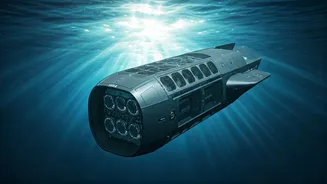
The ocean robot, engineered by Oshen, boasted an array of advanced technologies designed to conduct comprehensive oceanic research. Its core component was its advanced sensor suite, consisting of instruments capable of measuring a multitude of parameters such as temperature, salinity, water pressure, and chemical composition. These sensors gave scientists a comprehensive profile of the ocean environment. The robot's navigation system, a critical element, enabled autonomous movement across vast oceanic expanses. The system depended on GPS and sophisticated algorithms to map routes and avoid obstructions. In order to sustain operations for extended durations, the robot used a power system that often involved high-capacity batteries and energy-efficient designs. Communication systems were equally crucial, offering secure data transfer to researchers on land. This was typically achieved through satellite links, which ensured continuous access to information gathered by the robot, regardless of its location.
Impact and Applications
The advent of Oshen's ocean robot had a profound effect on the field of marine science, giving researchers new tools for detailed studies. The robot's capabilities enabled it to gather data in regions that were previously inaccessible or too difficult to explore with conventional methods. This included deep-sea trenches, areas affected by severe weather, and extensive stretches of the open ocean. Through its ability to operate independently, the robot offered significant benefits over manual data-gathering methods, such as the reduction of time and expenses. This advanced efficiency, in turn, allowed for more frequent and extensive data collection, improving the accuracy of scientific research and modeling. Furthermore, this data supported environmental monitoring. Continuous monitoring helped in tracking alterations in marine ecosystems, like warming temperatures, ocean acidification, and pollution dispersal. By providing critical insights into ocean dynamics, Oshen's robot empowered scientists and policymakers to make evidence-based decisions for environmental protection and sustainable ocean management.
Future Implications and Legacy
Oshen's pioneering ocean robot established a foundation for future innovations in marine technology. The success of this robot sparked further advancements, as other organizations and researchers sought to build on the original design. These efforts centered on improving the robots’ capabilities, extending their operational lifespan, and developing new applications. Anticipated advancements include the integration of artificial intelligence and machine learning to improve the robots’ capacity for autonomous decision-making and data analysis. These developments will transform the way scientists explore and understand the ocean, providing more precise and rapid insights into the planet’s largest ecosystem. The legacy of Oshen’s first ocean robot is also seen in its impact on education and public awareness, increasing people’s interest in ocean science. As these technologies become more accessible, they will play a key role in protecting the ocean and its inhabitants for future generations.