





Faith-Driven Journeys Lead
In 2026, a remarkable shift is underway in the Indian travel sector, with a pronounced move away from typical beach vacations and party hotspots towards
experiences rich in spirituality and self-discovery. A recent report by Agoda indicates that India is at the forefront of this movement in Asia. A significant 19% of Indian travelers, translating to nearly one in every five individuals, are planning journeys centered around faith, tradition, and personal growth this year. This statistic places India in a leading position, signifying that for many Indian explorers, travel is no longer merely an escape but a profound opportunity for connection and introspection. While countries like Indonesia and Malaysia also show interest in faith-based travel, India's commitment to this form of exploration is particularly noteworthy and signals a deeper engagement with cultural and spiritual heritage.
Kumbh Mela's Impact
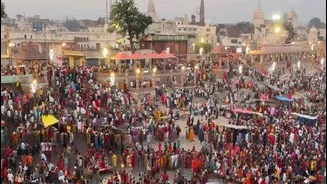
The return of the Maha Kumbh Mela to Prayagraj in 2025 served as a powerful catalyst, igniting a massive surge of 233% in accommodation searches. Renowned as one of the largest human gatherings globally, the Kumbh Mela is far more than just a religious festival; it's an extraordinary spiritual experience that draws millions and offers a once-in-a-lifetime opportunity for deep spiritual immersion and connection. Its immense draw demonstrates the profound impact of large-scale spiritual events on travel patterns, highlighting a strong desire among people to participate in ancient traditions and witness monumental religious congregations. The sheer volume of interest underscores the enduring appeal of pilgrimage and collective spiritual experiences.
Varanasi's Global Acclaim
In 2025, Varanasi received significant international recognition for its spiritual heritage, being ranked as the second most sought-after religious destination worldwide. This distinction, according to a study by My Cross, which analyzes faith-based tourism trends, positions the city as a global hub for spiritual seekers. The study evaluated cities based on five critical factors: annual visitor numbers, the quantity of religious sites, online search volume, social media engagement, and the availability of accommodations, assigning each a normalized score out of 100. Varanasi achieved an impressive score of 78, trailing only Kyoto, Japan, which secured the top spot with a perfect 100. Notably, while Kyoto attracts a larger annual footfall of over 75 million visitors and boasts more religious sites, Varanasi outshone all surveyed destinations in online search volume, registering nearly 2.8 million monthly searches, indicating a higher level of active interest and intent to visit among potential travelers.
Festivals Fueling Wanderlust
Even popular cultural celebrations like Holi are now actively reshaping travel behaviors, driving substantial interest in destinations steeped in mythology and ancient rituals. Pushkar witnessed an exceptional 195% increase in travel searches, closely followed by Vrindavan, which saw a 126% jump, and Mathura, with a 109% rise. These statistics clearly illustrate how traditional festivals are becoming major draws for travelers seeking authentic cultural immersion and spiritual engagement. The heightened search volumes for these cities indicate a growing preference for journeys that offer not just sightseeing but also participation in vibrant cultural practices and a chance to connect with the historical and religious narratives of these sacred places.
Transformation Through Travel
The driving force behind this surge in spiritual tourism is a powerful blend of seeking spiritual fulfillment and desiring authentic cultural immersion. Today's traveler is not content with simply visiting places; they are actively searching for experiences that are genuinely transformative. This translates to an increased interest in activities such as participating in temple rituals at sunrise, witnessing the mesmerizing Aarti ceremonies by the river ghats, engaging in meditation retreats nestled in serene mountain landscapes, and experiencing festivals where devotion and celebration merge seamlessly. As travel becomes more purposeful and intentional, the concept of spiritual tourism is evolving beyond traditional pilgrimage, transforming into a deliberate pursuit of enriching and life-altering explorations.