



The Science of Baking
Creating a truly excellent fruit tart involves understanding a few key culinary principles. The pastry cream's stability relies on cooking the starch to
a precise temperature, between 190-200°F, which fully gelatinizes it, ensuring a thick, sliceable filling. For the tart crust, chilling the dough before baking is crucial. This solidifies the butter within the dough, hindering excessive gluten development and ultimately preventing the crust from shrinking disproportionately during the baking process. Furthermore, ensuring your fruit is adequately dried before it's placed on the tart is essential to prevent excess moisture from compromising the pastry cream's delicate surface. A light glaze, such as one made from apricot preserves, not only adds a beautiful shine but also acts as a protective barrier, keeping the fruit fresh and preventing it from drying out.
Essential Ingredients
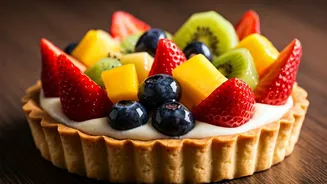
To create this delightful dessert, you'll need specific ingredients for each component. The pastry cream, a rich custard filling, is made with whole milk for creaminess, sugar for sweetness and stability, egg yolks for depth and emulsification, and cornstarch to thicken it properly. Vanilla extract or a vanilla bean adds its signature aromatic flavor, a pinch of salt balances the sweetness, and a touch of butter at the end lends a luxurious sheen and richness. The tart crust requires all-purpose flour for structure, powdered sugar for a tender, shortbread-like texture, cold butter for flakiness and flavor, an egg to bind everything together and add richness, and vanilla extract to enhance the overall taste. Finally, the star of the show is the fresh, seasonal fruit—think strawberries, blueberries, raspberries, kiwi, pineapple, or mandarin oranges—chosen for their color and taste. An optional glaze, typically made from apricot preserves diluted with water, provides a glossy finish and protects the fruit.
Crafting the Crust
Making the tart crust begins by combining dry ingredients like flour, powdered sugar, and salt in a food processor for even distribution. Next, cold butter is cut into the mixture until it resembles coarse crumbs, a technique that coats the flour particles with fat, thereby limiting gluten development and ensuring a tender, flaky outcome. An egg whisked with vanilla extract is then added, and the mixture is pulsed just until a cohesive dough forms; overmixing is avoided to maintain tenderness. The resulting dough is shaped into a disk, tightly wrapped, and chilled for at least an hour to firm the butter and relax the gluten, which is vital for preventing shrinkage. Once slightly softened, the dough is rolled to about 1/8-inch thickness and carefully pressed into a tart pan. Excess dough is trimmed, and any thin spots are patched. Docking the bottom of the crust with a fork allows steam to escape during baking. For optimal results, the shaped crust is frozen for 30 minutes to further prevent shrinkage before being blind-baked.
Perfecting Pastry Cream
The velvety smooth pastry cream starts with gently heating milk with sugar and a vanilla bean to infuse flavor without boiling. In a separate bowl, egg yolks are whisked vigorously with sugar, cornstarch, and salt until smooth and pale; this step ensures the starch is well-dispersed, leading to a lump-free custard. The hot milk is then tempered into the egg mixture by slowly whisking it in to prevent the eggs from scrambling. The combined mixture is returned to the saucepan and cooked over medium heat, whisking constantly, until it thickens significantly to a pudding-like consistency and reaches 190-200°F (88-93°C). This crucial temperature ensures the starch is fully gelatinized and any enzymes in the egg yolks that could break down the starch are deactivated. For an exceptionally silky texture, the cream is strained through a fine-mesh sieve. Finally, butter and vanilla extract are whisked in off the heat for richness and flavor. The pastry cream is then cooled rapidly in an ice bath, with plastic wrap pressed directly onto its surface to prevent a skin from forming, before being chilled for at least two hours.
Assembling and Glazing
Once the tart crust is completely cooled after baking and the pastry cream has been chilled and gently stirred until smooth, it's time for assembly. The smooth pastry cream is spread evenly into the cooled tart shell, creating a luscious base. Next, prepare your chosen assortment of fresh fruits. It's imperative that the fruit is thoroughly washed and completely dried to prevent any excess moisture from seeping into the cream. Arrange the fruit artfully on top of the pastry cream, creating a visually appealing design. For the finishing touch, prepare a light glaze by combining apricot preserves with a tablespoon of water. Gently heat this mixture in the microwave in short intervals until it forms a thinner, brushable glaze. Allow it to cool slightly before delicately brushing it over the arranged fruit. This glaze not only enhances the visual appeal with a beautiful sheen but also helps to keep the fruit looking fresh and prevents it from drying out. Serve the tart immediately for the best texture and flavor.