





Crafting Masor Tenga
Embark on a culinary journey to create authentic Masor Tenga, the beloved Assamese sour fish curry. The process begins with selecting prime river fish,
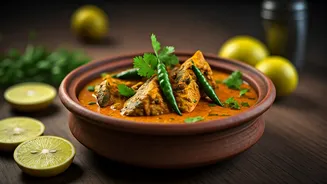
such as Rohu or Catla, which are then meticulously cleaned and cut into manageable pieces. A preliminary marination with turmeric and salt imparts a subtle depth of flavor and prepares the fish for cooking. The key to Masor Tenga's distinct texture lies in lightly frying these marinated fish pieces in pungent mustard oil until they achieve a delicate golden-brown hue. This step ensures the fish holds its shape and adds a foundational richness to the dish. Following this, the same pan is utilized to build the aromatic curry base. Finely chopped tomatoes are introduced and sautéed until they soften, creating a pulpy consistency that forms the heart of the curry's liquid component. A carefully selected blend of spices, including turmeric powder, red chili powder, and salt, is added to this base, mingling with the tomato's essence. Green chilies, slit to release their subtle heat, are incorporated to provide a gentle piquancy. Water is then added to create a broth, which is brought to a rolling boil for about five minutes to allow the flavors to meld. Finally, the lightly fried fish pieces are reintroduced into this simmering curry and cooked for an additional five minutes, ensuring they absorb the tangy broth without becoming overcooked. The final, crucial touch is the generous squeeze of fresh lemon juice, which bestows the curry with its signature bright, zesty sourness. Garnished with freshly chopped coriander leaves, this masterpiece is ready to be savored, typically alongside steamed rice.
Nutritional Prowess
Masor Tenga stands out not only for its delightful taste but also for its commendable nutritional profile, making it a healthy choice, particularly during warmer months. The dish emphasizes lean protein by primarily utilizing fresh river fish like Rohu or Catla, providing approximately 18–22 grams of protein per serving. These fish are also a good source of essential nutrients, including iron, contributing around 1–2 mg per serving, and a moderate amount of omega-3 fatty acids, which are beneficial for heart and brain health. The light preparation, which involves minimal oil, typically around 2 tablespoons of mustard oil, keeps the fat content relatively low, at about 7–9 grams per serving, derived from both the fish and the oil. The inclusion of fresh ingredients like tomatoes and lemon juice significantly boosts the vitamin C content, offering around 12–15 mg per serving, an essential antioxidant that supports the immune system and skin health. Overall, a typical serving of Masor Tenga contains an estimated 180–220 calories, making it a satisfying yet not overly heavy meal. This balance of macronutrients and micronutrients, combined with its refreshing tang, makes Masor Tenga a wholesome and invigorating dish.
Cultural Significance
Masor Tenga holds a cherished place in the culinary landscape and cultural traditions of Assam, deeply interwoven with the region's history and daily life. Its origins are rooted in the abundant availability of fresh river fish in Assam's numerous rivers and ponds, a resource that has long sustained local communities and shaped their cuisine. Over generations, Assamese home cooks developed innovative ways to prepare fish, with Masor Tenga emerging as a favorite for its unique tangy flavor and light, refreshing character. The use of indigenous souring agents, such as lemon, tomatoes, elephant apple (ou tenga), or the specific sour fruit known as outenga, is a hallmark of this dish, reflecting a sophisticated understanding of balancing flavors and enhancing digestibility. Masor Tenga's popularity surges during Bohag Bihu, the most significant Assamese festival celebrating the New Year and the onset of spring. This timing is no coincidence; the light, tangy nature of the curry is perfectly suited to the warmer climate prevalent during April, offering a palate-cleansing contrast to richer festive dishes. Serving Masor Tenga during Bihu underscores the festival's themes of renewal, freshness, and abundance, connecting the meal to the agricultural cycle and the vibrant spirit of the Assamese people.
Versatile Sourcing
The delightful tang of Masor Tenga can be achieved through a variety of natural souring agents, offering flexibility and showcasing the diverse produce available in Assam. While lemon is a widely accessible and popular choice, providing a consistently bright and zesty sourness, other traditional ingredients can be employed to impart similar, yet distinct, tangy notes. Elephant apple, known locally as 'ou tenga,' is a favored ingredient that lends a unique, slightly astringent tanginess to the curry, offering a flavor profile different from that of citrus. Another traditional option is 'outenga,' a wild sour fruit that contributes a characteristic sharpness, deeply embedded in Assamese culinary heritage. These alternatives highlight the adaptability of Masor Tenga, allowing cooks to utilize seasonal ingredients and cater to personal taste preferences. Regardless of the souring agent used, the fundamental appeal of Masor Tenga lies in its ability to create a light, flavorful, and invigorating dish, making it a celebrated staple, especially during festive occasions like Bohag Bihu.