
Grip Strength's Importance
Grip strength is far more critical than many realize, impacting various daily activities and athletic performance. It is a fundamental element in sports
such as weightlifting, rock climbing, and even tennis. Beyond sports, robust grip strength assists in everyday actions like carrying groceries, opening jars, and maintaining stability. Enhanced grip strength directly translates to increased power and control. Furthermore, grip strength provides crucial support in preventing injuries. A strong grip helps stabilize the wrists and elbows, reducing the likelihood of strains and sprains during exercise or other physical endeavors. Developing a solid grip also contributes to overall fitness and a more balanced physique, promoting functional strength that benefits all aspects of life.
Kettlebell's Role Defined
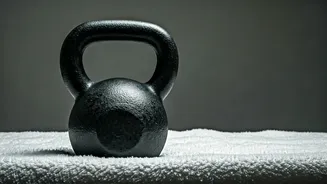
The kettlebell is an exceptional tool for enhancing grip strength, primarily due to its off-center weight distribution. This unique feature challenges the stabilizing muscles in the forearms and hands more than traditional dumbbells. Exercises performed with a kettlebell require a constant effort to control the weight, thus activating and strengthening the grip muscles. The shape of the kettlebell handle also contributes to grip development. It allows for various grip variations, promoting the activation of different forearm muscles. Exercises like kettlebell swings, cleans, and snatches demand a firm grip, ensuring the hands and forearms are constantly engaged. Moreover, kettlebells can be used for farmer's carries, a fantastic exercise to improve overall grip strength and endurance. The versatility of a kettlebell makes it an effective and adaptable tool for anyone aiming to build a stronger grip.
Towel's Gripping Edge
Using a towel with the kettlebell introduces an added layer of challenge to your grip. Wrapping a towel around the kettlebell handle increases the diameter, forcing the hands to work harder to maintain control. This modification directly targets and builds forearm strength, as the wider grip engages muscles in a different way than a standard handle. The towel grip also forces a more dynamic grip, often requiring adjustments to maintain control, which builds stability and endurance. The towel modification can be applied to many kettlebell exercises. For example, by wrapping the towel around the handle during kettlebell swings or rows, you will experience an immediate increase in forearm engagement. This simple addition maximizes the workout's effectiveness, making it a valuable method for anyone looking to step up their grip strength training.
Exercise: Towel Swings
Towel swings are a powerful exercise that can be incorporated to enhance both explosive power and grip strength. Begin by wrapping the towel around the kettlebell handle, ensuring a secure grip with both hands. Stand with your feet shoulder-width apart, holding the kettlebell in front of you. Bend your knees slightly, hinge at your hips, and swing the kettlebell back between your legs. Next, powerfully drive your hips forward to propel the kettlebell up to chest height. Maintain a tight grip throughout the swing to maximize forearm engagement. Control the kettlebell as it swings back down, and repeat for the desired number of repetitions. This exercise not only builds grip strength and forearm muscles but also improves core stability and cardiovascular fitness.
Exercise: Towel Rows
Towel rows provide an excellent way to target the muscles of the upper back while simultaneously challenging your grip. Place the kettlebell on the floor, wrap the towel around the handle, and grasp each end firmly. Assume a bent-over position, keeping your back straight and your core engaged. With your arms extended, let the kettlebell hang down toward the floor. Initiate the movement by pulling the kettlebell up towards your chest, squeezing your shoulder blades together. Focus on maintaining a tight grip on the towel throughout the exercise. Slowly lower the kettlebell back down, controlling the movement. Repeat the process for the recommended repetitions. This exercise effectively combines back muscle development with intense grip strength training, making it a comprehensive workout.
Exercise: Farmer's Carry
The farmer's carry is a simple yet extremely effective exercise for improving overall grip strength and endurance. Grasp the kettlebell by the handle using a towel and stand tall with your shoulders back and your core engaged. With a straight posture, walk forward, maintaining a firm grip and keeping the kettlebell stable. Your forearms, traps, and core will work hard to maintain your posture and balance while you walk. Continue walking for a set distance or a specific duration, focusing on keeping a tight grip and a straight posture. The farmer's carry significantly increases grip strength, and is also an excellent full-body exercise that develops core stability, shoulder strength, and endurance. Performing the farmer's carry is a direct way to translate grip strength into real-world functional fitness.
Workout Structure Example
A well-structured workout using the kettlebell and towel can effectively target grip and forearm development. Begin with a thorough warm-up to prepare the muscles for the exercises. This can include arm circles, wrist rotations, and light cardio. Then, incorporate the exercises: perform 3-4 sets of towel swings, aiming for 10-15 repetitions. Next, do 3 sets of towel rows, targeting 8-12 repetitions. Conclude with a farmer's carry, walking for 30-60 seconds, and repeated three times. Ensure proper form throughout each exercise to maximize effectiveness and reduce injury risk. Include rest periods of 60-90 seconds between sets to allow for adequate recovery. Cool down after the workout with stretching exercises for the forearms, wrists, and shoulders to promote muscle recovery and flexibility.
Progressive Overload Approach
To continue making gains, it is necessary to gradually increase the difficulty of your workouts. This principle, known as progressive overload, helps muscles adapt and grow stronger. Consider these strategies: increase the weight of the kettlebell over time to provide greater resistance. Increase the number of repetitions or sets for each exercise. Reduce rest times between sets to increase the intensity. Extend the duration of the farmer's carry. Incorporate more challenging variations of the exercises, such as one-arm towel swings or rows. Periodically assess your progress and adjust your workout accordingly. Tracking the weights used and the number of repetitions can help monitor your improvements and provide motivation to reach your fitness goals. Consistency and progressive overload are vital to continued progress.
Safety First
Prioritizing safety is essential when performing kettlebell exercises. Before beginning any workout routine, it’s advisable to consult a healthcare professional, especially if you have any pre-existing health conditions or injuries. Proper form is paramount. Watch videos, and possibly seek guidance from a qualified fitness instructor to ensure you are executing the exercises correctly. Always maintain control of the kettlebell, and avoid jerking or using momentum to lift the weight. Start with a weight that you can handle safely, gradually increasing the load as your strength improves. Pay attention to your body and stop if you experience any pain. Wear appropriate footwear with good support to provide stability during the exercises. Warm up before each workout, and cool down after. By observing these safety tips, you can reduce the likelihood of injury and make your workouts more productive.
Consistency for Results
Consistency is crucial for realizing the benefits of this kettlebell and towel workout. Aim to perform the workout at least two to three times per week, allowing adequate rest and recovery between sessions. Regular training allows the muscles to adapt and grow stronger over time. Combine the grip-strengthening exercises with a balanced overall fitness program that incorporates other forms of exercise, such as cardio and other strength training exercises. Nutrition also plays a significant role in muscle recovery and development. Consume a diet rich in protein to support muscle growth, and ensure that you get enough sleep, as this is when your body repairs and rebuilds itself. Stay committed to your training schedule and make it a sustainable part of your lifestyle. Over time, you will notice considerable improvements in your grip strength, forearm development, and overall fitness level.