
Telescope's Technological Prowess
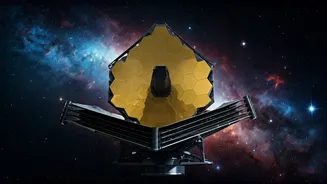
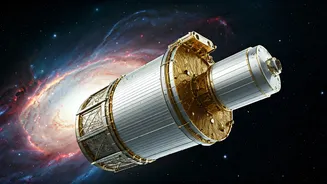
NASA's latest space telescope represents a significant leap forward in astronomical technology. Constructed with advanced mirrors and sensors, this telescope is designed
to capture images and data with unparalleled precision. The primary mirror, a crucial component, is carefully crafted to collect and focus light from distant celestial bodies. In addition to its optical capabilities, the telescope is equipped with a suite of cutting-edge instruments. These instruments enable scientists to study a wide range of cosmic phenomena, including the formation of galaxies, the characteristics of exoplanets, and the composition of interstellar space. Furthermore, the telescope's design emphasizes durability and efficiency, enabling it to function optimally in the harsh conditions of space. These technological advancements collectively provide an unprecedented opportunity to observe and analyze the universe in unprecedented detail. This telescope's innovative features make it a powerful tool for scientific discovery.
Mission's Scientific Goals
The primary goal of the telescope's mission is to enhance our understanding of the universe's origins and evolution. Scientists plan to use the telescope to observe the early universe, aiming to identify the first galaxies and stars. By analyzing the light from these distant objects, they hope to gain insights into how the universe formed and how galaxies and stars came to exist. In addition to studying the early universe, the telescope will also focus on exoplanets, which are planets orbiting stars outside our solar system. The telescope is equipped to detect the presence of water and other elements in the atmospheres of exoplanets, potentially revealing whether these planets could support life. Furthermore, the telescope will be used to explore the properties of black holes and other extreme objects in the universe. Scientists hope to gather new data on these phenomena to test existing theories and expand their knowledge of the universe. The mission's varied scientific objectives promise a wealth of information.
Impact & Future Prospects
The launch of NASA's new space telescope is poised to revolutionize the field of astronomy. The data it collects will provide scientists with unprecedented views of the cosmos, leading to significant advancements in our understanding of the universe. This will enable us to refine existing theories and develop new ones about the formation, evolution, and composition of celestial objects. The telescope's observations could lead to breakthrough discoveries about exoplanets, possibly finding the first signs of life outside Earth. It will also offer new insights into black holes and other extreme phenomena, deepening our understanding of fundamental physics. Furthermore, the success of this mission will inspire future space exploration endeavors, paving the way for more ambitious projects. The telescope's impact extends beyond scientific circles, as its findings will captivate the public and encourage curiosity about the universe. This mission represents a significant milestone in space exploration and promises to reshape our knowledge of the cosmos.