


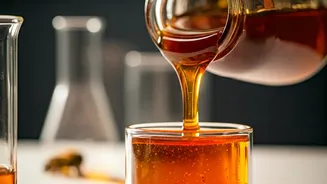


The Purity Predicament
Honey has been cherished for millennia for its natural sweetness and remarkable health properties. However, the integrity of this golden elixir is under
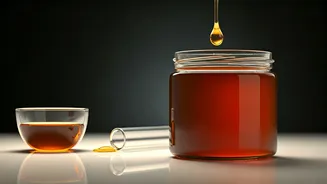
threat due to widespread adulteration. This practice involves mixing pure honey with cheaper substances like corn syrup, cane sugar, or molasses, significantly diminishing its beneficial compounds such as antioxidants and enzymes. Consumers are often deceived, paying premium prices for diluted or entirely synthetic products. Given that fake honey is frequently marketed at prices comparable to pure honey, equipping oneself with straightforward methods to authenticate honey is no longer just prudent, but essential for health-conscious individuals.
The Simple Water Check
One of the most straightforward methods to gauge honey's authenticity involves a basic water test. Begin by carefully adding a teaspoon of honey to a glass of water without agitating it. If the honey is pure, its density will cause it to sink to the bottom of the glass as a cohesive lump. In contrast, if the honey begins to dissolve rapidly or disperses into the water almost immediately, it strongly suggests the presence of added sugar syrups or other foreign agents. While this test is remarkably easy to perform, it's advisable to corroborate its findings with additional checks for a more definitive assessment of your honey's purity.
Heating for Authenticity
The reaction of honey when subjected to gentle heat can also offer significant insights into its composition. When pure honey is warmed for approximately 30 seconds, it typically caramelizes and emits a subtle, pleasant aroma reminiscent of caramel. However, if the honey exhibits excessive frothing, rapid bubbling, or begins to burn prematurely, this behaviour often signals the incorporation of excess moisture or other foreign elements. These reactions are commonly associated with the addition of ingredients like sugar syrup or molasses, which alter honey's natural thermal properties and can lead to undesirable outcomes.
Unveiling Texture Truths
The texture of natural honey undergoes a transformation over time, and the process of crystallization is, in fact, a positive indicator of its purity. Pure honey can crystallize after a period of storage due to the action of an enzyme known as glucose oxidase, which gradually reduces the moisture content. Conversely, if a jar of honey maintains a consistently syrupy consistency for many months without any change in its texture, it could be a red flag. This lack of crystallization might suggest that the honey has undergone extensive processing or has been adulterated with other substances to prevent this natural phenomenon.
The Vinegar Foam Test
Another expedient technique for assessing honey's purity utilizes common household vinegar. Pure honey possesses a naturally acidic pH, meaning that when a few drops of vinegar are introduced, there should be no discernible visual reaction. However, if the honey begins to foam or exhibit effervescence, this response can indicate that additives have been incorporated, thereby disrupting its natural chemical equilibrium. Experts recommend employing a combination of two or three of these simple tests to gain a more reliable understanding of whether the honey you are using is indeed pure or has been adulterated.