





The Sticker Dilemma
The Food Safety and Standards Authority of India (FSSAI) has recently issued a noteworthy advisory, prompting consumers to reconsider their habit of consuming
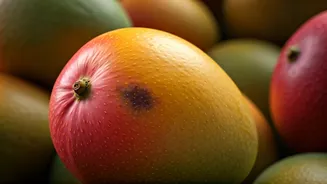
fruits and vegetables that bear stickers. While these labels are a ubiquitous presence in our daily grocery shopping, often aiding in identification and pricing at retail points, FSSAI emphasizes that the adhesives used in their manufacturing are not intended for ingestion. These stickers, commonly referred to as Price Look-Up (PLU) labels, serve vital functions in the supermarket environment, assisting in distinguishing between different types of produce, differentiating organic from conventionally grown options, and streamlining the billing and inventory processes. Although the sticker material itself is typically crafted from food-grade components, a critical concern arises from the nature of the adhesives. Experts highlight that these bonding agents may not be safe for consumption, especially when they come into contact with external contaminants like dirt, pesticides, or various types of bacteria found on the produce's surface.
Potential Health Hazards
Health professionals are raising awareness about the potential health implications of ingesting the residue left behind by fruit stickers. While a single, accidental encounter with these adhesives might not lead to immediate adverse effects, a pattern of repeated exposure could potentially introduce risks, particularly for vulnerable groups such as children. The primary concerns revolve around the unintended intake of chemicals that are not formulated for human consumption. Furthermore, these stickers can act as traps for undesirable elements, accumulating bacteria, dirt particles, and even residual pesticides from the fruit's skin. For individuals with more sensitive digestive systems, there's a possibility of experiencing mild gastrointestinal discomfort. It's crucial to understand that even if an adhesive is described as 'food-grade,' this designation pertains to its inert nature in contact with food during typical packaging processes and does not signify that it is safe for direct consumption.
Ensuring Safe Produce Consumption
Given that fresh fruits and vegetables are fundamental to a healthy diet for many in India, maintaining stringent food hygiene practices is of paramount importance. The FSSAI's advisory underscores a series of straightforward yet highly effective food safety measures designed to mitigate health risks. A primary recommendation is to always meticulously remove stickers from produce prior to consumption. Following this, thorough washing of fruits and vegetables under continuously running water for a minimum of five minutes is advised. For produce where it is feasible, peeling the skin can offer an additional layer of safety. Consumers are also encouraged to avoid biting directly into areas where stickers were previously adhered. For firmer produce items like apples and cucumbers, employing a clean brush to scrub the surface is a beneficial practice. It's important to note that the use of soaps, disinfectants, or any other cleaning agents on fresh produce is not recommended. Furthermore, perishable items should be stored appropriately in the refrigerator, and food should not be left exposed in vehicles or open environments. Maintaining clean kitchen surfaces and sinks after handling produce also contributes significantly to overall food safety.