





The Humble Potato's Journey
The ubiquitous potato, a staple in countless Indian dishes, did not always call India home. Its origins trace back to the high altitudes of the Peruvian-Bolivian
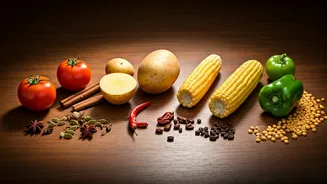
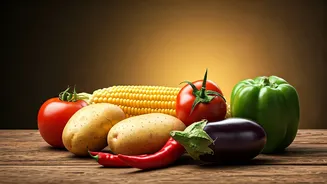
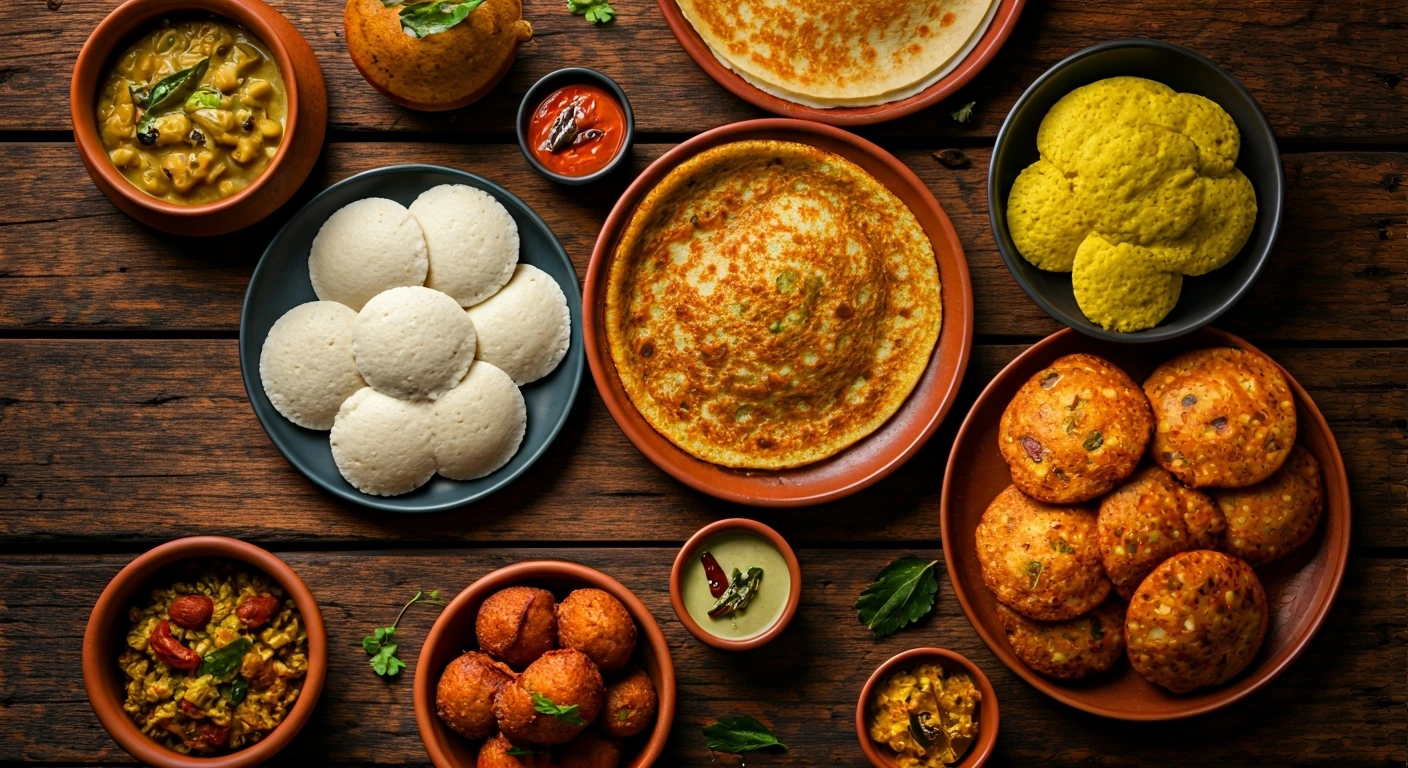
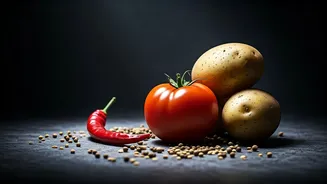
Andes. It made its way to Europe in the latter half of the 16th century and subsequently journeyed to India, brought by Portuguese traders as part of their introductions of New World produce. What's truly remarkable is the potato's effortless assimilation into Indian food culture. Over centuries, it found its way into regional culinary traditions so naturally that it's now almost impossible to imagine everyday cooking without it. From the fluffy stuffed parathas of North India to the crispy masala dosas of the South, the potato has become an inseparable part of the Indian gastronomic identity, despite its South American roots.
Tomatoes: India's Flavorful Fruit
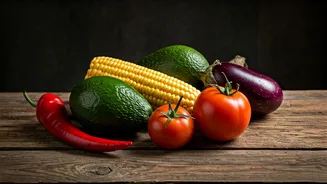
Today, tomatoes are fundamental to the rich gravies, tangy chutneys, and vibrant street food that define Indian cuisine. However, this essential ingredient isn't indigenous to the subcontinent. Originating in South America, the tomato was first introduced to Europe in the early 16th century. Initially, many Europeans regarded the fruit with caution, sometimes even considering it merely decorative rather than edible. Nevertheless, its inherent bright acidity and remarkable versatility facilitated its global journey across continents and culinary styles. Its arrival in India followed the same well-trodden Portuguese trade routes that brought other New World crops, eventually cementing its place in Indian kitchens.
Chilies: A Fiery Arrival
While it's difficult to envision Indian cooking without its characteristic heat, the chili pepper itself is a relatively recent addition. Native to the Americas, these fiery pods arrived in India during the 16th century via Portuguese trade, as part of the vast Columbian Exchange. Prior to their introduction, Indian kitchens relied on ingredients like black pepper, long pepper, ginger, and mustard to impart spice. The transition wasn't instantaneous; for many years, chilies coexisted with older spices. However, they gradually became more affordable, easier to cultivate, and widely accessible across various regions. Farmers found them well-suited to diverse climates, while cooks discovered their adaptability in curries, pickles, chutneys, and everyday tempering, ultimately revolutionizing regional cuisines.
Cashews: From Erosion Control to Delicacy
Cashews might feel like a quintessential Indian snack, but the cashew tree's origin lies in northeastern Brazil. Portuguese traders and missionaries introduced them to India in the late 16th century, initially planting them along coastal areas with the primary aim of combating soil erosion. What began as a utilitarian crop for land management gradually evolved into a cherished culinary item. Cashew trees thrived particularly well in regions like Goa, Kerala, and parts of coastal Karnataka, becoming intertwined not only with food but also with local economies and seasonal harvesting practices. Over successive generations, the nut shed its foreign perception and became fully integrated into India's food identity, gracing festive sweets, rich curries, and everyday snacks.
Pineapple's Tropical Entry
The pineapple represents another tropical delight that found its way to India long after many of the nation's established food traditions had taken root. Hailing from South America, this exotic fruit traversed oceans through Portuguese trade networks during the 16th century, reaching Indian shores around the mid-1500s. Its adaptability to tropical climates proved advantageous, especially in the coastal and northeastern parts of the country, where it gradually became a part of local dietary habits. Today, the presence of pineapple is widespread, appearing from bustling street-side fruit stalls to elaborate festive desserts and regional dishes.
Papaya: A Sweet Integration
The papaya, with its succulent sweetness, now appears perfectly at home in Indian markets and kitchens. However, its origins are rooted in Mexico and Central America. Portuguese traders were instrumental in introducing New World fruits, including the papaya, to India during the 16th century. Much like several other crops that followed a similar trajectory, the papaya arrived as an unfamiliar entity. Its persistence and eventual widespread acceptance can be attributed to the way Indian kitchens embraced and adapted it, making it a beloved part of the local palate and a common sight in markets across the country.