






The Silent Hunter
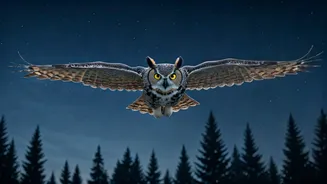
The Barn Owl, instantly recognizable by its distinctive heart-shaped facial disc and pale plumage, is a quintessential nocturnal predator. Its primary
hunting advantage lies in its incredibly acute hearing, allowing it to pinpoint the exact location of prey, such as mice and voles, even in absolute darkness. This precision is further enhanced by its uniquely adapted wings, which generate almost no sound during flight, enabling it to descend upon unsuspecting victims with astonishing stealth. The haunting, ethereal screeches often associated with barn owls only add to their enigmatic presence in the nighttime soundscape, making them a symbol of the nocturnal world's quiet efficiency and ghostly allure. Their success is a testament to specialized evolution for life in low light conditions.
Camouflage and Catch
Often confused with owls due to their nocturnal habits, Tawny Frogmouths are masters of disguise, spending daylight hours perfectly camouflaged against tree trunks and branches. When night falls, however, they transform into adept hunters, primarily targeting insects, small mammals, and even amphibians. What sets them apart from owls is their unique hunting method; instead of using sharp talons, they employ their broad, powerful beaks to snatch prey. This specialized mouth structure, capable of opening exceptionally wide, allows them to effectively capture flying insects mid-air and secure other small creatures with remarkable dexterity. Their ability to blend in so seamlessly during the day makes their nocturnal prowess all the more impressive and mysterious.
Twilight Insectivores
The Common Nighthawk is a marvel of aerial agility, perfectly adapted for a life spent hunting in the fading light of dusk and the first hints of dawn. Its diet consists predominantly of flying insects, such as moths and beetles, which it intercepts with remarkable speed and maneuverability. The bird's cryptic coloration provides excellent camouflage against its surroundings, making it difficult to spot even during its active hours. While many nocturnal birds are strictly active in the dead of night, nighthawks are classified as crepuscular, meaning they are most energetic during these transitional periods. Their characteristic, high-pitched "peent" calls are a familiar and distinctive sound that cuts through the twilight, signaling their presence in the aerial hunt.
Regal Night Predator
The Great Horned Owl stands as one of the most powerful and versatile nocturnal hunters in its domain. Its striking, large yellow eyes are exceptionally well-suited for gathering the scant light available at night, providing superior vision for locating prey. Coupled with its formidable physical attributes, including incredibly sharp talons, this owl can successfully hunt a wide array of creatures, ranging from small rodents and rabbits to even other birds. The deep, resonant hooting sound produced by the Great Horned Owl is an iconic and unmistakable vocalization that frequently punctuates the stillness of the wilderness after sunset, serving as a powerful announcement of its presence and hunting prowess.
Cave Navigator Extraordinaire
In a remarkable departure from most nocturnal birds, the Oilbird possesses an extraordinary adaptation: echolocation. This unique ability, akin to that of bats or dolphins, allows it to navigate through the absolute darkness of the caves where it typically roosts during daylight hours. Primarily found in South America, these fruit-eating birds emerge at night to forage for their preferred foods, such as palm and avocado fruits. By emitting a series of clicking sounds and interpreting the returning echoes, the oilbird can accurately perceive its surroundings, detect obstacles, and locate food sources, making it one of the very few avian species known to utilize echolocation. This specialized skill adds a profound layer of mystery and wonder to its already unique existence.
Nocturnal Wading Hunter
Shifting from aerial to aquatic environments, the Black-crowned Night Heron presents another fascinating example of nocturnal adaptation within the bird world. Unlike owls or nightjars, this waterbird actively hunts in shallow aquatic habitats under the cover of darkness. Its diet typically includes fish, amphibians like frogs, and crustaceans, which it patiently stalks. Characterized by its hunched posture and distinctive, piercing red eyes, the night heron exhibits incredible patience before launching a swift, decisive strike to capture its meal. The haunting, resonant calls of this heron are a characteristic sound heard near wetlands and coastal regions after sunset, adding to the mystique of its nighttime fishing expeditions.