


Porosity: The Unsung Hero
Many of us mistakenly focus on hair textures like curls or straightness when choosing hair products, often ending up with a collection of seldom-used bottles.
However, hair scientists, known as trichologists, emphasize that the crucial factor for healthy hair isn't your curl pattern, but rather your hair's porosity. Think of porosity as your hair's ability to absorb and retain moisture. It dictates how readily your hair takes in hydration and, more importantly, how well it holds onto it. Without understanding your hair's porosity, your hair care efforts are essentially guesswork, leading to frustration and ineffective product choices. This fundamental understanding is the first step towards truly nourishing your hair and achieving desired results.
Decoding Your Hair's Cuticle
To grasp hair porosity, visualize your hair strand as having an outer layer resembling roof shingles, referred to as the cuticle. The way these 'shingles' lie determines how your hair interacts with moisture. When the cuticle is tightly closed, it acts as a barrier, preventing moisture from entering. Conversely, if the cuticles are open or damaged, moisture can easily seep in but also escapes just as rapidly. Your hair's behavior with water and products will fall into one of two primary categories based on how these cuticles function, offering insight into its unique needs.
Low Porosity: The Fortress Hair
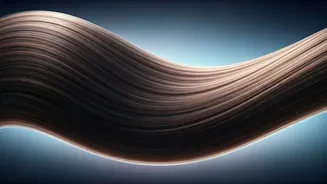
If water seems to simply roll off your hair in the shower, and conditioning oils feel like they're just sitting on top, making your hair greasy rather than moisturized, you likely have low porosity hair. In this type, the hair cuticles are densely packed and lie very flat, making it difficult for moisture to penetrate the hair shaft. This can result in hair that takes an exceptionally long time to become fully saturated when wet and an equally long time to air dry, often remaining damp for hours. Heavy moisturizing products like thick butters can weigh down low porosity hair, leaving it feeling heavy and unpleasant. The key to managing low porosity hair is to help open the cuticles. Applying heat during conditioning treatments, such as using a steam cap or a warm towel, can aid in lifting the cuticles to allow moisture absorption. It's also advisable to avoid heavy butters and instead opt for humectants like glycerin, honey, and aloe vera, which attract moisture. Regular clarifying treatments are essential to prevent product buildup, which can further hinder moisture penetration.
High Porosity: The Thirsty Sponge
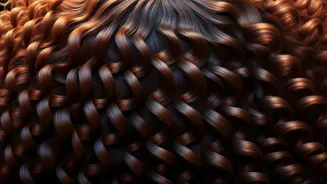
In contrast, high porosity hair is characterized by gaps and openings in the cuticle layer. These imperfections are often a result of chemical treatments, excessive heat styling, or even genetic predisposition. This hair type readily absorbs moisture upon contact, but due to the open cuticle structure, it loses that hydration just as quickly, leading to a constant cycle of dryness. Signs of high porosity hair include rapid saturation when wet, extremely fast drying times (sometimes in under an hour), and a tendency towards frizz, tangles, and a dull appearance. The primary goal for high porosity hair is to effectively seal in moisture. Since the hair struggles to retain hydration on its own, implementing methods like the LOC (Liquid, Oil, Cream) technique is beneficial. This involves layering moisturizing liquids, followed by heavier oils and then a cream to create a protective barrier. Rich sealants such as castor oil or shea butter are excellent for this purpose. Incorporating protein treatments, which can include ingredients like wheat, silk, or keratin, can help to fill in the gaps within the cuticle, strengthening the hair and improving its ability to retain moisture.
Testing Your Hair's Porosity
While the popular 'hair float test' in a glass of water is often unreliable due to surface tension or residual product on the hair strands, a more accurate method is the spray bottle test. To perform this, take a clean, dry section of your hair. Mist it with water using a spray bottle. Observe how the water interacts with your hair: if the water beads up on the surface, it indicates that your hair has low porosity, meaning it struggles to absorb moisture. If the water soaks into the hair strands almost immediately, it suggests that you have high porosity hair, which absorbs moisture quickly but also loses it just as fast. This simple, at-home test provides a practical way to determine your hair's porosity and guide your product selection.
Choosing the Right Products
The ultimate takeaway for effective hair care lies in understanding your hair's porosity and tailoring your product choices accordingly, rather than relying on marketing claims about curl types. For individuals with low porosity hair, the focus should be on lightweight, water-based hydration products that can penetrate the tightly closed cuticles without weighing the hair down. Conversely, those with high porosity hair will benefit most from products rich in proteins and heavy sealants. These ingredients help to repair the damaged cuticle layer and create a barrier that prevents moisture from escaping, thus maintaining hydration and improving hair health. By reading ingredient lists and understanding what your hair truly needs based on its porosity, you can make informed purchasing decisions that will lead to healthier, happier hair and save you money in the long run.