
Cosmic Race, Human Health
The contemporary pursuit of space is more than just a race for discovery; it's a pivotal moment for enhancing human well-being. Unlike past endeavors,
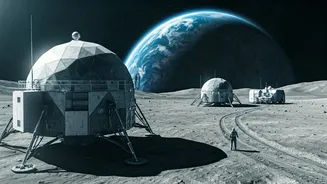
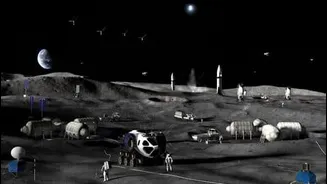
this era is defined by sophisticated technologies like self-landing rockets and reusable spacecraft, fueling ambitions to find extraterrestrial life and establish future human habitats. This intensified focus on space is concurrently opening up novel avenues for scientific research, particularly in the realm of human health. Institutions like the University of Pittsburgh Health Sciences Center are actively leveraging spaceflight to delve deeper into health-related scientific inquiry, demonstrating a significant shift in how we approach medical research by looking beyond Earth's atmosphere for solutions. This transformative approach is driven by the substantial investments made by governments and organizations worldwide, aimed at optimizing astronaut health and longevity, with the exciting prospect that these very solutions could yield substantial benefits for individuals on Earth.
NASA's Health Initiatives
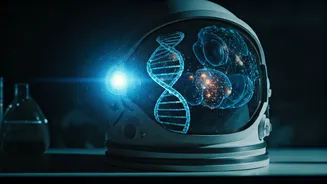
NASA is at the forefront of exploring the intricate relationship between space travel and human health, spearheading numerous projects focused on precision health. By meticulously studying how the extreme stressors of space impact the human body, scientists are gaining invaluable insights that can be directly applied to understanding and treating conditions on Earth. A prime example is NASA's comprehensive approach, which investigates a quartet of critical areas: how organs respond to prolonged exposure to various stressors, the mechanisms of aging and disease progression in human tissues under novel environmental factors, the enhancement of synthetic biology through the engineering of molecules and vitamins, and the complex process of human acclimatization to diverse climates and surroundings. These investigations serve as a powerful proxy for a wide range of terrestrial health challenges, offering a unique lens through which to develop more effective treatments and therapies.
Repurposing Space Technologies
The ingenious solutions developed for the highly resource-constrained environment of space travel are proving to be remarkably adaptable and beneficial for applications on Earth. As highlighted by the Trivedi Institute, technologies initially designed for the rigors of space can be effectively repurposed to aid patients, especially in settings with limited infrastructure. This includes critical areas such as disaster response, rural medicine, military operations, and humanitarian missions, where innovative and robust solutions are essential. The institute further elaborates that their work to bridge the gap between space travel and human health aims to tackle the field's most formidable challenges. The unique conditions of space, such as microgravity and intense radiation, accelerate biological processes like cell growth and disease development, offering a compressed timeframe for scientific discovery that could dramatically shorten the path to major breakthroughs. This harsh environment also serves as an unparalleled testing ground for advancing human health solutions applicable to underserved communities on Earth, a strategic objective for organizations like Pitt Health Science.
Space: A Hub for Innovation
Space is rapidly emerging as a dynamic nucleus for scientific advancement across a multitude of disciplines. In recent years, a significant interest has been shown by various companies in harnessing space-based resources, particularly for powering the burgeoning artificial intelligence sector. The increasing economic viability of space travel, spurred by technological innovations, suggests this trend will only accelerate in the coming years. This growing accessibility to space is not only fueling commercial enterprises but is also creating unprecedented opportunities for medical research. The ability to conduct experiments in a controlled, unique environment, free from many terrestrial influences, allows scientists to isolate variables and observe biological processes in ways that are simply not possible on Earth. This promises to unlock new understandings of human physiology and disease, potentially leading to paradigm shifts in healthcare.