






Bridging The Rehabilitation Gap
Stroke remains a significant cause of long-term disability, placing a considerable caregiving burden on families, who often lack specialized training.
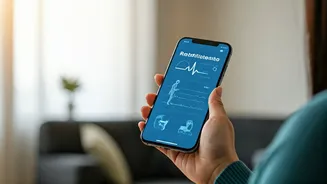
Recognizing this challenge, researchers at PGI, Chandigarh, have developed a pioneering mobile application-based strategy to enhance post-stroke recovery within domestic settings. This digital innovation, dubbed the 'Stroke Home Care' (SHC) application, is an educational platform that guides caregivers in providing consistent and timely support to stroke survivors. The initiative, born from the expertise of neurologists and a multidisciplinary team at PGI and further developed in collaboration with institutions like IIT-Ropar, AIIMS-Rishikesh, and Dalhousie University, Canada, aims to tackle the limitations in accessing rehabilitation services in resource-constrained environments. It leverages technology to deliver crucial information and practical steps, especially vital in a country like India where such support can be scarce. This approach seeks to mitigate post-stroke complications, which are often manageable with the right knowledge and timely intervention, thereby improving the quality of life for those affected by stroke.
Empowering Caregivers Through Technology
To precisely understand the needs of stroke survivors and their caregivers, an initial screening of 170 individuals was conducted. This study identified the most prevalent post-stroke complications and essential rehabilitation requirements. Follow-up assessments at three and six months confirmed a substantial occurrence of these complications, highlighting the urgent necessity for structured home-based care solutions. Crucially, over 80% of caregivers reported being active smartphone users and expressed a strong willingness to adopt a dedicated mobile application for patient care. Responding to these insights, the SHC app was meticulously developed. Its feasibility was then rigorously tested with 30 patient-caregiver pairs, yielding highly positive results. An impressive 75% of participants rated the app favorably, with the remainder also expressing satisfaction. Notably, no participant reported any dissatisfaction with the app’s usability or content, underscoring its user-friendly design and effective information delivery. This feedback loop was instrumental in refining the application to meet real-world needs.
Content Validation and Impact
The educational content within the 'Stroke Home Care' application underwent a rigorous validation process, involving a distinguished panel of 20 stroke experts. This group comprised seasoned neurologists, nurses, physiotherapists, and psychologists, all of whom unanimously endorsed the app's appropriateness. They specifically lauded the clarity of the instructional videos, the conciseness of the learning modules, and the intuitive navigation. Feedback from caregivers echoed this expert approval, with users reporting that the app was simple to install and operate, significantly enhancing their understanding of patient care at home. The researchers posit that this application holds substantial potential to alleviate the strain on healthcare facilities by equipping caregivers with the necessary knowledge and tools for early intervention and proactive management of potential issues. This empowers families to handle complications such as bedsores, aspiration pneumonia, urinary tract infections, frozen shoulder, and deep vein thrombosis with greater confidence, ultimately aiming to elevate the quality of life for stroke survivors by ensuring timely and effective management of often-preventable complications.
Future Potential and Limitations
Despite its promising outcomes, the study acknowledges certain limitations inherent in the current iteration of the 'Stroke Home Care' app. The application's feasibility was assessed with a relatively small participant group, and its availability is presently restricted to Hindi and English languages. This linguistic constraint could potentially limit its reach and effectiveness in regions where these languages are not commonly spoken. Furthermore, the app's primary focus is on supporting bedridden or severely disabled patients, which might mean it offers less direct benefit to stroke survivors who regain mobility. Nevertheless, the research team regards the app as a significant and encouraging innovation in the field of neurorehabilitation. They are proposing a larger, randomized controlled trial to further substantiate its effectiveness and explore its seamless integration into established stroke care protocols. Experts anticipate that such digital interventions can play a transformative role in bridging the divide between hospital-based treatment and sustained home-based recovery, especially with the increasing penetration of smartphones across India, making scalable and cost-effective solutions like the SHC app a vital component of long-term stroke management.