






Where to Point Your Eyes
To witness the Eta Aquarid meteor shower in 2026, you'll want to orient yourself towards the constellation Aquarius. For observers located in the Northern
Hemisphere, this celestial shower will appear quite low on the horizon, originating from that specific star grouping. However, those situated in the Southern Hemisphere are in for a treat, as the radiant point for the Eta Aquarids ascends much higher in the sky, making it one of the premier meteor events of the year for that region. The constellation Aquarius itself is positioned at a right ascension of 23 hours and a declination of -15 degrees, and is best viewed between latitudes of 65 degrees North and 90 degrees South. Understanding the radiant's position is crucial for pinpointing the shower's origin, though meteors can appear anywhere in the sky.
Timing Your Celestial Show
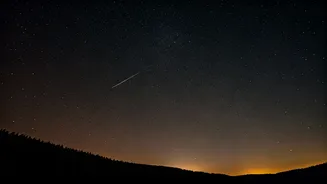
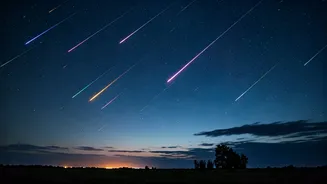
The prime time to catch the Eta Aquarid meteor shower in 2026 is during the early morning hours of May 6, just before the sun begins to rise. At this point, the constellation Aquarius, the shower's radiant, will be at its highest elevation in the sky, offering the most favorable viewing conditions. While the peak activity occurs on this specific date, a broader window of activity usually spans several days around the peak. It's worth noting that the moon's phase can significantly impact visibility; in 2026, the peak occurs shortly after the May 1st full moon. This means the moon will be approximately 81% illuminated during the shower's zenith, and its bright glow may obscure fainter meteors. Despite this lunar interference, the Eta Aquarids are renowned for occasionally producing spectacular 'fireballs' – exceptionally bright meteors that blaze across the sky with vivid trails.
Understanding the Cosmic Origins
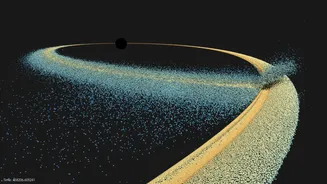
Each Eta Aquarid meteor you witness is actually a tiny fragment of the famous Halley's Comet, which enters Earth's atmosphere and ignites upon entry. Halley's Comet is a periodic celestial body, making its appearance in Earth's neighborhood roughly every 75 years. Its last close encounter was in 1986, and it is anticipated to return in 2061. This iconic comet, officially designated 1P/Halley, bears the name of the English astronomer Edmond Halley, who first calculated its orbit and predicted its return. As Earth passes through the debris trail left behind by Halley's Comet each year, these small particles from the comet burn up, creating the meteor shower we observe.
Maximizing Your Viewing Experience
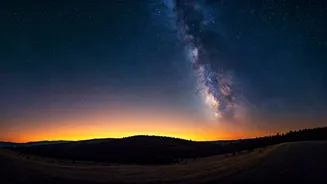
To make the most of your Eta Aquarid meteor shower observation in 2026, several practical tips can enhance your chances of seeing more shooting stars. Firstly, seek out a location that is as far removed from artificial light pollution as possible. Urban areas with their bright lights will significantly diminish the visibility of fainter meteors. Once you've found your dark sky spot, dedicate at least 20 to 30 minutes to allow your eyes to fully adapt to the darkness. It's crucial to resist the temptation to look at your phone or any other bright screens during this adjustment period, as even brief exposure can reset your night vision. Additionally, dress warmly, as meteor watching can involve extended periods outdoors, and the pre-dawn hours can be chilly. Meteors don't always appear at a constant rate; they can come in bursts, so giving yourself an hour or two to observe is recommended to fully appreciate the shower's potential.