







A Vision for Preservation
Iftekhar Ahsan, the founder of Calcutta Walks, observed Kolkata's rapid modernization and felt a deep urge to safeguard its historical fabric. Witnessing
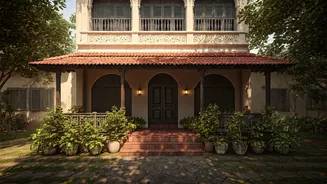
the city's heritage gradually fade amidst new developments, he recognized the urgent need for tangible actions beyond mere historical tours. This realization sparked his quest for a property that could be restored and revitalized, serving as a living testament to Kolkata's glorious past. His search led him to the Shyam Bazar neighborhood, where he discovered a 1926 bungalow. This structure, built in a classical style contrary to the prevailing Art Deco trend of its era, represented a significant period in Calcutta's architectural history. Critically, the bungalow was structurally sound, a rarity among the many dilapidated buildings he had encountered. Its location within a close-knit community further cemented his decision, envisioning the property as a beacon of preserved heritage.
Architectural Echoes of Old Kolkata
The Calcutta Bungalow project aimed to encapsulate the best of old Kolkata's design ethos. The restoration focused on showcasing traditional craftsmanship and materials, particularly emphasizing the use of Burma teak for woodwork, a hallmark of older homes. Colored glass and intricate cast iron railings, characteristic of colonial-era balconies, were carefully incorporated to evoke a sense of nostalgia. For the flooring, the team selected red mandana stone, further grounding the hotel in regional aesthetics. To amplify its connection to Kolkata, a classic yellow Ambassador taxi was placed outside, a charming icon of the city's past. The design philosophy deliberately eschewed excessive modernization, opting instead to honor the quiet elegance and intimacy of an early 1900s upper-middle-class household. The approach prioritized preserving the building's original character and memories over a superficial polish, using reclaimed materials and upcycled elements.
Craftsmanship and Heritage Materials
The restoration meticulously preserved and revived traditional building techniques and materials. Elements like 'khorkhoris,' which are painted wooden window frames characteristic of old Bengali colonial houses, were repurposed. Some were transformed into artistic courtyard installations, while others found new utility as bedside tables, seamlessly blending historical fragments into functional design. Even the exposed brick walls tell a story, bound by an ancient mortar recipe. This unique mortar, prepared by skilled 'raj mistries' (bricklayers) from Murshidabad, utilized a blend of jaggery, wood apple pulp, fenugreek seeds, and betel nuts. The mixture underwent a curing process lasting several weeks, a testament to the enduring traditions and artisanal expertise involved. This conscious use of organic materials and age-old methods not only respects the building's history but also contributes to its structural integrity and breathable environment, allowing moisture to escape and preventing potential issues.
Narrative Rooms and Cultural Threads
Each room within the Calcutta Bungalow is designed to be a narrative in itself, drawing inspiration from distinct cultural threads of Kolkata's past. The 'Patuapara' room pays homage to Bengal's 'patuas,' scroll painters who used their art to narrate mythological and social tales. 'Jatrapara' is inspired by 'jatra,' the vibrant folk theatre of Bengal. The 'Boipara' room celebrates Kolkata's profound love for books, referencing the historic College Street book market. 'Sahibpara' offers an ode to the European influences that shaped the city's architecture and lifestyle. These thematic rooms are adorned with memorabilia that weave together stories of the city's everyday life, providing guests with an immersive experience that goes beyond mere accommodation, offering a route into the soul of old Calcutta.
Experiences Beyond the Bungalow
Beyond the architectural marvels and curated rooms, the Calcutta Bungalow offers guests a gateway to experiencing the multifaceted charm of Kolkata. Through Calcutta Walks, led by Iftekhar himself, visitors can embark on curated journeys. These include the 'White Town Walk' exploring colonial architecture in Dalhousie Square, and the 'Life by the River Walk' along the Hooghly, highlighting its importance from flower markets to artisan quarters. For culinary enthusiasts, a Bengali cooking experience and street food trails offer deep dives into local flavors. The 'Melting Pot Walk' traverses diverse neighborhoods like Bow Barracks and Burrabazar, showcasing cultural diversity, while the Park Street walk delves into its social life and colonial glamour. The 'Black Town Walk' in Sovabazar provides insights into traditional Bengali culture. Additionally, unique local experiences like playing chess with grandmasters, fishing in the East Calcutta Wetlands, or cycling from Victoria Memorial are available, enriching the visitor's connection to the city.