
Hubble's Betelgeuse Revelations
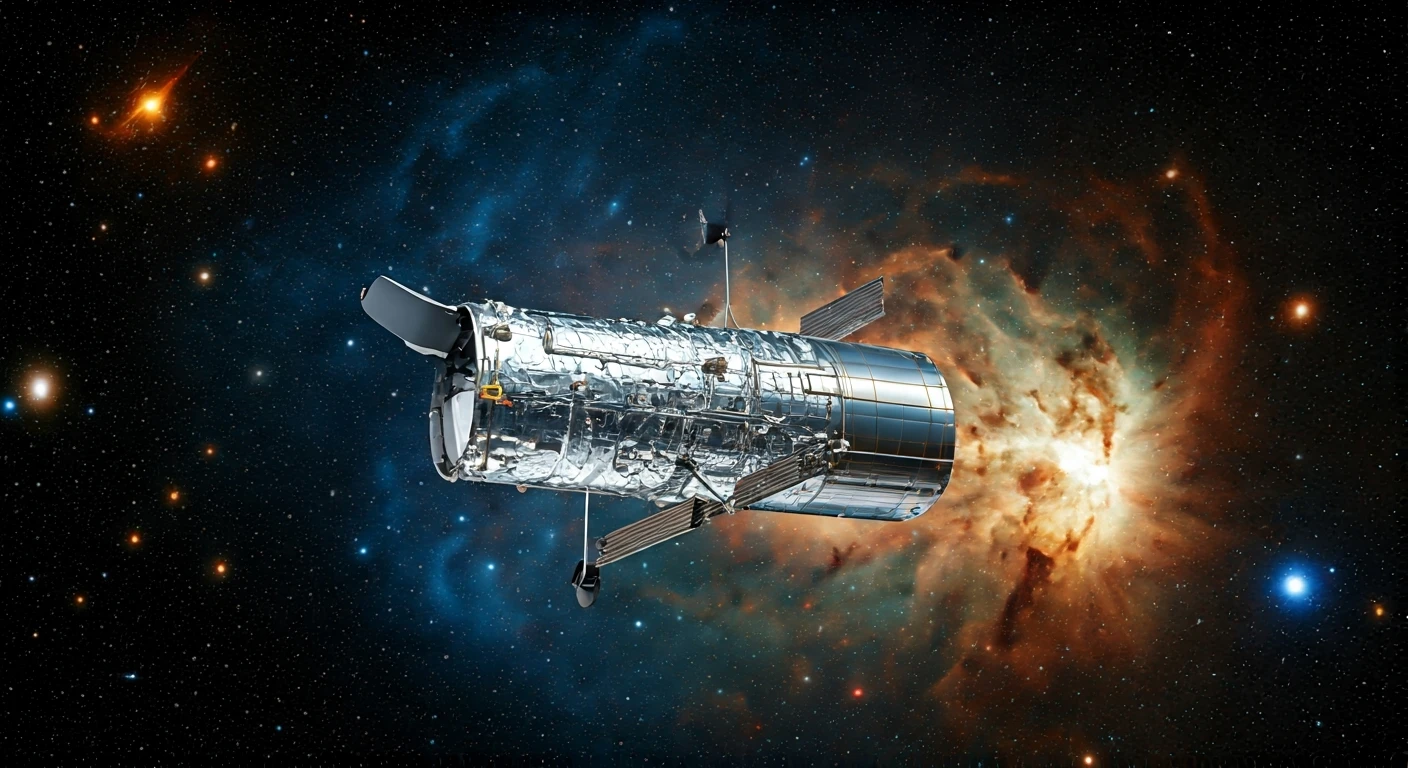
The Hubble Space Telescope has once again proven its prowess by capturing the wake of a hidden companion star to the supergiant Betelgeuse. This discovery
provides crucial insight into the dynamics and interactions within this binary star system. Betelgeuse, already a well-known star, has a companion that has remained obscured until now. This hidden partner is significantly smaller, providing a contrast in size to its supergiant counterpart. The observations reveal the impact of this unseen companion on Betelgeuse's surrounding environment, unveiling details about stellar evolution and the effects of gravitational interactions within binary systems. The Hubble's capabilities are highlighted in these observations, which allows us to get a much deeper understanding of the universe.
New Cosmic Object Unveiled
Hubble has also been instrumental in identifying a new type of cosmic object, leaving astronomers in awe. These discoveries prompt excitement and excitement within the astronomical community. The nature of this newly found object remains a subject of ongoing study and exploration. The initial observations from the Hubble indicate distinct characteristics that distinguish it from previously observed celestial bodies. Further analysis will be crucial in classifying and understanding its role in the wider universe. This recent finding emphasizes the value of continuous exploration, using advanced technological resources like the Hubble telescope, to push the boundaries of current knowledge and understanding within the scientific community.
Dying Stars: Dark Matter Insights
Beyond its stunning imagery, the Hubble is contributing to our understanding of some deeper concepts. The study of old, dying stars provides valuable clues about axions, which are theoretical particles proposed as a possible component of dark matter. Researchers analyze these stellar remnants to look for traces and signals that may provide evidence for the existence of these elusive particles. The detailed observations of the end stages of stellar life cycles offer a unique perspective. This can help researchers to refine theories about dark matter, by looking at how axions may interact with other cosmic elements and influence the behavior of dying stars. This research pushes the understanding of the composition of the universe, and helps understand its mysterious elements.
Beyond Hubble: Other Discoveries
While the Hubble Telescope has been central to recent space discoveries, there are several other notable events occurring within space exploration. Astronomers might have witnessed the first 'superkilonova' double-star explosion. Also, NASA's exoplanet-hunting spacecraft recorded a red giant star 'singing' to its black hole partner. Moreover, astronomers captured the first direct images of collisions within a star system. These developments, along with the discovery of the fastest-spinning asteroid, demonstrate the dynamic state of astronomical exploration. These discoveries point to the progress of space exploration, including the advancement of technology and research.
Looking Ahead: Future Exploration
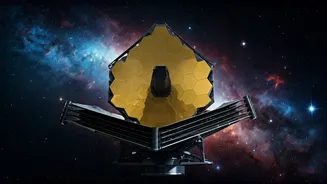
The scientific community is preparing for the future of space exploration with the development of next-generation telescopes. Former CEO of Google is spearheading the development of these advanced telescopes, with three based on Earth and one in space. The next generation of telescopes will expand the scope and accuracy of scientific discovery. These instruments will enable scientists to delve even deeper into the universe, revealing more about the cosmos. These advances promise to transform the current understanding of the universe, with fresh insights into cosmic phenomena.