





The Growing Orbit Concern
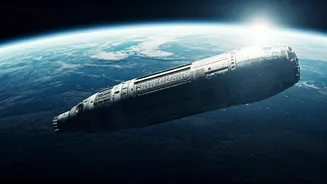
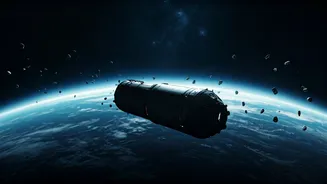
The vast expanse of space surrounding our planet is becoming increasingly cluttered with artificial objects, commonly referred to as space junk. This debris
ranges from defunct satellites and spent rocket stages to tiny fragments resulting from past missions and collisions. Scientists are particularly concerned about the potential for a cascading effect known as Kessler Syndrome. This alarming scenario suggests that as the density of debris increases, the likelihood of collisions also rises, generating even more fragments and creating a chain reaction that could render certain orbital paths unusable for future space endeavors. It's estimated that millions of objects larger than a centimeter, and tens of millions of even smaller particles, are currently in orbit, posing a significant and growing challenge to the safety and sustainability of space exploration.
Why Cameras Miss Debris
Despite the sheer volume of space debris, capturing it in photographs, even from advanced missions like Artemis II, is an exceptionally rare occurrence. The primary reason for this elusiveness lies in the nature of the objects themselves and the extreme conditions in space. Most pieces of orbital debris are incredibly small, far too minuscule to be perceived by the human eye, let alone resolved clearly by a camera lens. While the possibility of photographing a larger piece exists, the circumstances required are exceedingly precise. The immense velocities at which both the spacecraft and the debris are traveling create a significant blur, making it difficult to isolate and capture a distinct image. The odds of achieving a clear, identifiable photograph of space junk are therefore exceptionally low, akin to spotting a specific grain of sand from a speeding train.
Debris Location Matters
The distribution of space junk plays a crucial role in why it's not readily visible in mission photographs. The highest concentrations of orbital debris are predominantly found in low Earth orbit, typically residing at altitudes between approximately 466 and 621 miles above the planet's surface. During the initial phases of a space mission, such as the launch and ascent of the Artemis II, astronauts are intensely focused on critical flight operations. This demanding period leaves virtually no opportunity to divert attention or resources towards observing and photographing external objects. Furthermore, the incredible speed at which a spacecraft traverses these altitudes means that even larger debris objects would likely pass by too quickly to be recognized or captured in any meaningful detail, underscoring the difficulty in obtaining clear imagery.
Astronaut Safety Ensured
While space debris might be difficult to photograph, its presence in human spaceflight is a known reality. For instance, the International Space Station (ISS) routinely encounters minuscule particles of debris. However, spacecraft like the ISS are engineered with robust shielding and systems designed to withstand impacts from these tiny fragments. The probability of a catastrophic collision with a larger object remains relatively slim, due to the vastness of space and sophisticated tracking systems. Current technologies allow for the monitoring of potential hazards during space missions, providing astronauts and ground control with crucial data to mitigate risks. Although the problem of space debris is serious, the distances between objects in the immense cosmic environment mean that astronauts are not constantly navigating a dense field of junk, ensuring their safety remains paramount.