





The Rhythm of Rails
The ubiquitous "click-clack" sound of a moving train is a direct consequence of its wheels traversing the deliberate gaps present between sections of steel
rail. This percussive noise is not random but arises from the fundamental design of railway tracks. When the train's wheels, particularly those on a bogie which typically comprises a pair of wheels close together, roll along the continuous metal pathways, they encounter these intentional breaks. The first "click" is produced as a wheel descends into a gap and makes contact with the foremost edge of the subsequent rail segment. The almost immediate "clack" follows as the second wheel in the pair encounters the same gap. This rhythmic repetition is a hallmark of traditional track construction and is intrinsically linked to how these massive steel structures behave under varying environmental conditions.
Historical Track Design
The origin of the click-clack sound is rooted in the historical methods employed to construct railway lines. In earlier times, engineers used relatively short pieces of steel rail, which were then laid end-to-end to form the tracks. A crucial aspect of this method was the intentional inclusion of small spaces, or gaps, between these individual rail sections. These gaps were not an oversight but a necessary design feature to accommodate the physical properties of steel. Steel, like most materials, is subject to thermal expansion – it expands when heated, typically in the summer months, and contracts when cooled, as occurs during winter. Without these allowances, the immense forces generated by expansion and contraction could lead to severe track distortion and potential derailments, thus compromising safety.
Physics and Steel
The interplay between physics and steel is central to understanding the train's characteristic sound. As a heavy steel wheel glides over the rail, it eventually reaches one of the engineered gaps. The impact of the wheel dropping into this void and then striking the edge of the next rail section creates the distinct "click." Furthermore, the way rail sections are secured plays a role. While heavy steel plates and tightly bolted fasteners are used to hold the rails firmly in place, a minuscule amount of vertical movement can still occur at these joints. This slight give or flex amplifies the mechanical impact, turning a simple transition into an audible thud that contributes to the overall rhythmic noise. The design, therefore, balances the need for structural integrity with the necessity of allowing for natural material behavior.
Indian Railways' Network
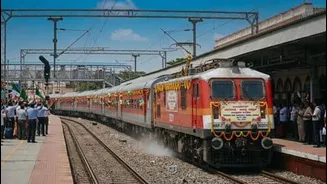
Indian Railways, a colossal entity in global transportation, operates one of the world's most extensive and intricate rail networks. Covering thousands of kilometers, these tracks traverse an incredibly diverse range of terrains, from plains to mountainous regions. To effectively manage this vast infrastructure, which includes a multitude of stations and a massive fleet of locomotives and coaches, the network is strategically divided into numerous operational zones. This organizational structure ensures efficient management of daily operations, maintenance, and the safe transit of millions of passengers and tons of freight. The classic click-clack sound is a familiar auditory companion to journeys across this immense network, a testament to the engineering that has evolved over decades.