



Sun's Volatile Outbursts
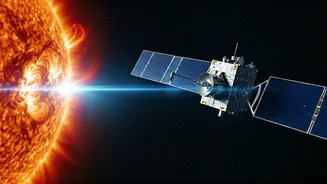
The sun is a dynamic celestial body, frequently unleashing energetic phenomena such as solar flares, coronal mass ejections, and solar radiation storms.
These events, collectively termed 'space weather,' can have profound impacts, extending far beyond our planet's atmosphere. For astronauts undertaking missions, like the recent Artemis 2 crew, these solar outbursts present a direct health hazard due to intense radiation exposure. Similarly, the sophisticated satellites that underpin much of our modern communication, navigation, and data systems are highly susceptible. Disruptions can range from temporary glitches to permanent damage, underscoring the urgent need for robust monitoring and predictive capabilities. Understanding the onset, trajectory, duration, and sheer intensity of these solar events is paramount in developing effective protective strategies.
SWPC's Mission Sharpened
In response to these growing vulnerabilities, the Space Weather Prediction Center (SWPC), a key component of the National Oceanic and Atmospheric Administration (NOAA) located in Boulder, Colorado, is dedicated to refining its space weather forecasting prowess. As the official U.S. government entity responsible for issuing alerts and warnings related to space weather, the SWPC diligently monitors solar activity. Its primary objective is to provide crucial solar-terrestrial information that can help mitigate the detrimental effects of solar outbursts on vital infrastructure, including satellite communications, global positioning systems (GPS), and terrestrial electric power grids. This continuous vigilance and commitment to improving predictive models are essential for maintaining the operational integrity of technologies we increasingly rely on.
Artemis 2 Protection
The critical role of space weather monitoring was vividly demonstrated during the 10-day Artemis 2 mission. Ground control teams maintained a round-the-clock watch, specifically looking for any signs of threatening solar radiation storms that could endanger the crew. SWPC Director Clinton Wallace emphasized that space weather poses an escalating threat to a wide array of technologies, and accurate prediction relies on informed decisions derived from meticulous observations and advanced modeling. He also highlighted that space weather forecasting is still in its nascent stages, decades behind terrestrial weather prediction. The SWPC is actively pursuing the development of more sophisticated models, leveraging both physics-based research and artificial intelligence, to enhance prediction accuracy while also quantifying uncertainty and associated risks.
Collaborative Testbed
A significant stride in bolstering space weather prediction capabilities has been the establishment of a dedicated testbed at the SWPC. Since taking the helm as Director in March 2019, Clinton Wallace has been a champion for this collaborative space. This specialized facility brings together customers, researchers, and forecasters to work synergistically on enhancing observational techniques, refining predictive models, and improving forecast products. In April and May of 2025, this testbed engaged over 70 participants from diverse organizations, including NASA, the U.S. Air Force, commercial space enterprises, and international research institutions, for Artemis 2-focused exercises. These simulations allowed participants to collaboratively navigate hypothetical radiation storm scenarios and rigorously evaluate space weather modeling methodologies.
Megaconstellation Hazards
Beyond safeguarding human spaceflight, the SWPC's efforts are also geared towards enabling technologies such as GPS satellites and the burgeoning megaconstellations like Starlink and Amazon's Project Kuiper to better withstand the impacts of solar weather. These satellites are particularly vulnerable; a significant solar storm in May 2024 inflicted substantial economic damage, estimated at over a billion dollars, impacting sectors like agriculture that depend on precision GPS. This same geomagnetic event exerted additional atmospheric drag on Starlink satellites, altering their orbits and potentially causing them to descend several kilometers. Such disruptions could lead to orbital congestion and increase the risk of collisions in low Earth orbit, threatening the sustainability of space operations.
Future Space Assets
The future of space weather monitoring and forecasting is being bolstered by a combination of new spacecraft and enhanced ground-based tools. These advancements promise more comprehensive forecasts with extended lead times. A recent addition to the SWPC's observational arsenal is NOAA's Space Weather Observations at L1 to Advance Readiness – 1 (SOLAR-1) satellite, launched in January and expected to be operational by late April. Positioned at Lagrange point 1, approximately one million miles from Earth, SOLAR-1 will provide continuous monitoring of the sun and space weather from an optimal vantage point. Furthermore, the SWPC eagerly anticipates the European Space Agency's Vigil satellite, slated for launch in the early 2030s. Vigil's unique side-view perspective of the sun will be instrumental in detecting hazardous solar activity, such as coronal mass ejections, before they become evident from Earth, enabling more timely predictions of their arrival.
Building Resilience
A key objective for the SWPC is fostering a 'space weather-ready nation.' Given our profound reliance on technology, our vulnerability to space weather events is increasing. While considerable progress has been made in the last decade, it is imperative to ensure that new scientific discoveries are effectively integrated into forecasting systems and infrastructure preparedness. To this end, the SWPC is collaborating with the Department of Homeland Security to establish benchmarks that define the potential magnitude and impact of solar storms. The recognition of space weather as a significant risk within the National Risk Register highlights a concerted governmental effort to fortify the critical infrastructure essential for daily life against these celestial threats.