




Blade Length Matters
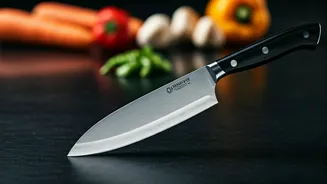
The length of a knife's blade significantly influences the pace at which you can prepare food. For larger tasks like slicing through a whole chicken, a long
blade is incredibly advantageous, requiring fewer strokes to complete the cut, thus boosting efficiency. Conversely, when dealing with smaller, more intricate tasks, a shorter blade offers superior control, though it necessitates more repeated movements, which can slow down overall preparation time for bulkier ingredients. The strategic choice of blade length can therefore make a substantial difference in how quickly and effectively you move through your cooking prep.
The Rocking Curve
A blade's curvature is a key element for tasks that involve a rocking motion, particularly when finely mincing herbs or dicing vegetables. This design ensures a portion of the blade remains in constant contact with the cutting surface, enabling fluid, rapid cuts and reducing the physical strain on your wrist and forearm. The smooth action facilitated by a curved edge allows for more effortless chopping, making repetitive motions less tiring and more productive for the cook.
Precision with Flat Edges
Knives featuring flat-edged blades provide complete surface contact with the cutting board, which is essential for achieving straight, exact cuts. This uniform contact is ideal when precision is paramount, such as when dicing onions, carrots, or garlic, ensuring uniformity in size. Such consistency in ingredient dimensions is crucial for even cooking and enhances the visual appeal of your dishes, making flat-edged knives indispensable for detailed prep work.
Thin Blades Glide
The reduced resistance offered by thin blades allows them to glide through food with greater ease, minimizing the effort required for cutting. This characteristic is particularly beneficial when working with softer ingredients like delicate vegetables or boneless meats, where minimal damage is desired. By cutting cleanly without crushing or tearing, thin blades help preserve the integrity of the food, ensuring a better final product and a more efficient preparation process.
Strength in Thickness
A knife's spine, the blunt edge opposite the cutting edge, plays a vital role in its overall robustness. A thicker spine imparts greater strength and durability to the blade, making it more suitable for tackling tougher ingredients, such as dense root vegetables or when butchering meat. While this might add a bit of weight, the enhanced resilience prevents the blade from bending or chipping under pressure, contributing to both safety and longevity in demanding kitchen environments.
Sharp Tips for Detail
The pointed, sharp tip of a knife is designed for meticulous tasks that demand a high degree of accuracy. This includes trimming excess fat from meat, scoring surfaces for better flavor penetration, or piercing ingredients to initiate cuts. The precision offered by the tip minimizes the need to switch between different tools, allowing cooks greater control and efficiency during intricate preparation stages where fine detail is crucial.
Wide Blades for Transfer
The width of a knife blade serves a practical purpose beyond just cutting; it aids significantly in the transfer of ingredients. A wider blade makes it easier to scoop up chopped food from the cutting board and move it directly into a pan or bowl. This dual function of cutting and transferring streamlines the cooking process, reduces mess, and saves valuable time by consolidating multiple steps into one fluid motion.
Balance Reduces Fatigue
A knife's balance, referring to the even distribution of weight between its handle and blade, is crucial for comfortable, prolonged use. When a knife is well-balanced, it reduces strain on the hand and wrist, enabling cooks to work for longer periods with increased comfort and control. This ergonomic consideration not only enhances productivity but also contributes to a safer working environment by minimizing the risk of fatigue-related accidents.