



Introducing Skyfall Helicopters
NASA, in collaboration with AeroVironment, is developing the 'Skyfall' mission, which will deploy six scout helicopters to the Martian surface. These advanced
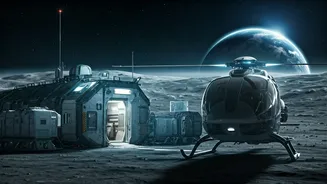
rotorcraft are designed to explore regions identified as prime landing zones for future human astronaut missions. Echoing the success of Ingenuity, the first helicopter to fly on another world, Skyfall's fleet will go beyond technology demonstration. Each helicopter will operate autonomously, collecting high-resolution imagery and subsurface radar data. This crucial information will assist in identifying landing sites rich in resources like water ice, vital for sustained human presence and aiding the search for signs of past Martian life. The 2028 launch marks a significant step in robotic exploration capabilities.
Nuclear Propulsion Breakthrough
The 'Skyfall' mission's journey to Mars in 2028 will be facilitated by a revolutionary spacecraft powered by nuclear electric propulsion (NEP). This marks NASA's first nuclear-powered interplanetary vehicle. Unlike traditional RTGs that utilize radioactive decay for power, NEP systems employ an onboard fission reactor to generate thermal energy, which is then converted into electricity to power highly efficient electric thrusters. This technology offers a consistent power source independent of solar distance, making it ideal for deep space exploration and future lunar bases. The spacecraft, tentatively named 'SR-1 Freedom,' is poised to establish critical flight heritage for nuclear hardware, regulatory precedents, and a robust industrial base for future fission power systems.
Broader Space Exploration Vision
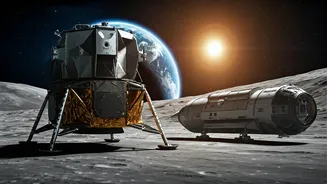
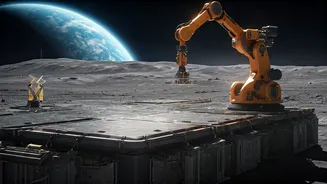
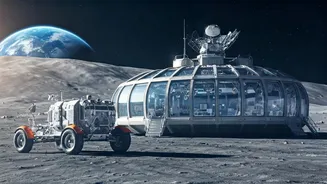
The 'Skyfall' mission and its accompanying nuclear propulsion technology are integral to NASA's broader strategic goals for space exploration. The agency, in partnership with the U.S. Department of Energy, is committed to unlocking the capabilities necessary for sustained exploration beyond the Moon, ultimately enabling journeys to Mars and the outer solar system. This forward-looking approach also influences current projects; for instance, NASA is re-evaluating its Gateway lunar-orbiting space station plans to prioritize the development of a surface-based lunar outpost, with some Gateway hardware potentially repurposed for its construction. This strategic shift underscores a growing emphasis on enabling long-term human presence and scientific endeavors across the solar system.