


What Defines True Caviar?
Caviar is a distinguished delicacy, specifically referring to salt-cured eggs derived solely from sturgeon species. These ancient fish, renowned for their
prized roe, traditionally hail from the vast Caspian and Black Seas. Iconic varieties such as Beluga, Osetra, and Sevruga represent the pinnacle of this exquisite food. Unlike generic fish roe, genuine caviar undergoes a meticulous curing process that imparts its unique, refined flavor profile and signature delicate texture. This careful preparation is a hallmark that sets it apart from the broader category of fish eggs, which can originate from a variety of other aquatic life and possess vastly different characteristics.
Beyond the Brine: Roe vs. Caviar
The term 'fish roe' encompasses the eggs of numerous aquatic creatures, including salmon, trout, capelin, and lumpfish, each offering a distinct culinary experience. However, these do not qualify as caviar. The crucial distinction lies in the origin; only the roe from sturgeon fish earns the title of caviar. Furthermore, the preparation methods diverge significantly. Caviar involves a specialized curing process that defines its luxurious quality and flavor, whereas other fish roes can vary immensely in taste, hue, and saltiness, often being consumed with different culinary intentions and preparations. This difference is fundamental to understanding why authentic caviar commands a premium.
The Premium Price Tag
The high cost of genuine sturgeon caviar is a direct consequence of several factors. Sturgeon, being slow-growing and infrequent producers of roe, coupled with the intricate and delicate nature of their processing, contribute significantly to the expense. Overfishing and the vulnerable status of many sturgeon populations have further restricted natural supply, necessitating regulated aquaculture. This inherent rarity, combined with the labor-intensive manual handling required for harvesting and preparing the eggs, firmly positions authentic caviar within the luxury market segment, explaining its elevated price point compared to other types of roe.
Visual Cues: Color & Sheen
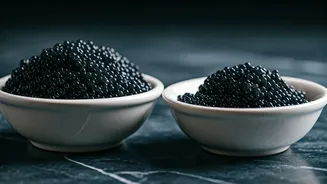
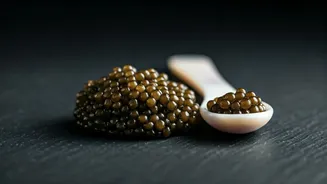
When presented with caviar, start by carefully observing its color. Authentic sturgeon caviar typically exhibits a spectrum of natural, subdued tones, ranging from deep charcoal grey and earthy olive to rich golden brown or classic jet black, all possessing a gentle, natural sheen. Be wary of caviar that appears unnaturally vibrant, uniformly dark, or excessively glossy; these characteristics often suggest the use of artificial dyes or enhancements to mimic the appearance of premium roe. A subtle, organic coloration is a key indicator of genuine caviar, serving as a visual warning sign if the color seems too intense or artificial.
Texture Tells a Tale
Examine the texture of the caviar pearls closely. Authentic caviar possesses distinct, firm eggs that remain separate and maintain their shape, not collapsing or becoming a homogenous smear on a spoon. If the pearls appear clumped together, mushy, overly soft, or sticky, it's a strong indication that you are not looking at genuine sturgeon roe. Cheaper substitutes, often derived from fish like lumpfish or capelin, tend to have a less refined texture, frequently adhering to each other or appearing unnaturally rigid rather than delicate and distinct, a stark contrast to the signature mouthfeel of real caviar.
The Palate's Verdict
A true test of authentic caviar lies in its flavor profile. Genuine caviar offers a mild, buttery taste with a subtle hint of salinity that quickly dissipates. It should never present a strong fishy undertone, a metallic tang, or an aggressively salty sensation. If the flavor feels harsh, overwhelming, or leaves an unpleasant lingering aftertaste, it is highly probable that you are consuming imitation roe. Restaurants employing less expensive alternatives often compensate with excessive salt to simulate richness, a practice that masks the delicate nuances of authentic caviar.
Menu Clues: Price and Names
The context in which caviar appears on a menu offers significant clues. If 'caviar' is casually incorporated into dishes like pasta, canapés, or appetizers at remarkably low prices, it's almost certainly not authentic sturgeon caviar. The inherent cost of genuine varieties means they are typically highlighted with specific, recognizable names such as Osetra, Sevruga, or Beluga. Vague descriptions like 'black caviar' or 'caviar garnish' often signal the use of less expensive, substitute roes intended for visual appeal rather than genuine luxury.
Descriptive Details Matter
Reputable dining establishments pride themselves on transparency regarding their ingredients. Menus that clearly specify the caviar's species, origin, or precise type are usually indicative of genuine product. When chefs feature authentic sturgeon caviar, they often proudly name it on the menu as a point of distinction. Conversely, if a server is evasive about details or casually refers to it as 'just regular caviar,' this vagueness can serve as a subtle hint that the ingredient is likely an imitation, used more for aesthetic effect than for true connoisseurship.