





Evolving Artemis Strategy
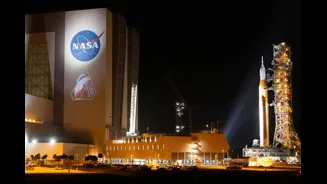
NASA is dynamically adapting its strategy for returning humans to the lunar surface, a significant update that reshuns the original timelines for the Artemis
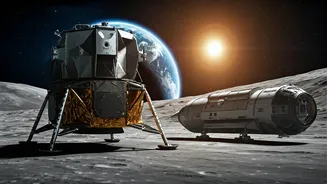
program. A pivotal change announced in late February is the rescheduling of the program's inaugural crewed lunar landing. This historic milestone, initially slated for the Artemis 3 mission, has been deferred to the Artemis 4 mission. Consequently, Artemis 3's objectives will shift, focusing instead on critical in-orbit operations. Astronauts aboard Artemis 3 will conduct extensive practice in Earth orbit, honing their skills in rendezvous and docking procedures. This essential training will involve the program's Orion spacecraft and one or both of the privately developed lunar landers, namely SpaceX's Starship and Blue Origin's Blue Moon. These preparatory steps are vital for ensuring the safety and success of future lunar surface expeditions.
Upcoming Missions and Timelines
The immediate focus for NASA's lunar endeavors is the Artemis 2 mission, which is currently being prepared for launch as early as April 1. This mission is designed to carry four astronauts on an exhilarating journey around the Moon, culminating in a safe return to Earth. Following Artemis 2, the Artemis 3 and Artemis 4 missions are targeted for subsequent years, with projections placing them in 2027 and 2028, respectively. These dates reflect the strategic adjustments made to the program, ensuring each phase is adequately resourced and technologically prepared. The agency's commitment to a phased approach underscores the complexity and ambition of returning humans to the Moon and establishing a sustainable presence there.
Live Broadcast Details
Today, March 24, NASA is hosting a comprehensive series of events to disseminate these updated plans for lunar exploration and other agency initiatives. These events are scheduled to occur throughout the day at NASA's headquarters in Washington, D.C. The overarching theme is the agency's execution of President Donald J. Trump’s National Space Policy, with a specific emphasis on accelerating the timeline for America's return to the Moon by the year 2028. Interested individuals can access live streams of three key events via NASA+. These broadcasts will commence at 9 a.m. EDT (1300 GMT) with "Ignition: NASA's Plan for the Moon." This will be followed at 1 p.m. EDT (1700 GMT) by "Ignition: NASA's Plan for Science and Discovery." The day's informational sessions will conclude with a news conference at 4:45 p.m. EDT (2045 GMT), providing a recap of the day's announcements and progress.
Key Speakers and Topics
The concluding news conference is expected to feature prominent figures within NASA's leadership, offering in-depth insights into the agency's strategic direction. Participants scheduled to speak include Administrator Jared Isaacman, Associate Administrator Amit Kshatriya, and Dana Weigel, program manager for the International Space Station Program. Also present will be Carlos Garcia-Galan, program executive for Moon Base; Steve Sinacore, program executive for Fission Surface Power; Dr. Nicola Fox, associate administrator of the Science Mission Directorate; and Dr. Lori Glaze, program manager for the Moon to Mars Program. This assembly of experts highlights the interdisciplinary nature of the Artemis program and the broad scope of NASA's lunar and Martian exploration objectives.