



The Gentle Gujarati Charm
Khandvi, a beloved creation from Gujarat, is a testament to subtle flavors and delicate textures. Its foundation is a carefully concocted batter of chickpea
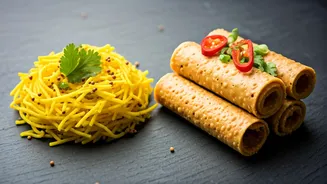
flour (besan) and buttermilk. This mixture undergoes a slow cooking process, eventually being spread thinly onto a surface to cool. Once set, it's skillfully rolled into elegant spirals, resembling delicate logs. The finishing touch involves a light, aromatic tempering of mustard seeds, curry leaves, and sesame seeds, often adorned with a sprinkle of fresh coconut or vibrant coriander. The result is a soft, mildly tangy snack that melts in your mouth, perfect for a peaceful tea-time indulgence or as a refined component of a traditional farsan platter, offering comfort and easy enjoyment.
The Fiery Tibetan Kick
Laphing presents a striking contrast, originating as a popular Tibetan street food that has found a vibrant niche in places like Delhi. Its core is a jelly-like noodle made from mung bean or wheat starch, lending it a distinctively slippery and chewy mouthfeel. Unlike Khandvi's gentle preparation, Laphing's appeal lies in its bold seasoning. The rolled starch sheets are generously coated in a potent mix of chili oil, pungent garlic, savory soy sauce, and tangy vinegar, often accompanied by various spice pastes. Served cold, Laphing is a powerful sensory experience – sharp, spicy, and intensely flavorful, demanding attention with every bite and leaving a lingering warmth that seasoned food lovers crave.
Cultural Roots and Ingredients
The divergence between Khandvi and Laphing begins with their cultural roles and fundamental ingredients. Khandvi embodies a sense of tradition, frequently prepared at home for family gatherings or served as a staple on celebratory platters, signifying comfort and heritage. Conversely, Laphing is intrinsically street food; it's designed for quick consumption, offering an immediate, robust flavor hit. Ingredient-wise, Khandvi relies on the humble besan and buttermilk for its subtle taste, while Laphing's character is entirely shaped by its starches and the vibrant symphony of sauces and spices it's dressed in, making their flavor profiles fundamentally different.
Preparation and Mouthfeel
The cooking processes and resultant textures of Khandvi and Laphing are vastly dissimilar. Crafting Khandvi demands precision and patience; any misstep can prevent the mixture from setting correctly, impacting the final delicate rolls. The focus is on achieving a light, melt-in-your-mouth sensation. Laphing, while requiring careful preparation of the starch sheets, emphasizes the assembly and generous application of its flavorful dressing over complex cooking techniques. Its texture is intentionally slippery and chewy, providing a more assertive and dramatic mouthfeel compared to the ethereal softness of Khandvi.
Flavor Intensity and Finish
The taste experience of Khandvi and Laphing is where their differences are most pronounced. Khandvi offers a mild, comforting tang that is easy on the palate, leaving a subtle, pleasant aftertaste. It’s a snack that soothes rather than surprises. Laphing, on the other hand, is unapologetically bold and spicy. Its intense flavors, driven by chili and garlic, deliver a powerful punch that can be both exhilarating and demanding, often prompting a need for a refreshing drink. The lingering sensation from Laphing is one of heat and spice, a stark contrast to Khandvi’s gentle finish.