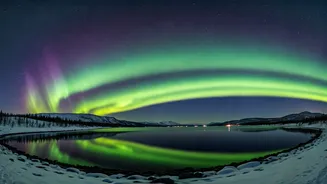








Aurora Overview
The Northern Lights, a breathtaking display of light, are a result of interactions between charged particles from the sun and Earth's atmosphere. These
particles, carried by solar winds, collide with atmospheric gases, creating vibrant colors in the sky. Forecasting auroras involves understanding solar activity and geomagnetic conditions. Several factors, including solar flares, coronal mass ejections (CMEs), and coronal holes, can significantly influence aurora displays.
Key Factors
Solar winds, the stream of charged particles from the sun, are a crucial element. Increased solar wind speeds often lead to enhanced aurora activity. Geomagnetic storms, disturbances in Earth's magnetic field, are another vital factor. These storms, triggered by solar events, can intensify and expand the aurora's visibility. Coronal mass ejections, powerful bursts of plasma from the sun, can cause significant geomagnetic storms. Coronal holes, areas of lower density in the sun's corona, release fast solar winds, impacting aurora displays. The Kp index, a measure of geomagnetic activity, helps predict the intensity and reach of the aurora.
Recent Forecasts
Numerous forecasts highlighted varying aurora possibilities. Dates like January 6th, January 20th, and March 26th featured predictions of favorable viewing conditions, especially at high latitudes, with elevated geomagnetic activity. December 30th and October 16th held potential for widespread displays. Periods of fast solar wind and incoming CMEs were frequently cited as drivers of aurora activity. On the other hand, many forecasts indicated calm conditions or limited aurora chances, as solar wind eased or activity waned, especially around dates like September 29th, July 7th, and January 7th. Some forecasts emphasized unsettled or minor storm conditions, suggesting potential for auroras, while others reported very quiet skies.
Notable Events
Several forecasts pointed to significant solar events. Earth-directed solar storms and CMEs, like the one expected around January 24th, were predicted to supercharge auroras. A geomagnetic storm alert with G3 levels on August 21st and a strong G2 event were observed. The detection of a colossal Earth-facing coronal hole also indicated enhanced aurora potential. Some dates reported CME impacts hours earlier than anticipated. A coronal mass ejection reached Earth around New Year's Eve 2024 and New Years Day 2025. These events played a crucial role in predicting the aurora's strength and reach.
Viewing Tips
For optimal viewing, choose locations with minimal light pollution and a clear view of the northern horizon. Monitor aurora forecasts and geomagnetic activity levels to time your viewing. Higher Kp indices and fast solar winds increase the likelihood of aurora sightings. Check local weather for clear skies and optimal viewing conditions. Some forecasts suggested that a weekend could bring better chances. Remember that auroras can be visible as far south as Illinois and Oregon during strong geomagnetic storms. Be patient and enjoy the spectacle, as the aurora's beauty is worth the wait.
Long-Term Outlook
Overall, the aurora forecasts demonstrated the dynamic nature of space weather. Periods of high activity are interspersed with periods of calm. The interplay between the sun, solar wind, and Earth's magnetic field directly dictates aurora visibility. Monitoring upcoming solar events, like the ones highlighted in the forecasts, will continue to improve forecasts. Keep watching the skies! The chance of seeing aurora borealis depends on several factors, so it is necessary to continue checking the forecast. Stay informed and look towards the upcoming solar activity to make your aurora viewing plans.