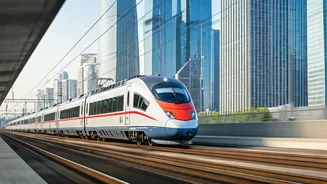

RRTS: A New Era
The RRTS project marks a pivotal moment in India's infrastructure development, with the primary goal of creating a high-speed rail network. The RRTS intends
to link major urban centers, allowing passengers to travel across long distances more quickly. This initiative focuses on reducing congestion, and cutting down on travel times. The RRTS project is envisioned to not only enhance transportation efficiency, but also serve as a catalyst for economic growth. By improving connectivity between cities, it intends to boost economic activity and create new opportunities for businesses and individuals alike. This ambitious project has the potential to transform urban mobility and promote regional development in India.
Mobility & Connectivity
The main benefit of the RRTS is the enhanced connectivity it offers across urban and suburban areas. The implementation of this network is designed to significantly reduce travel times for commuters. Faster transit options are expected to lead to greater productivity for individuals and businesses. RRTS's design prioritizes seamless integration with existing public transportation systems. This will allow for easy transfers, creating a more integrated transport network. Moreover, the project promotes regional development. By connecting cities, the RRTS intends to stimulate economic activity and foster growth in peripheral areas. The focus on improved mobility and connectivity positions the RRTS as a crucial element in India's strategy for modernizing transportation infrastructure.
Economic Impact
The RRTS is poised to have a large economic impact, bringing numerous benefits. The reduction in travel times is anticipated to improve overall economic efficiency. Less time spent commuting means more time available for productive activities, potentially increasing economic output. The project is also expected to create job opportunities during construction and operation. This will provide employment in different sectors. In addition to direct employment, the improved connectivity facilitated by the RRTS is likely to encourage investment in peripheral areas. Businesses will be able to expand their reach and access a wider market. This, in turn, will stimulate economic growth and create new opportunities. The development of RRTS has a high potential to boost the economy.
Urban Transformation
The RRTS initiative will play a significant role in changing India's urban landscape. It is designed to encourage urban expansion and reduce congestion by providing a convenient alternative to private vehicles. This shift towards public transportation can lead to a decrease in traffic. As the RRTS promotes public transit, it will likely contribute to sustainability. The system is designed to be energy-efficient. It may also encourage the development of eco-friendly urban environments. Furthermore, the RRTS is expected to influence urban planning strategies. The network will probably contribute to the creation of more integrated and sustainable urban spaces. The RRTS project may transform the urban experience in India by enhancing mobility.
Challenges & Outlook
While the RRTS initiative has the potential to benefit India, the project must navigate a number of difficulties. Large-scale infrastructure projects require careful planning, execution, and cost management. Furthermore, securing the necessary funding and managing the project's complexity can be challenging. Despite these challenges, the RRTS project is a long-term investment. Successful implementation of the project is expected to create a model for future transportation infrastructure endeavors. The RRTS is poised to contribute to economic prosperity and sustainable urban development. It highlights India's commitment to modernizing its infrastructure and meeting the needs of a growing population. The project’s success will require cooperation between stakeholders.