



Ancient Origins Unveiled
The humble dupatta boasts an astonishingly deep history, stretching back over three millennia to the Indus Valley Civilization. Evidence suggests its earliest
form was a practical, chaddar-like cloth, visible even on artifacts like the renowned "Priest-King" sculpture. The Sanskrit name itself, 'dupatta,' meaning 'two strips of cloth,' hints at its construction. During the Vedic era, it was known as an 'uttariya' and served a vital, unisex purpose: a functional cloak for both men and women, offering protection from the elements and upholding societal standards of modesty. The focus back then wasn't on the material itself, but rather on the skillful ways it was folded and draped, signifying a deep cultural understanding of fabric manipulation.
Mughal Opulence and Artistry
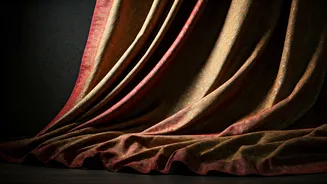
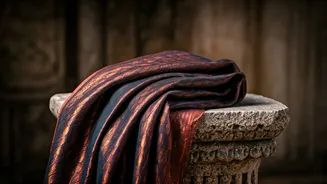
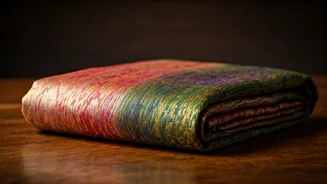
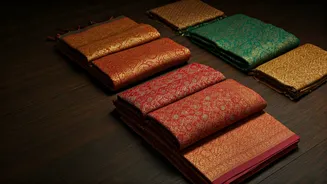
The arrival of the Mughals marked a significant turning point for the dupatta, transforming it from a simple utility item into an emblem of luxury and intricate artistry. Influenced by Persian aesthetics, the royal courts adorned these garments with opulent fabrics such as rich silks, plush velvets, and elaborate brocades. For women of high status, across both Hindu and Muslim traditions, the dupatta became an integral part of the purdah system, a practice emphasizing modesty. However, rather than blending into the background, these noblewomen elevated the dupatta into a statement piece. They lavishly embellished it with pearls, precious gemstones, dense embroidery, and exquisite zari work, turning a functional garment into a canvas of wearable art.
Gender Norms and Shifting Perceptions
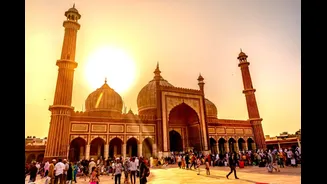
The dupatta's narrative is inextricably linked to the complex evolution of gender norms and societal expectations within Indian culture. For centuries, it was deeply associated with a woman's 'izzat,' or honor, and was instrumental in reinforcing a specific archetype of womanhood. Covering one's head or chest was not merely a fashion choice but a societal mandate, presented as a demonstration of a woman's purity, dignity, and respect for familial elders. Fortunately, contemporary urban fashion has begun to redefine these associations. While the dupatta continues to be respectfully draped over the head when entering sacred spaces like temples, mosques, or gurdwaras, its role outside these contexts has largely transformed. It is no longer a compulsory instrument of modesty but has evolved into a freely chosen element for personal style expression.
Regional Craftsmanship Flourishes
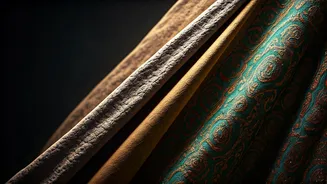
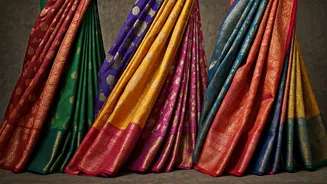
As the dupatta permeated various regions of the Indian subcontinent, local artisans passionately infused it with their unique cultural identities and skills, transforming it into a vibrant textile map. Each regional style tells a story of craftsmanship: Punjab's distinctive 'Phulkari' showcases bold, geometric floral embroidery, while Varanasi offers the sheer opulence of the Banarasi weave, characterized by its heavy gold and silver zari work. Gujarat and Rajasthan contribute the intricate dotted tie-dye technique of 'Bandhani.' Lucknow is celebrated for its delicate 'Chikankari,' an elegant white-on-white embroidery, and Andhra Pradesh presents 'Kalamkari,' featuring hand-painted or block-printed cottons adorned with detailed mythological narratives. These diverse styles highlight the dupatta's adaptability and the rich artistic heritage it embodies.
Bollywood's Glamorous Reinvention
By the close of the 20th century, Bollywood emerged as a powerful force in reshaping the dupatta's cultural perception and its presence in popular culture. Audiences, particularly those who grew up in the 1990s, will recall the cinematic impact of the sheer chiffon dupatta. Directors frequently employed dramatic wind machines to create flowing, ethereal scenes, transforming the dupatta into an iconic symbol of cinematic romance and an indispensable glamorous accessory. This modern interpretation brings us back to the recent 'Scandinavian Scarf' trend controversy. While it can be disheartening to see global fashion trends borrowing from ancient traditions without acknowledgment, the debate served as a valuable reminder. It highlighted that the dupatta in our wardrobes is far more than just a matching adornment; it is a resilient cultural artifact with a profound 3,000-year lineage.