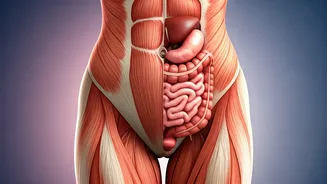









The Abs Dilemma
In contemporary fitness culture, the quest for visibly defined abdominal muscles is frequently presented as the zenith of physical conditioning and a testament
to discipline. However, for many women, attaining this highly sculpted midsection can push the boundaries of their body's natural hormonal equilibrium and reproductive well-being. Biologically, female bodies are not inherently designed for sustained extremely low body fat levels throughout the year without potential repercussions. The pursuit of deep abdominal definition often teeters on the edge of what the female body perceives as a safe threshold for optimal hormonal function. For instance, consider a scenario where a 26-year-old woman dedicates herself to achieving visible abs. This might involve rigorous strength training four to five times weekly and a significant reduction in calorie intake to achieve a leaner physique. While her abs may become more prominent over several months, she might concurrently observe disruptions in her menstrual cycle, such as delayed periods and a pervasive sense of low energy. This contrasts with another woman pursuing a similar goal through a more moderate regimen, incorporating weightlifting for core strength but emphasizing consistent nutrition, incorporating rest days, and avoiding drastic calorie cuts. Her abs may show some definition, but her menstrual cycle remains regular and stable, illustrating how individual responses to training intensity, dietary habits, recovery protocols, and unique bodily characteristics can lead to vastly different outcomes.
Energy Availability's Impact
When the body consistently receives less energy than it expends, it initiates a series of adaptive responses primarily aimed at self-preservation. This isn't merely about aesthetics; it's a crucial internal protective mechanism. The body prioritizes vital functions such as maintaining brain activity and cardiovascular health, while functions deemed less essential for immediate survival, like reproduction, may be down-regulated when energy stores are perceived as critically low. This physiological response can manifest as irregularities in the menstrual cycle, including inconsistent timing or the complete absence of periods. It is important to recognize that these responses are highly individualized, influenced by a complex interplay of genetic predispositions, existing body composition, and ongoing lifestyle factors. Therefore, a uniform outcome is not expected, as each woman's biological system reacts differently to periods of reduced energy availability.
Key Influencing Factors
Several interconnected elements critically shape how a woman's body adapts to changes in fitness routines and energy balance, directly impacting both the visibility of abdominal muscles and the regularity of her menstrual cycle. Body fat levels are paramount; while lower percentages can enhance ab definition, they can also heighten hormonal sensitivity in certain individuals. Muscle development, particularly in the core region, plays a significant role, allowing for improved definition even without extreme fat reduction. Calorie intake must be consistent and sufficient to support not only physical performance but also vital hormonal regulation. The training load is another crucial aspect; excessively intense workouts without adequate recovery can escalate physiological stress. Lastly, genetics influence how the body naturally stores fat and its inherent response to dietary restrictions. Understanding these factors collectively provides a clearer picture of an individual's potential responses.
Balancing Training & Recovery
Exercise is undeniably instrumental in sculpting the midsection, yet achieving this goal safely necessitates a delicate balance between exertion and recovery. Strength training is fundamental for building muscle mass, including the core musculature, which contributes to a more defined appearance at healthier body fat percentages. However, pushing the body too hard with insufficient rest periods can significantly increase overall stress, potentially negating the benefits. An effective and balanced fitness regimen typically incorporates a variety of components: focused strength training, often utilizing compound movements like squats and deadlifts, alongside targeted core exercises such as weighted crunches or leg raises. Moderate cardiovascular activity or daily walking is beneficial for overall fitness, while dedicated rest days are indispensable for allowing the body to repair and adapt, thereby reducing physical strain.
Nutrition and Hormones
An individual's dietary intake has a direct and profound impact on both athletic performance and the intricate mechanisms of hormone regulation. When the body is consistently supplied with adequate nutrients, it is far more likely to maintain stable energy levels and support the regular functioning of the menstrual cycle. Key nutritional considerations include ensuring sufficient protein intake to facilitate muscle repair and maintenance, consuming enough carbohydrates for energy and essential hormonal signaling, and incorporating healthy fats vital for hormone production and overall bodily balance. Drastically restricting any of these macronutrients over extended periods can, for some individuals, increase physical stress, depending heavily on their specific training intensity and the body's unique response to such demands.
Individual Responses Vary
It is imperative to acknowledge that there is no universal outcome when it comes to achieving visible abs and maintaining menstrual health. Some women can attain a highly defined abdominal appearance at a relatively higher body fat percentage while still preserving a stable and healthy menstrual cycle. Conversely, others may need to exercise greater caution regarding how lean they become to prevent hormonal disruption. The critical differentiator is not solely the level of effort expended but rather how each individual's body uniquely reacts to the combined stresses of exercise, diet, and physiological changes. This recognition of individual variation is key to approaching fitness goals in a way that supports overall well-being rather than compromising it.
A Holistic Fitness View
Many contemporary fitness professionals advocate for a broader interpretation of success that extends beyond mere physical appearance. They encourage individuals to consider a range of indicators such as overall strength, sustained energy levels, the effectiveness of recovery processes, and the consistent health of the menstrual cycle as crucial markers of well-being. While visible abs can certainly be a component of a fitness aspiration, they should not be the sole metric by which health is measured. Adopting this more holistic perspective allows for a more sustainable and healthier approach to fitness, ensuring that physical goals are pursued in a manner that supports, rather than undermines, long-term health and vitality. This balanced viewpoint prioritizes overall vitality alongside aesthetic achievements.