





Beware of Topping
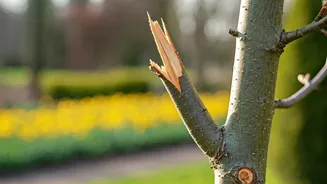
A frequent and damaging practice, tree topping involves abruptly cutting off the main leader or large branches from the top of a tree. While sometimes
used by utility companies to manage growth near power lines, or by homeowners to reduce shade, this method disrupts the tree's natural hormonal control, known as apical dominance. Instead of curbing growth, topping triggers the tree to sprout numerous weak shoots from the cut points, leading to dense, structurally unsound growth within a few years. This can worsen shade problems, increase vulnerability to wind and storm damage, and ultimately compromise the tree's long-term health and aesthetic appeal. Arborists advocate for a strategic, gradual pruning plan over several years to manage height and shape effectively, rather than resorting to this harmful shortcut.
Timing is Crucial
The timing of your spring pruning significantly impacts tree recovery and health. Arborists generally recommend pruning before buds break dormancy, ideally in late winter. This allows the tree ample time to heal its cuts as the growing season begins. While removing dead, diseased, or damaged branches can be done year-round, major structural pruning should be limited to once annually. However, there are exceptions. Trees that bloom early in spring, such as magnolias, dogwoods, Eastern redbuds, ornamental cherries, and plums, should be pruned only after their flowering period has concluded. Similarly, lilacs benefit from pruning within two weeks of their flowers fading, before new growth buds form. For fruit-bearing trees, pears, apples, and flowering crabapples can be pruned in late fall or mid-winter, while stone fruits like peaches and plums are best pruned in February.
Mastering Pruning Techniques
Beyond timing, the method and tools used for pruning are critical for tree vitality. Employing improper techniques or dull tools can inflict wounds that create entry points for diseases and pests. Always ensure your pruning tools, such as pruners and loppers, are clean before and after use to prevent the transmission of pathogens. Sharp tools are essential for making clean, precise cuts, as ragged cuts heal poorly and can lead to further complications. A key principle emphasized by arborists is the avoidance of leaving 'stubs' – short, protruding branches that will die back. These stubs are prime sites for disease infections like canker. The optimal approach is to prune back to a bud or a healthy lateral branch, where active growth is occurring, facilitating proper healing and encouraging directed, healthy development.
The Neglect Factor
Many gardeners make the mistake of either neglecting pruning altogether or waiting far too long to perform it. This lack of regular maintenance can result in trees becoming overgrown and misshapen, which not only diminishes their aesthetic appeal but also poses risks to their overall health. Diseased or damaged branches, if left unattended, can spread problems throughout the tree. Furthermore, a severely neglected tree becomes difficult to restore to a desirable shape without resorting to aggressive pruning that removes large limbs. Such extensive cutting can place considerable stress on the tree, hindering its recovery and potentially weakening its structure for an extended period.
Weather Considerations
The environmental conditions under which you prune your trees play a vital role in preventing stress and disease. It is generally advisable to prune when the weather is dry. Pruning trees while they are wet from rain can inadvertently facilitate the spread of disease-causing organisms. Additionally, opt for pruning during periods of stable temperatures, avoiding drastic fluctuations like sudden drops or spikes. Such temperature swings can put undue stress on the tree, impeding its ability to recover from pruning. Similarly, pruning during excessively hot weather should be avoided, as this can also be a significant stressor for trees, potentially compromising their health and resilience.