




Sacred Beginnings
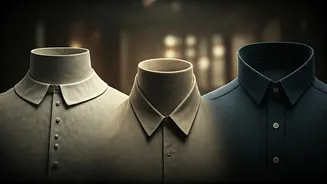
The story of the shirt collar begins not in the fashion salons of Paris, but in the monastic cloisters of the 15th century. Initially, collars were a practical
addition to the coarse, religious garments worn by clergy. Their primary function was to act as a protective buffer for the sensitive skin of the neck, shielding it from the abrasive textures of heavier robes. This early iteration was purely utilitarian, a humble solution to a common discomfort, laying the groundwork for a feature that would later become a significant sartorial element.
Renaissance Flourish
As centuries turned and the Renaissance bloomed, the humble collar underwent a dramatic transformation. It shed its purely functional skin to become a potent symbol of wealth, status, and social prestige. The aristocracy embraced and exaggerated the collar, evolving it into the elaborate, starched ruffs that became iconic of the era. These grand neckpieces were not merely clothing; they were declarations of a person's standing in society, showcasing their ability to afford such intricate and demanding adornments, which often required significant upkeep and specialized construction.
Structural Sophistication
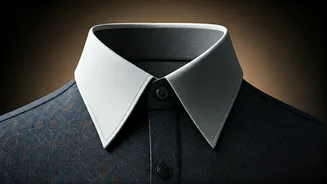
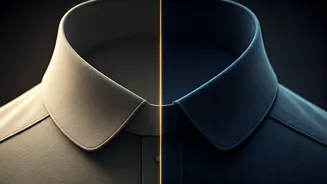
Beyond its historical roles, the collar plays a crucial part in the very structure and appearance of a shirt. It serves to elegantly frame the face, drawing attention upwards and providing a clean, defined line that enhances the wearer's overall look. This structural contribution is particularly vital in formal wear, where a well-formed collar lends an air of polish and seriousness. It transforms a simple piece of fabric into a garment that projects professionalism and attention to detail, making it indispensable for many dress codes.
Elemental Shield
Historically, the collar also offered practical benefits in shielding the wearer from the elements. In colder climates, a well-designed collar provided an essential layer of warmth around the neck, preventing heat loss and offering a degree of protection against chilling winds. Furthermore, it acted as a barrier against rougher outer garments, such as tunics or cloaks, preventing chafing and irritation of the neck and upper chest. This protective aspect highlights the collar's deep roots in everyday utility before it became a purely aesthetic choice.
The Detachable Revolution
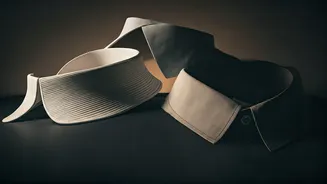
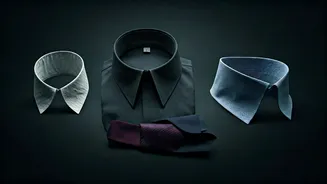
The 19th century introduced a significant innovation that revolutionized shirt maintenance: the detachable collar. Washing an entire stiff shirt was a laborious and time-consuming task, often requiring specialized starching and ironing techniques to maintain its shape. Detachable collars, however, could be easily removed and cleaned independently, allowing the shirt body to remain pristine for longer. This practical advancement made formal dressing more manageable and became a widespread trend, reflecting an evolving approach to laundry and garment care.
Modern Formality
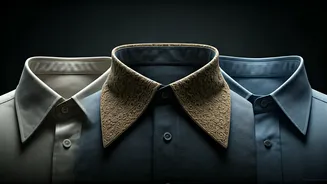
Even in contemporary times, the presence of a collar on a shirt continues to carry a strong association with professionalism and formality. Whether for business meetings, interviews, or formal events, collared shirts remain the standard choice, projecting an image of respect and seriousness. In contrast, shirts without collars are often perceived as more casual, signaling a relaxed or informal setting. The collar, therefore, retains its power as a subtle yet significant indicator of the context and the wearer's intention.