





The Persistent Problem
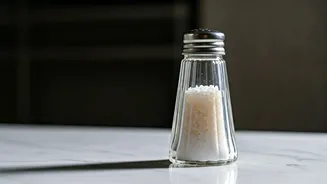
Anyone who cooks regularly has likely encountered the exasperating issue of salt clumping. On humid days, salt crystals readily absorb moisture from the air,
causing them to stick together and form stubborn lumps. This often happens at the most inconvenient times, like when you're trying to season a steaming pot of soup or prepare a flavourful barbecue rub. While modern solutions like expensive airtight containers exist, many home cooks are rediscovering a classic, grandmother-approved technique that harnesses the power of a common pantry staple to overcome this persistent kitchen nuisance.
Rice: Nature's Desiccant
The secret to preventing salt clumping lies in understanding salt's hygroscopic nature – its inherent ability to attract and absorb water vapor from its surroundings. When humidity levels rise, this moisture makes the salt crystal surfaces slightly tacky, leading to the dreaded clumping. Enter raw rice grains. Scientific studies, including research published in journals like 'Scientific Reports', have highlighted rice's remarkable capacity to act as a natural desiccant. The unique structural composition of dry rice grains allows them to effectively reduce local humidity within enclosed spaces by drawing dampness away from their environment, thus creating a drier atmosphere for your salt.
The Science of Sorption
Rice grains outperform salt in moisture absorption due to their superior capacity for 'sorption', the process by which a substance takes up moisture. When mixed with salt, rice grains act as a proactive barrier. They intercept atmospheric water vapor before it can significantly affect the salt crystals. Research featured in 'Food Research International' further supports this, indicating that maintaining a constant 'water activity' is crucial to prevent crystalline solids like salt from becoming sticky and lumpy. Rice, in this context, functions as a subtle 'humidifier' for the salt, creating a stable micro-environment that keeps the salt crystals in their free-flowing form.
Choosing the Right Grain
Not all rice varieties are created equal when it comes to this moisture-absorbing trick. It's essential to use only raw, whole white rice grains. Processed forms of rice, such as rice flour or powder, have drastically altered properties that make them unsuitable, as evidenced by research in 'Foods'. Rice flour can become gummy or even rancid when exposed to moisture, potentially contaminating your salt. Whole grains, however, possess a stable structure that remains intact and doesn't interact negatively with your spices, making them the ideal choice for this simple yet effective pantry hack.
Implementing the Hack
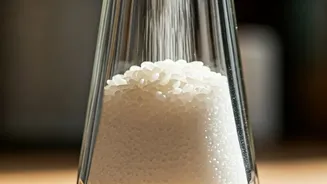
To successfully implement this anti-clumping strategy, begin with a thoroughly clean and completely dry salt shaker. Add a small amount, perhaps a teaspoon, of uncooked white rice to the bottom of the shaker before filling it with your preferred salt. For those residing in perpetually humid regions, such as coastal or tropical climates, it's advisable to refresh the rice grains every few months. Over time, the rice will become saturated with moisture and lose its effectiveness. Replacing it ensures that your moisture-wicking shield remains potent, guaranteeing consistently free-flowing salt.
An Eco-Friendly Solution
Beyond its practical benefit of keeping salt clump-free, this rice method offers a more environmentally conscious approach to kitchen management. Instead of relying on artificial silica gel packets, which may not always be food-grade and contribute to landfill waste, you are utilizing an organic, edible substance readily available in your kitchen. This simple hack demonstrates how understanding basic scientific principles, like the physics of water absorption by grains, can lead to clever, sustainable solutions for everyday household challenges, making your pantry more efficient and your cooking experience smoother.