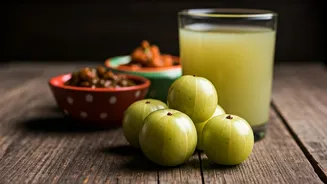

Amla's Winter Appeal
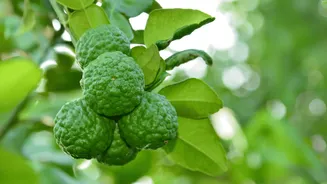
Amla, also known as the Indian gooseberry, holds a special place in Ayurvedic traditions, especially during winter. This fruit is packed with Vitamin C,
antioxidants, and other essential nutrients, making it a perfect addition to the winter diet. The cool and dry nature of amla is said to balance the body during the colder months, while also supporting the immune system. The recipes presented here are designed to utilize the versatility of amla, combining its tartness with various complementary flavors and spices to create warming, comforting meals. These recipes show how amla can be used in different dishes, from sweet to savory, making it easy to integrate into the daily menu. They also highlight the ease with which one can incorporate amla into their diet, ensuring you not only enjoy delicious food, but also improve your overall health during the winter season.
Amla Chutney Bliss
Amla chutney stands out as a simple yet impactful way to harness the benefits of amla. This recipe often involves grinding fresh or dried amla with spices such as ginger, green chilies, and a touch of jaggery for sweetness. The process of making amla chutney preserves the fruit's nutritional value, while also enhancing its flavor profile. Whether used as a side dish with meals or as a dip, amla chutney provides a concentrated dose of vitamins and antioxidants. The different variations of amla chutney offer opportunities to experiment with spices and flavors, tailoring it to your preference. The chutney's tangy and slightly sweet taste complements the rich flavors of winter dishes, adding a refreshing element to the table. Making amla chutney at home ensures you can avoid the preservatives that are often added in commercially produced chutneys, giving a healthier alternative. By adding a small portion of amla chutney to your meal, you can enhance both taste and nutrition, boosting your health during the winter months.
Tangy Amla Pickle Delight
Pickling amla offers a way to preserve this seasonal fruit while introducing a range of flavors that make it an exciting addition to any meal. Amla pickle recipes often involve the use of spices such as mustard seeds, fenugreek, and red chili powder, which not only enhance the taste but also bring warmth to the dish. The process typically involves marinating amla pieces in a mixture of spices, oil, and vinegar or lemon juice. This helps to soften the amla and allow the flavors to penetrate thoroughly. The tangy and spicy notes of amla pickle add a flavorful dimension to everyday meals, making them more enjoyable. The use of oil in pickling also helps to preserve the amla, allowing you to enjoy the fruit's benefits over a longer period. This simple addition brings a taste of tradition to the meals, as well as a welcome boost of nutrients, making it an excellent option for incorporating amla into your winter routine.
Refreshing Amla Juice
Starting your day with a glass of amla juice offers a quick and effective way to benefit from this fruit. Amla juice is known for its high Vitamin C content, making it an immune-boosting drink during winter. Preparation is simple: fresh amla is blended with water and, optionally, ginger or honey to soften the tart taste. The use of honey can also add an anti-inflammatory property to the juice. Regular consumption of amla juice aids in digestion, and the antioxidants in amla can help to detoxify the body. It also provides a refreshing element to your daily diet, especially when the winter weather makes us crave lighter, more refreshing options. It is an easily accessible way to include amla in your diet, ensuring you stay healthy and energized during the cold months. Drinking a glass of amla juice offers a fast and straightforward route to improved well-being.
Amla Murabba Sweetness
Amla murabba is a traditional Indian preparation where amla is preserved in sugar syrup, resulting in a sweet and chewy treat. This preparation is more than just a dessert; it also has a range of health benefits. The process involves slow cooking amla in a sugar syrup, along with spices such as cardamom or saffron to add flavor. The sweet syrup infuses the amla, enhancing its texture. Amla murabba provides a concentrated dose of nutrients, making it a delicious and healthy alternative to other sweets. It has a calming effect on the digestive system and provides an energy boost. During the winter, the sweetness in the murabba can also provide warmth and comfort. Amla murabba is more than just a treat; it's a testament to traditional culinary methods aimed at health and well-being. It is a sweet way to enjoy the advantages of amla while satisfying your cravings for something tasty.
Amla Candy Delights
Amla candy presents a fun and convenient way to consume amla throughout the day. This preparation involves boiling, drying, and then flavoring amla with a mix of sugar and spices, such as ginger or cardamom. Amla candy offers a long shelf life, making it a convenient snack to have on hand. The process of making amla candy retains many of the fruit's beneficial properties while offering a sweet taste. Because it is simple to carry, it can be consumed at any point of the day, whether at home or while working. The inclusion of additional spices not only adds flavor but also has a warming effect, making the candy an ideal treat during the winter. Amla candy is both delicious and beneficial for health, making it a favorite for all ages, offering a balance of taste and wellness. It’s a convenient method to increase amla consumption, guaranteeing you'll benefit from its goodness every day.
Amla in Soups
Incorporating amla into soups can bring a unique twist, adding both flavor and nutritional benefits to your winter meals. Adding amla, whether grated, pureed, or in small chunks, to your favorite soups adds a tangy taste and helps enhance the overall nutritional profile of the dish. Soups infused with amla offer a comforting, warm meal, rich in vitamin C and antioxidants, which are perfect for maintaining good health during the winter. The incorporation of amla into soup can enhance digestion, which is crucial during the colder months when digestive processes often slow down. The ability to customize amla soup allows for culinary creativity. Adding other vegetables, spices, and herbs makes each bowl a complete meal filled with nutrients. Having amla in soup is a simple and efficient way to boost your daily diet and take pleasure in healthy, heartwarming meals.
Amla Rice Innovations
Using amla in rice dishes offers a way to bring its goodness to a staple meal, infusing it with extra health advantages and a distinct flavor profile. Amla can be incorporated into rice dishes in different ways, such as in the form of amla rice, or by adding amla juice to the cooking water. Amla rice often involves cooking the rice with amla pulp, along with spices like turmeric and mustard seeds, to create a flavorful and nutritious meal. The use of amla in rice not only improves the taste, but also offers the benefits of vitamin C and antioxidants, supporting a healthy immune system during winter. The addition of spices also creates a warming effect. Rice prepared with amla provides a filling, tasty, and healthy meal, perfect for any time of the day. Amla-infused rice dishes show how simple modifications can significantly improve your daily meals.
Amla in Winter Beverages
Besides juice, amla can also be used in other winter beverages to add flavor and nutritional value. You could blend amla with other winter fruits such as oranges or pomegranates to create a refreshing blend. Adding amla to hot beverages like herbal teas or spiced chai can also bring a tangy twist, while enhancing their health benefits. Such beverages are a great source of vitamin C and antioxidants, helping the body fight off winter illnesses. The use of spices like ginger, cinnamon, and cloves can enhance the warming properties of these drinks. These beverages provide a delicious way to improve your winter diet. Try different combinations and explore the possibilities of amla in beverages to make your winter season more healthy and enjoyable.