








Drone Encounter Details
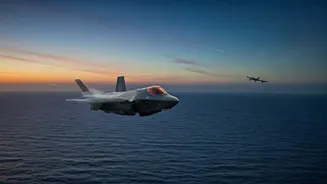
In a critical moment within the Arabian Sea, a United States F-35 fighter jet successfully neutralized an Iranian drone. This drone, identified as a Shahed-139,
was observed behaving aggressively as it approached the USS Abraham Lincoln aircraft carrier. According to Captain Tim Hawkins of the US Central Command, the F-35C fighter jet took defensive action to safeguard the carrier and its personnel. Fortunately, no American service members sustained injuries, and no US equipment suffered damage during this close call. The incident occurred against a backdrop of ongoing diplomatic negotiations aimed at resuming nuclear talks between the United States and Iran, with President Donald Trump having previously issued a warning about potential negative outcomes if an agreement wasn't reached, especially as US naval assets were being positioned nearer to Iran.
Geopolitical Context
The downing of the Iranian drone was part of a larger narrative of escalating tensions and strategic maneuvers in the Middle East. The presence of the Abraham Lincoln carrier strike group represented a significant US military deployment in the region, largely in response to Iran's forceful suppression of anti-government protests that had recently occurred and resulted in considerable loss of life, marking the most severe unrest since the 1979 revolution. While President Trump had initially refrained from direct military intervention in the protests, he subsequently shifted his focus to demanding nuclear concessions from Iran and consequently deployed naval forces towards its coast. Reports from the previous week suggested that Iran was engaging in serious discussions, a sentiment echoed by top Iranian official Ali Larijani, who confirmed that negotiations were in progress. Adding to the volatile atmosphere, Iran's Revolutionary Guard had also engaged in harassing behavior towards a US-flagged merchant vessel, the M/V Stena Imperative, in the Strait of Hormuz, with IRGC boats and a Mohajer drone reportedly threatening to board and seize the ship.
Diplomacy and Deterrence
The incident underscores the complex interplay between diplomatic overtures and military deterrence that characterized US-Iran relations. The White House Press Secretary, Karoline Leavitt, confirmed the drone's destruction, noting that CENTCOM's decision was based on the unmanned aircraft's aggressive actions towards the USS Lincoln. President Trump, while pursuing a diplomatic path, emphasized the need for reciprocal effort from both sides for any meaningful dialogue to occur. The internal situation in Tehran had been tense following widespread anti-regime protests the previous month, which were met with a violent crackdown by security forces, leading to significant casualties and international condemnation, prompting threats of US intervention. President Trump, though stopping short of military action, signaled that consequences would follow. He then publicly called for Iran to provide nuclear concessions as a prerequisite for restarting talks. The deployment of the Abraham Lincoln carrier strike group and other warships towards Iran's coast served as a clear display of leverage. Despite Trump's statements that Iran was 'seriously talking,' and official confirmations of advancing negotiations, the US military buildup was intended to dissuade Iranian provocations amidst a fragile diplomatic environment. However, this period also saw direct confrontations, indicating an escalation from both nations.