




First Plasma Milestone
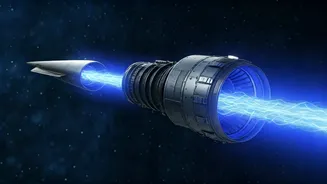
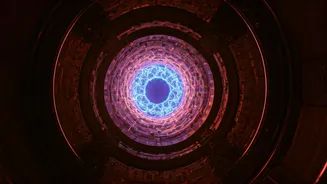
In a significant development for space propulsion, Pulsar Fusion has announced the successful generation of 'first plasma' within its Sunbird exhaust test
system. This crucial step, achieved at their facility in England and presented live at Amazon's MARS Conference in California, demonstrates the company's capability to confine and manipulate plasma using electric and magnetic fields. While not a fully functional fusion rocket, this initial plasma ignition is a vital proof of concept, showing that charged particles can be guided through the Sunbird's exhaust architecture. This accomplishment is fundamental for any propulsion system relying on the immense power of nuclear fusion, paving the way for advanced spacecraft designs. CEO Richard Dinan highlighted the importance of this milestone, emphasizing its presentation on a prominent global stage to esteemed experts in science and technology. The ability to control plasma is the bedrock upon which more advanced fusion propulsion systems will be built.
Deep Space Tug Vision
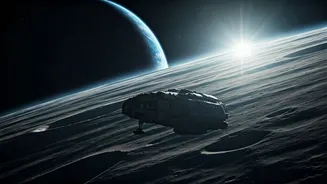
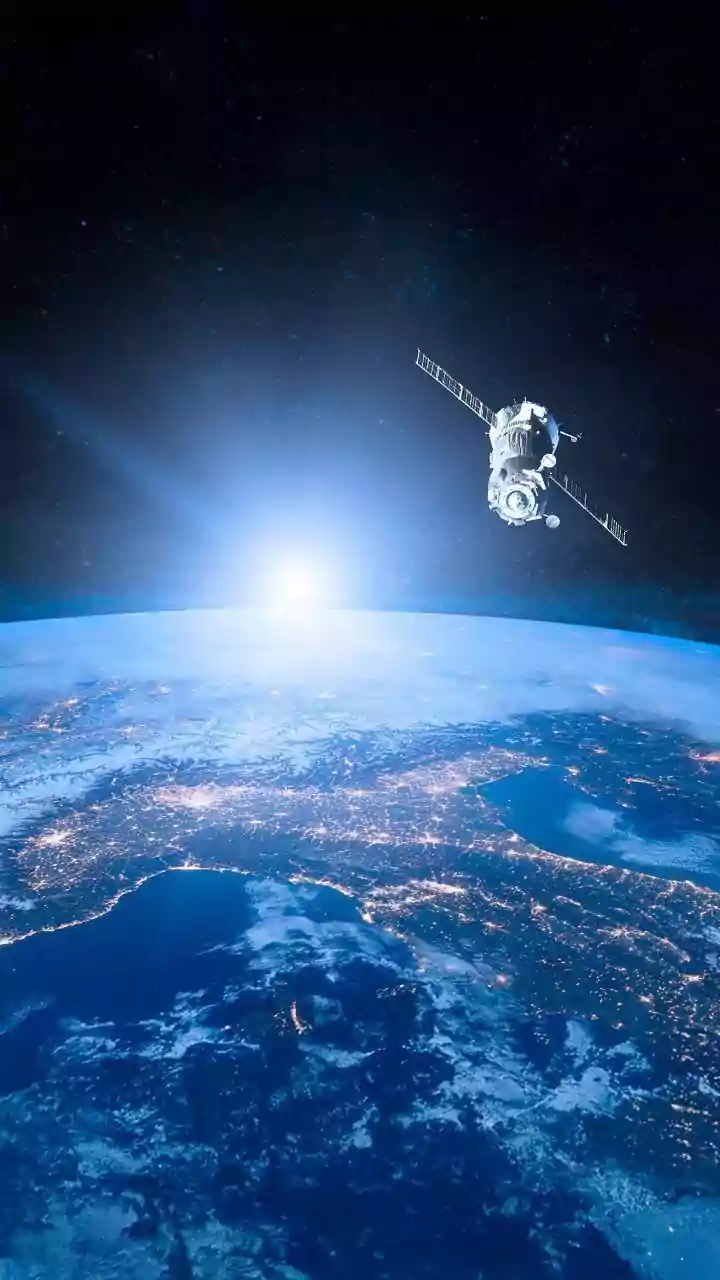
Pulsar Fusion envisions Sunbird not as a launch vehicle from Earth, but as a reusable interplanetary tug designed to operate in orbit. For approximately a decade, the company has been discreetly developing this concept. The core idea is for Sunbird to rendezvous with and propel other spacecraft towards destinations like Mars or Pluto, significantly reducing transit times. This vision hinges on the unique advantages of fusion propulsion, which theoretically combines the high thrust of chemical rockets with the high exhaust velocities of electric systems like ion thrusters. Unlike current technologies that present a trade-off between thrust and speed, fusion propulsion promises the best of both worlds, enabling much faster cargo transport across the vast distances of space. The company estimates that journeys such as the 9.5-year trip to Pluto taken by NASA's New Horizons could be cut to around four years, and Mars travel times could be halved. The fundamental principle, as articulated by CEO Richard Dinan, is that achieving higher exhaust speeds is paramount for efficient interplanetary travel, and fusion reigns supreme in this regard.
Next Steps and Challenges
Following the successful first plasma test using krypton as a propellant—chosen for its ionization efficiency and inert nature—Pulsar Fusion is now moving into a more data-intensive phase. The next steps involve meticulous measurement of thrust and exhaust velocity using specialized instruments like thrust balances and E×B probes. Engineers aim to enhance plasma confinement and heating through systems such as rotating magnetic fields and radio frequency heating. Future upgrades will incorporate high-temperature superconducting magnets made from rare-earth elements to generate stronger magnetic fields, enabling experiments with higher plasma density and pressure, and facilitating the exploration of aneutronic fusion fuel cycles. Crucially, Pulsar is also collaborating with the U.K. Atomic Energy Authority to understand and mitigate the long-term effects of neutron radiation on reactor components, a critical durability concern for any practical fusion system. These rigorous tests and upgrades are essential to progress from a successful demonstration to a robust and reliable propulsion system.
Unique Engine Design
The Sunbird engine concept, dubbed the Duel Direct Fusion Drive, diverges from common terrestrial fusion research by utilizing a deuterium and helium-3 fuel mixture instead of the more conventional deuterium-tritium. Pulsar suggests this combination could generate charged protons directly usable for propulsion. Furthermore, the company favors a linear engine configuration over the torus-shaped tokamak, believing it will result in a lighter and more practical system for space applications. Despite these innovations, the project is acknowledged by its own CEO as highly speculative. While Pulsar has not set a definitive date for a full-scale Sunbird, tests are planned for the current year, with potential in-orbit demonstrations targeted for 2027. For static tests, inert gases will be used to simulate engine behavior in lieu of actual helium-3. External experts express caution, noting the inherent difficulty in developing compact fusion systems. Professor Paulo Lozano of MIT highlights that fusion has long posed significant challenges, particularly in miniaturized devices, and stresses the need for detailed design information before offering a technical assessment.
Potential Impact and Outlook
Should Pulsar Fusion's ambitious approach prove successful, it could dramatically alter the economics of deep-space transportation by enabling faster movement of cargo and personnel between celestial bodies. This acceleration would be particularly beneficial for missions where time directly impacts cost, operational feasibility, and the establishment of off-world infrastructure. However, for the present moment, Sunbird remains an advanced engineering endeavor with a significant initial achievement in its first plasma result. The project faces a considerable array of technical obstacles, and there is no guarantee that fusion propulsion can be engineered to be sufficiently compact, durable, and cost-effective for routine space operations. The company's efforts are supported by grants from the U.K. Space Agency and the European Space Agency, underscoring the potential strategic importance of this research despite the inherent uncertainties.