





Golden Glow's Appeal
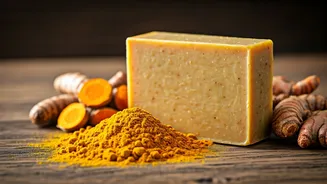
Turmeric soap’s popularity is fueled by its purported benefits for the skin. Turmeric, a spice with a rich history in traditional medicine, contains curcumin,
a compound with antioxidant and anti-inflammatory properties. This has made turmeric soap a sought-after product in the skincare world. Many people use it to lighten skin, reduce acne, and enhance overall skin appearance. The vibrant color and the association with natural ingredients add to its appeal. With its natural origin, it aligns with a growing preference for organic and holistic skincare routines. The rising interest in Ayurvedic practices has also contributed, positioning turmeric soap as a remedy deeply rooted in cultural heritage and natural well-being.
Benefits of Turmeric
Turmeric soap is believed to offer several potential advantages for the skin, largely thanks to curcumin. Curcumin's antioxidant properties help neutralize free radicals, which can damage skin cells and accelerate aging. The anti-inflammatory effects of curcumin can soothe irritated skin and reduce redness, making it useful for conditions like eczema and psoriasis. Many users find it helps reduce acne by decreasing inflammation and controlling sebum production. Regular use could contribute to a brighter complexion, as it is claimed to lighten dark spots and even skin tone. These benefits have made it popular among individuals wanting natural skincare alternatives that may improve their skin's appearance, texture, and overall health. Though research is ongoing, these claims have driven the popularity.
Who Should Avoid?
Even with its benefits, turmeric soap is not suitable for everyone. Individuals with sensitive skin might experience irritation, redness, or dryness. It's recommended to perform a patch test before using it extensively. People with specific skin conditions like rosacea should exercise caution, as turmeric's active compounds could trigger flare-ups. Those allergic to turmeric or any ingredients in the soap should definitely avoid it to prevent allergic reactions. Also, individuals on certain medications or undergoing skin treatments should consult with a dermatologist before use. The strong pigmentation of turmeric can stain clothes and surfaces, which is another factor to consider. Thus, understanding your skin type and any pre-existing conditions is crucial to determine if turmeric soap suits you.
Usage and Cautions
To use turmeric soap effectively, it's best to start with a gentle approach. Wet your face or body with warm water, and gently lather the soap in your hands. Apply the lather to your skin using circular motions and avoid harsh scrubbing. Leave the lather on for a short period, typically a few minutes, before rinsing thoroughly. Always follow up with a moisturizer to prevent dryness, particularly if you have sensitive skin. It's very important to patch-test the soap on a small area of your skin before applying it to larger areas, to check for any allergic reactions or irritation. Be cautious with the staining properties of turmeric; protect clothes and surfaces when using the soap. If any adverse effects, like redness, itching, or swelling, occur, stop using the soap immediately.
The Bottom Line
Turmeric soap can be a valuable addition to your skincare routine, with the potential to improve skin health. Its ability to combat inflammation and provide antioxidant benefits are key aspects of its effectiveness. However, it’s not suitable for everyone. Understanding your skin type and being aware of potential allergic reactions or sensitivities is vital before including it in your regimen. Always consult with a dermatologist if you're uncertain about its suitability, particularly if you have existing skin issues or are on medication. With proper consideration and caution, turmeric soap can provide noticeable advantages. So, explore its benefits cautiously and consider how it can meet your specific skincare needs and achieve a healthier and more radiant complexion.