



February's Celestial Advantage
February emerges as the premier month for stargazing across India, presenting a unique atmospheric sweet spot. Following the monsoon rains and preceding
the summer heat, the air becomes exceptionally dry and clear. This lack of humidity and settled dust means fewer particles scatter starlight, allowing stars to twinkle with remarkable brilliance. The atmosphere is also more stable, providing an ideal environment for both casual observers and keen astrophotographers. Unlike times with higher humidity or lingering atmospheric dust, February's conditions minimize light distortion, offering a crisp and unobstructed view of the cosmos. This makes it the perfect time to embark on a journey to witness the universe's grandeur away from the glare of urban lights.
Hanle's High-Altitude Wonders
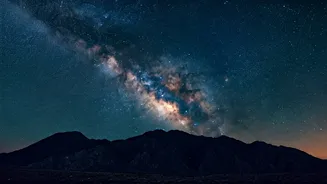
Nestled in the remote, high-desert landscapes of Ladakh, Hanle stands as one of the world's highest sites for astronomical observation, situated at an impressive altitude of over 4,500 meters. Its extreme elevation and minimal human presence contribute to an almost complete absence of artificial light pollution, a crucial factor for pristine stargazing. The air here is incredibly dry, further enhancing the clarity of the night sky. During February, the conditions are exceptionally favorable, allowing the faintest celestial objects, including the Milky Way band, to be viewed with stunning detail. This remote sanctuary offers an unparalleled opportunity to immerse oneself in the vastness of the universe, far removed from the distractions of the modern world.
Rann of Kutch's Expansive Canvas
The Rann of Kutch in Gujarat offers a uniquely expansive and unobstructed stage for celestial viewing. Its vast, shimmering white salt flats stretch out to the horizon, creating a 360-degree panorama that makes the night sky feel immense. With no obstructing hills or trees, the view is truly limitless. February is particularly well-suited for stargazing here; the lingering chill of winter has subsided, and humidity levels are low, ensuring clear nights. Following the vibrant Rann Utsav, the region becomes tranquil, providing a peaceful backdrop for observing the countless stars. The flat, open terrain amplifies the sense of being enveloped by the cosmos.
Spiti Valley's Himalayan Veil
Deep within the Himalayas, the Spiti Valley presents another pristine, high-altitude desert destination for stargazers. Similar to Hanle, Spiti benefits from minimal light pollution and its elevated position. The frigid February nights, though cold, are rewarded with incredibly clear skies that reveal a dense tapestry of constellations. Prominent celestial figures like Orion, Taurus, and Gemini are sharply defined against the dark expanse, their clarity enhanced by the low humidity. The valley's remoteness and the crisp, dry mountain air create an ethereal setting where the universe feels intimately close, offering a profound sense of awe to those who venture there.
Western Ghats' Verdant Cosmos
Moving away from desert extremes, the interior regions of the Western Ghats in Karnataka and Maharashtra provide a different yet equally captivating stargazing experience. Amidst the forested plateaus, coffee plantations, and serene eco-lodges of areas like Coorg and the outskirts of Agumbe, the night sky transforms into a deep, velvety canvas. February here offers exceptionally clear nights, ideal for spotting distinct constellations. The combination of altitude, lush greenery, and the absence of major urban centers creates a remarkably dark sky. These locations offer a unique blend of natural beauty and celestial wonder, perfect for those seeking a peaceful, star-filled retreat.
Pench & Satpura's Wild Skies
The Pench and Satpura regions in Madhya Pradesh offer a unique proposition for stargazers: a chance to combine wildlife adventures with celestial observation. Strict conservation efforts and regulations limit artificial lighting within these forest areas, resulting in remarkably dark skies. This creates an excellent environment for observing the night sky, particularly during February when atmospheric conditions are optimal. For travelers seeking an experience that blends the thrill of spotting nocturnal wildlife with the serenity of gazing at the stars, these central Indian forests provide an accessible and enchanting option, without the harsh cold or extreme altitudes of some other destinations.