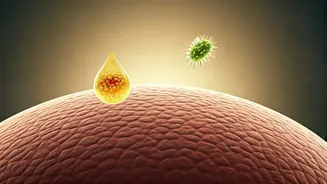







Dandruff's True Nature
Contrary to popular belief, dandruff isn't a direct consequence of infrequent hair washing or a simple cleanliness issue. Experts emphasize that dandruff stems
from a disruption in the scalp's natural barrier, often exacerbated by an imbalance in its microbial ecosystem, particularly the overgrowth of a yeast known as Malassezia globosa. This yeast is naturally present on everyone's scalp, but under certain conditions, it can multiply excessively, leading to irritation and inflammation. The initial signs of this imbalance often manifest as itching, serving as an early warning signal from the scalp even before visible flakes appear. Understanding this complex interplay between microbes and the scalp environment is crucial for effective management.
The Science of Flakes
The primary driver of dandruff is the rapid multiplication of Malassezia globosa, a common scalp yeast. This overgrowth is often triggered by an increase in scalp oil production (sebum), heightened perspiration, humid atmospheric conditions, environmental pollutants, heightened stress levels, and inconsistent hair cleansing routines. When Malassezia feeds on the scalp's natural oils, it metabolizes these lipids, producing by-products that irritate the scalp's protective barrier. This irritation initiates an inflammatory response, accelerating the rate at which skin cells shed. These rapidly shedding cells then clump together, forming the characteristic white or yellowish flakes associated with dandruff. Scientific studies confirm that Malassezia species break down sebum lipids, creating irritants that fuel scalp inflammation and lead to the accelerated shedding of keratinocytes, thus manifesting as visible flaking.
Targeting the Cause
A common misconception is that simply removing visible dandruff flakes is sufficient for treatment. Many individuals resort to frequently changing shampoos, seeking products that promise immediate flake reduction. While these treatments may offer temporary relief from flaking, they often fail to address the underlying microbial imbalance that fuels dandruff. Consequently, the flakes tend to reappear when the root cause remains untreated. Therefore, a deeper understanding of shampoo ingredients is essential. Not all anti-dandruff formulations work the same way. Some focus on exfoliating the scalp or slowing skin cell turnover, which can reduce flakes temporarily but may not effectively control the fungal overgrowth responsible for recurrent dandruff. An effective solution must address both the scalp environment and the microbial imbalance, recognizing that dandruff occurs at the junction where the scalp and hair meet.
Effective Ingredients
To combat dandruff effectively, it's vital to use ingredients that directly target the overgrowth of Malassezia, addressing the core issue rather than just its superficial symptoms. Clinically proven ingredients like Piroctone Olamine are highly recommended. Piroctone Olamine is a potent antifungal agent that inhibits the growth and activity of Malassezia, helping to manage its proliferation on the scalp. By curbing fungal growth, it reduces scalp irritation and helps restore the scalp's natural equilibrium. Moreover, this ingredient is formulated to be gentle, making it suitable for regular use as part of a consistent scalp care regimen. Research has demonstrated that Piroctone Olamine exhibits significant antifungal properties against Malassezia species, leading to a sustained decrease in dandruff severity compared to shampoos lacking antifungal action. This scientific validation underscores the importance of selecting shampoos that directly combat the fungus, offering a more comprehensive approach than merely masking symptoms.
Holistic Scalp Care
Beyond selecting the right shampoo, cultivating healthy scalp habits is paramount for managing dandruff effectively. It is advisable to wash the scalp regularly, particularly after periods of heavy sweating, to prevent the accumulation of excess oils and environmental residue. Maintaining cleanliness of hair accessories like helmets and avoiding prolonged periods where the scalp remains moist are also important steps. Furthermore, managing stress levels can contribute positively to overall scalp health. Dandruff, though often perceived as a minor cosmetic concern, frequently indicates a disrupted balance within the scalp's ecosystem. By understanding the role of Malassezia and opting for treatments that address the fundamental causes, individuals can make informed decisions to achieve and maintain a healthier, balanced, and flake-free scalp through diligent and consistent care.