



Moonshot for AI
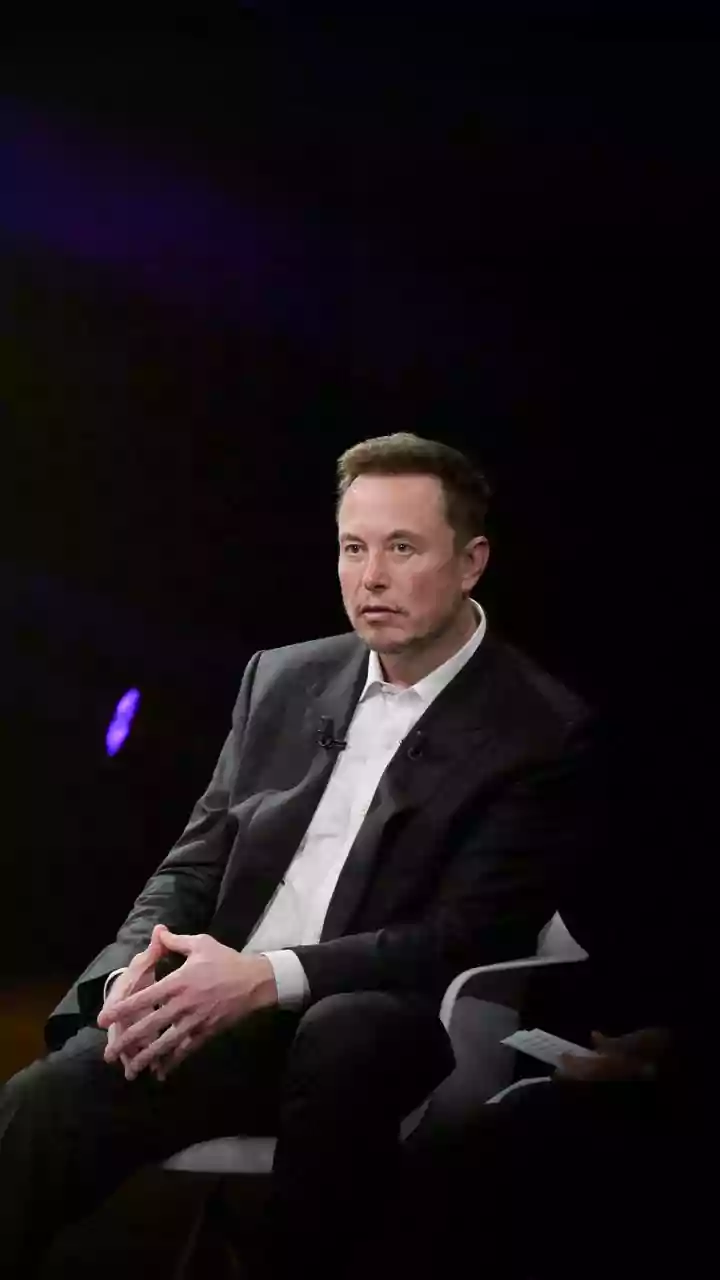
Elon Musk, the driving force behind SpaceX, has put forth a groundbreaking idea: the establishment of a factory on the moon specifically for the construction
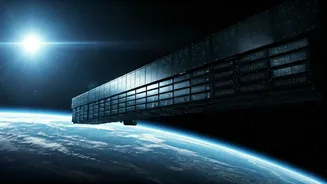
of artificial intelligence (AI) satellites. This ambitious proposal, revealed in a recent internal communication following the acquisition of xAI, also includes a colossal catapult designed to launch these satellites into orbit from the lunar surface. Musk projects that within a two to three-year timeframe, generating AI computation capacity in space will become the most cost-effective method available. He reiterated this vision during an all-hands meeting with xAI staff, emphasizing that while Earth-based launches are the current priority, SpaceX's Starship rocket is poised to facilitate extraterrestrial operations, including those on the moon. This forward-thinking approach seeks to leverage off-world capabilities for advanced technological development.
Lunar Cargo & Manufacturing
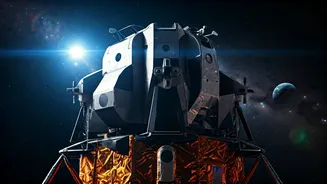
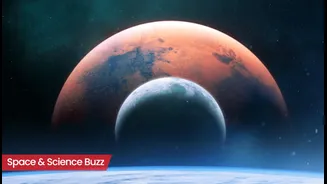
The feasibility of establishing a lunar manufacturing base hinges significantly on advancements in space logistics, particularly in-space propellant transfer. Musk highlights that the Starship rocket will be instrumental in delivering massive payloads of cargo to the moon. Once on the lunar surface, this capability will enable the creation of a permanent presence for both scientific exploration and manufacturing endeavors. The moon's abundant resources can be harnessed to produce satellites directly on-site and then deploy them into space. By employing an electromagnetic mass driver combined with lunar manufacturing techniques, Musk estimates the potential to deploy an astounding 500 to 1000 TW/year of AI satellites into deep space. This would allow humanity to significantly ascend the Kardashev scale and tap into a substantial portion of the sun's energy.
The Power of Mass Drivers
The concept of utilizing mass drivers – essentially advanced railgun technology – on the moon is not entirely new; it echoes visionary ideas from Gerard O'Neill back in 1974. O'Neill proposed adapting mass drivers, even those based on coilgun designs capable of accelerating non-magnetic objects, for lunar applications. One of his notable proposals involved using mass drivers to eject baseball-sized chunks of mined lunar ore into space. This ejected material could then serve as raw material for constructing space colonies and solar power satellites. O'Neill, alongside his colleague Henry Kolm and a team of student volunteers at MIT, developed early prototypes of mass drivers. With funding from the Space Studies Institute, subsequent prototypes demonstrated that even a 520-foot (160-meter) mass driver could effectively launch material off the lunar surface. Their lab system suggested scalability to a multi-kilometer lunar mass driver, capable of delivering 600,000 tons annually to Earth-moon Lagrange points.
Modern Lunar Launch Systems
More recently, Robert Peterkin of General Atomics Electromagnetic Systems has bolstered the case for lunar-based mass drivers. In 2023, he presented a report to the Air Force Office of Scientific Research (AFOSR) titled "Lunar Electromagnetic Launch for Resource Exploitation to Enhance National Security and Economic Growth." Peterkin argues that modern electromagnetic launchers represent a superior approach, as they can utilize abundant solar energy as their primary power source, negating the need to transport chemical rocket fuel from Earth. He advocates for U.S. government investment in evolving existing electromagnetic launch technology, currently operational on the U.S. Navy's Gerald R. Ford nuclear aircraft carrier, to achieve higher speeds and lower mass for reliable lunar launches.
Developing a Lunar Ecosystem
The initial phase of developing a lunar ecosystem will undeniably depend on supplies from Earth, including machinery, structures, and essential support systems. Peterkin's AFOSR report highlights that SpaceX's Starship, with its capacity to deliver 100 metric tons to the lunar surface, is a critical enabler for this vision. He notes that SpaceX and NASA are actively developing plans for a lunar base, recommending its location be conducive to establishing a reliable and effective lunar electromagnetic launch system. The report underscores the moon's rich deposits of valuable resources such as silicon, titanium, aluminum, and iron, with the potential exploitation of lunar water also being a significant prospect. A future lunar economy is envisioned where these resources can be used to resupply, repair, and refuel spacecraft in lunar orbit at a substantially lower cost compared to sourcing materials from Earth's deep gravitational well.