







A Glimpse of the Past
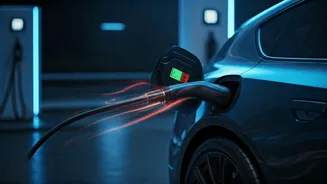
Over a hundred years ago, electric cars were more prevalent than gasoline-powered ones, hinting at a different automotive future. Thomas Edison himself
patented a lead-acid battery in 1901, capable of powering vehicles for about 30 miles. However, challenges with cost and range prevented this electric revolution from taking hold, allowing the internal combustion engine to dominate the 20th century. While Edison's initial vision for nickel-iron batteries wasn't fully realized for transportation due to these limitations, the underlying scientific principles have recently been revisited by researchers. A new study highlights a prototype battery that recharges almost instantaneously and endures an astonishing 12,000 cycles, equating to over three decades of daily use, suggesting a powerful new application for this established technology in stationary energy storage.
Biomimicry in Battery Design
The groundbreaking approach to developing this advanced battery draws inspiration from nature, specifically the formation of biological structures like bones and shells. Biochemists and materials scientists adopted this concept, observing how proteins act as intricate frameworks for mineral deposition in living organisms. Vertebrate bones, for instance, achieve their strength and flexibility not just from their calcium-based composition, but crucially from how these minerals are arranged by protein templates. By mimicking this biological process, the researchers hypothesized they could guide the precise placement of metallic elements. They envisioned using proteins to structure clusters of nickel and iron, the very metals Edison once proposed for his batteries, creating nanoscale architectures that optimize electrochemical reactions.
Crafting the Nanostructure
To bring this biomimetic concept to life, the research team ingeniously utilized beef processing byproducts as their protein framework. These proteins were then infused with graphene oxide, a single-atom-thick material composed of carbon and oxygen. The result was the controlled growth of a folded protein structure that successfully housed positively charged nickel atoms and negatively charged iron atoms. These metallic clusters were incredibly small, measuring less than five nanometers in width – meaning 10,000 to 20,000 of them would barely span the width of a human hair. Initially, the oxygen in the graphene oxide acted as an insulator, a hurdle for battery performance. However, a crucial step involved subjecting the structure to intense heat in water. This process transformed the proteins into pure carbon while expelling all oxygen, simultaneously embedding the metallic clusters more firmly within the resulting aerogel, which turned out to be nearly 99% air by volume.
The Power of Surface Area
The transformation into an aerogel, a material almost entirely composed of air, unlocked remarkable battery capabilities due to an amplified surface area. As particle sizes shrink down to the nanoscale, the available surface area for chemical reactions increases dramatically, which is a significant advantage for battery efficiency. In this nickel-iron battery design, the incredibly tiny nanoclusters mean that almost every single atom is available to participate in the charging and discharging processes. This heightened accessibility leads to significantly faster charge and discharge rates, allowing for greater energy storage capacity and overall enhanced performance. The efficiency gains are substantial, enabling the battery to operate with a speed and responsiveness previously unattainable with traditional battery architectures.
Future Applications for Grid Storage
While this advanced nickel-iron aerogel battery currently lacks the energy density to power electric vehicles, its unique characteristics make it exceptionally promising for stationary energy applications. Its ability to recharge in mere seconds and withstand over 12,000 charge cycles offers a compelling alternative to existing technologies for grid-scale energy storage. Imagine solar farms efficiently capturing excess sunlight during the day and then rapidly discharging that stored energy to the grid as needed during the night. Furthermore, the battery's rapid response and resilience could provide crucial backup power for energy-intensive data centers, ensuring uninterrupted operations. This innovative revival of Edison's concept sidesteps the reliance on rare earth metals found in lithium-ion batteries, utilizing commonly available materials and straightforward manufacturing processes, paving a more sustainable path for energy infrastructure.