





Founding Vision Clash
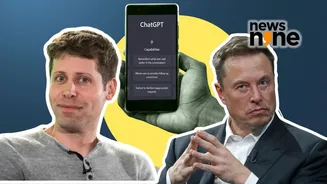
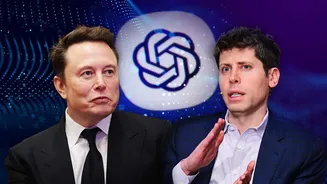
The legal showdown between Elon Musk and OpenAI centers on a fundamental disagreement about the company's original purpose. In 2015, Musk, along with Sam
Altman and others, established OpenAI as a nonprofit entity with a profound commitment to developing artificial general intelligence (AGI) for the unequivocal benefit of all humanity. The founders envisioned a future where powerful AI wouldn't be controlled by a single entity, like Google, which held a significant AI development lead at the time. Their initial pledge was to make AI advancements freely accessible through open-source contributions. However, by 2017, a divergence in philosophy emerged, with many within OpenAI, including Musk, growing concerned about the potential dangers of open-sourcing highly advanced AI. Furthermore, there were escalating worries about OpenAI's ability to secure the substantial funding necessary to realize its ambitious AGI objectives. Musk even proposed integrating OpenAI's AI development with Tesla's supercomputing infrastructure, a suggestion that was ultimately declined by Altman and other leaders. This disagreement contributed to Musk's departure from the OpenAI board and his eventual cessation of financial support, paving the way for him to establish his own AI venture, xAI, which is now associated with SpaceX.
Allegations of Betrayal
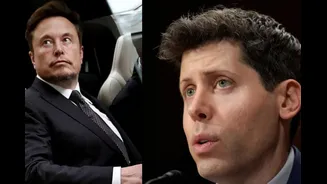
Elon Musk initiated legal proceedings against OpenAI in 2024, contending that the organization, under the leadership of Sam Altman and other executives, has strayed from its humanitarian mandate to pursue financial gains. The lawsuit specifically charges that Altman and Greg Brockman, OpenAI's president, deliberately misled Musk and other early stakeholders by falsely assuring them of a safer development trajectory for AI compared to that of profit-driven corporations like Google and Microsoft. During the discovery phase of the trial, a number of court-unsealed documents have come to light, including private diary entries from Greg Brockman. These entries reportedly express internal hesitations about excluding Musk from OpenAI and about committing solely to a non-profit structure. One particularly telling entry from Brockman's diary indicated a reluctance to affirm a commitment to the non-profit model, with concerns that a shift to a B-corp structure within months would render such a commitment a falsehood. Brockman also documented a personal ambition to become a billionaire. Musk's legal team asserts that these documents, alongside others, unequivocally demonstrate that OpenAI's leadership had intentions of transitioning to a for-profit model well before making such plans public, and that he and other key individuals were intentionally deceived. Judge Yvonne Gonzalez Rogers cited these diary entries as a critical factor in her decision to allow Musk's case to proceed to trial, recognizing sufficient evidence of deception.
OpenAI's Defense
OpenAI's defense fundamentally rests on the assertion that Elon Musk himself attempted to steer the nonprofit lab towards a commercial enterprise before his departure in 2018. Evidence submitted as part of the legal proceedings suggests that in 2017, Jared Birchall, who manages Musk's family office, registered a company named 'Open Artificial Intelligence Technologies.' This entity was apparently intended to function as a for-profit counterpart to OpenAI. In a court filing, OpenAI stated, "His own words and actions speak for themselves. Elon not only wanted, but actually created, a for-profit as OpenAI’s proposed new structure." The company further elaborated in a blog post titled 'The truth Elon left out' on January 16, 2026, that Musk had expressed a desire to amass $80 billion for a self-sufficient city on Mars and insisted on holding majority equity. They claim he argued for complete control, citing past negative experiences, and unexpectedly proposed that his children would oversee AGI during discussions about succession planning. OpenAI has also accused Musk of actively attempting to hinder its progress while simultaneously advancing his own competing AI initiatives. Currently, since October 2025, OpenAI operates as a for-profit public benefit corporation (PBC), governed by its charitable arm, which also holds a substantial stake in the PBC. Initially, OpenAI proposed to eliminate the nonprofit's oversight entirely, but this plan was later revised after facing considerable opposition from various advocacy groups.
Trial Expectations
The jury, comprising nine individuals, will render a verdict on Elon Musk's claims against OpenAI. It is important to note that Judge Yvonne Gonzalez Rogers dismissed Musk's fraud claims on Friday, April 24th. Consequently, the trial will proceed solely on the grounds of Musk's allegations of breach of charitable trust and unjust enrichment. Should the court rule in Musk's favor, he is reportedly seeking $150 billion in damages, with the intention that these funds be directed to OpenAI's charitable foundation. Musk's attorney, Marc Toberoff, stated, "He is asking the court to return everything that was taken from a public charity — and to make sure the people responsible are never in a position to do this again." Furthermore, Musk has requested that the court remove Sam Altman from OpenAI's board and mandate that the company reverse its recent pivot to a for-profit PBC structure. If these remedies are granted, it could severely impact OpenAI's trajectory, potentially disrupting its anticipated initial public offering, which is projected to be one of the largest in history. Such an outcome would also represent a significant victory for OpenAI's primary rivals, including Anthropic and Google. Conversely, a loss for Musk would grant OpenAI greater freedom to operate as a for-profit entity, enabling it to pursue ambitious data center expansion plans that could cost hundreds of billions of dollars. The company has already experienced substantial growth, now employing over 4,000 individuals across global offices. Judge Rogers acknowledged the critical role of witness credibility, stating in court, "Part of this is about whether a jury believes the people who will testify and whether they are credible," during her dismissal of OpenAI and Microsoft's attempts to have the lawsuit thrown out.